
Crypto Market Volatility and the Psychology of Fear vs. Hype in 2025: Navigating High-Conviction Entry Points
The cryptocurrency market in 2025 has evolved into a complex ecosystem shaped by institutional adoption, regulatory clarity, and technological innovation. Yet, volatility remains a defining feature, driven by macroeconomic shifts, speculative fervor, and the emotional pendulum of investor psychology. For investors seeking high-conviction entry points amid chaos, understanding the interplay between fear and hype is critical.
Market Dynamics in 2025: A New Era of Institutionalization
The crypto landscape in 2025 is no longer dominated solely by retail speculation. Institutional adoption has surged, with major players like BlackRockBLK-- and Fidelity allocating significant capital to digital assets[1]. The approval of spot BitcoinBTC-- and EthereumETH-- ETFs in the U.S. has cemented cryptocurrencies as legitimate investment vehicles, while regulatory frameworks—such as the EU's MiCA regulation and the U.S. SEC's evolving stance—have added a layer of legitimacy[2].
Technological advancements further underpin this transformation. Decentralized finance (DeFi) platforms, AI-integrated blockchain systems, and tokenized real-world assets (RWAs) are expanding crypto's utility beyond speculative trading[3]. For instance, Ethereum's shift toward specialized use cases like staking ETFs and tokenized assets has attracted institutional capital, even as its price faced short-term corrections[4].
The Psychology of Fear and Hype: A Double-Edged Sword
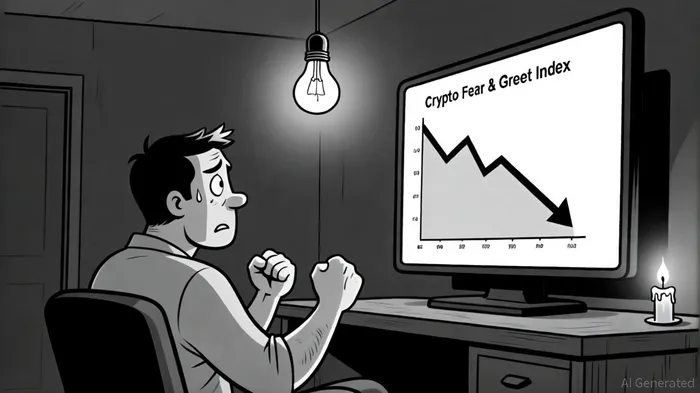
Investor sentiment in 2025 remains a powerful force, often amplifying market movements. The Crypto Fear & Greed Index, a barometer of emotional extremes, has proven pivotal in predicting turning points. In July 2025, the index hit 79 (indicating extreme greed) as Bitcoin surged to $118,000, fueled by ETF inflows and FOMO-driven buying[5]. Conversely, September 2025 saw the index plummet to 28—a level of "extreme fear"—amid a $162 billion market selloff triggered by leveraged liquidations, regulatory uncertainty, and macroeconomic headwinds[6].
This volatility underscores the cyclical nature of crypto psychology. Fear often creates buying opportunities, as seen in September when panic-driven selling left quality assets undervalued. Conversely, hype during bullish phases can lead to overvaluation, as witnessed in mid-2025 when retail investors chased altcoins without fundamental analysis[7].
High-Conviction Entry Strategies: Lessons from the September 2025 Crash
The September 2025 crash offers a masterclass in identifying entry points during market panic. When Bitcoin dipped below $112,000 and Ethereum fell to $4,075, the market faced a "Triple Witching" options expiry, rising Treasury yields, and geopolitical tensions[8]. Yet, for disciplined investors, this chaos presented opportunities:
- Dollar-Cost Averaging (DCA): By consistently buying during dips, investors mitigated the risk of timing the market. For example, allocating capital to Bitcoin and Ethereum during September's selloff allowed position-building at discounted prices[9].
- Sentiment-Driven Timing: The Fear & Greed Index's extreme fear reading (28) signaled a potential bottom. Historical data suggests that such levels often precede rebounds, particularly when structural buyers (e.g., ETFs, institutional treasuries) remain active[10].
- Fundamental Filtering: Experts like Michael Chmielewski advised focusing on projects with resilient use cases, such as RWAs, AI-driven protocols, and DeFi platforms with strong liquidity[11].
Institutional behavior also provided clues. While Bitcoin ETFs saw outflows during the crash, Ethereum ETFs recorded $4 billion in inflows, highlighting institutional confidence in ETH's long-term potential[12].
Balancing Risk and Reward: The Path Forward
Despite the allure of high-conviction entries, risk management remains paramount. Strategies such as stop-loss orders, portfolio diversification, and stablecoin hedging can protect against further downturns[13]. Additionally, macroeconomic factors—like the Federal Reserve's anticipated rate cuts—will continue to influence crypto's trajectory, offering both risks and opportunities[14].
The September 2025 crash also revealed structural shifts. Thinner exchange reserves and robust ETF inflows weakened the historical "crypto September blues" pattern, suggesting that institutional adoption may insulate the market from traditional seasonal volatility[15].
Conclusion: Mastering the Emotional and Strategic Landscape
The 2025 crypto market is a battleground of fear and hype, where emotional discipline and strategic foresight determine success. While volatility persists, the maturation of institutional infrastructure and regulatory frameworks provides a foundation for long-term growth. For investors, the key lies in leveraging sentiment indicators, adhering to disciplined strategies, and focusing on fundamentals—transforming market panic into a catalyst for high-conviction gains.





Comentarios
Aún no hay comentarios