
Crypto Market Volatility and the Human Cost of Hype: Systemic Risks and Investor Psychology in Digital Assets
The cryptocurrency market has long been a theater of extremes-where speculative euphoria and catastrophic collapses coexist. Over the past five years, systemic risks have amplified volatility, exposing the fragile interplay between technological innovation, investor psychology, and macroeconomic forces. From the algorithmic stablecoin implosions of 2022 to the regulatory upheavals of 2025, the human cost of crypto's hype cycle has become increasingly tangible, with retail investors bearing the brunt of cascading failures and emotional tolls.
Systemic Risks: When Market Architecture Fails
The collapse of Terra's UST and LUNALUNA-- in May 2022 epitomized the systemic vulnerabilities of crypto's interconnected ecosystems. As UST depegged from the dollar, the algorithmic mechanism minted trillions of LUNA tokens to stabilize the stablecoin, triggering a death spiral that erased $45 billion in value, according to an MDPI study. This event revealed how DeFi protocols, stablecoins, and governance tokens are interlinked, with losses in one asset class rapidly spreading to others. Similarly, the FTX bankruptcy in November 2022 exposed governance flaws in centralized exchanges, wiping 20% of the crypto market cap in days and triggering a chain reaction of insolvencies at Celsius and Voyager, as documented in a ScienceDirect study.
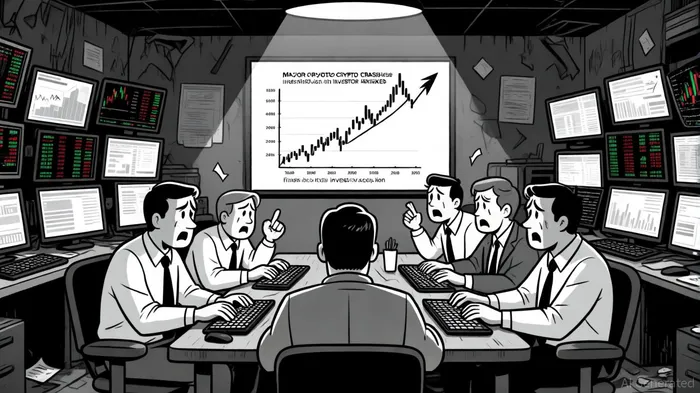
Stablecoins, once seen as a safe haven, further compounded instability. The 2023 USDCUSDC-- depeg-triggered by Circle's exposure to the Silicon Valley Bank collapse-forced investors to flee to alternative stablecoins like USDTUSDT--, exacerbating liquidity stress, according to an S&P Global report. These events underscore a critical truth: crypto's systemic risks are not confined to individual assets but reverberate across the entire market, eroding trust and amplifying volatility.
Investor Psychology: The Role of Behavioral Biases
Behavioral finance research paints a grim picture of how investors navigate crypto's turbulence. Overconfidence, anchoring, and herd behavior dominate decision-making, particularly during speculative booms. For instance, the 2024 memeMEME-- coin frenzy, driven by social media hype and influencer endorsements, saw retail investors pour billions into assets with no intrinsic value, only to face catastrophic losses when liquidity vanished, as argued in a ResearchGate paper.
Fear of Missing Out (FOMO) and Fear, Uncertainty, and Doubt (FUD) create a volatile feedback loop. During the TerraLUNA-- crash, panic selling accelerated the collapse as investors rushed to liquidate positions, while during bull markets, herd behavior inflated bubbles in assets like BitcoinBTC-- and EthereumETH--, as shown in an NCBI study. Social media platforms like Twitter and Reddit amplify these dynamics, with sentiment indices outperforming traditional volatility metrics in predicting price swings, according to a JAEPS study.
The Human Cost: Financial and Psychological Toll
The human cost of crypto's volatility is stark. According to the Bank for International Settlements (BIS) and a CryptoNews analysis, most retail investors lost money over the past seven years, with price-chasing strategies leading to significant losses during major crashes. The Terra collapse alone wiped out $500 billion in market value, leaving individual investors-many of whom had over-leveraged positions-devastated, as recounted in a TheStreet article.
Psychologically, the 24/7 trading cycle and social media-driven hype exacerbate anxiety, sleep disruption, and emotional strain. Loss aversion, where losses feel twice as painful as gains feel pleasurable, intensifies during downturns, leading to impulsive decisions like panic selling or doubling down on failing assets, according to a SmartLiquidity article. Societally, these crashes have shifted focus toward projects with demonstrable utility, yet volatility remains a defining feature, particularly for meme coins and speculative tokens, as noted in a TalkMarkets article.
Regulatory Gaps and the Path Forward
While institutional adoption and regulatory clarity in 2025 have injected optimism-spurred by ETF approvals and corporate Bitcoin holdings-the market remains vulnerable to tail risks. The lack of standardized data and fragmented oversight complicates risk management, particularly as crypto's integration with traditional finance deepens, a point underscored in a ScienceDirect analysis. For investors, the lesson is clear: understanding behavioral biases and systemic interdependencies is as critical as technical analysis in navigating this high-stakes arena.







Comentarios
Aún no hay comentarios