
Crypto Market Sentiment and Short Positioning: The Shadow of Insider Trading Narratives
The cryptocurrency market has long been a theater of extremes-where euphoria and panic coexist, and where whispers of insider trading can send shockwaves through price action. In 2023–2025, Bitcoin's price trajectory has been increasingly shaped by narratives of market manipulation, with insider trading allegations and strategic short positions acting as catalysts for volatility. This article dissects how these narratives influence trader sentiment, short positioning, and Bitcoin's price dynamics, drawing on recent events and data to outline the risks and opportunities for investors.
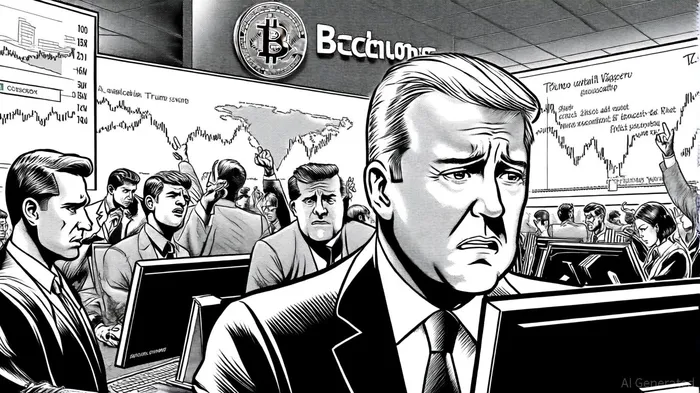
The Insider Trading Narrative: A Catalyst for Sentiment Shifts
Insider trading in crypto is not a new phenomenon, but its visibility has surged in 2023–2025, amplified by social media and on-chain analytics. A prime example is the case of Garrett Jin, former BitForex CEO, who opened a $340 million short position on BitcoinBTC-- just before President Trump's 2023 tariff announcements. This move, which coincided with a $19 billion in crypto liquidations, reignited debates about "Trump insider" trading and market manipulation, according to a BeinCrypto report. Despite Jin's denials, blockchain analytics firms like ArkhamARKM-- Intelligence highlighted the suspicious timing of his trades, fueling bearish sentiment and triggering a $131 billion crypto crash, as detailed in a Tecronet article.
Such events create a feedback loop: allegations of insider trading erode trust, prompting retail traders to adopt defensive strategies like shorting or exiting positions. For instance, during the October 2025 Hyperliquid liquidation event, the Crypto Fear & Greed Index plummeted to a "Fear" level of 27, reflecting widespread panic, according to a CCN primer. This sentiment was further exacerbated by the actions of "insider whales," such as 0xb317, who profited $192 million from a pre-tariff short and then amplified the downturn with a $163 million Bitcoin short on Hyperliquid, as reported by a BeinCrypto report.
Short Positioning: A Mirror of Market Doubt
The rise in short positions over 2023–2025 underscores the market's skepticism, even as Bitcoin hit all-time highs. Data from CoinGlass reveals that over 53% of Bitcoin positions are short, a stark indicator of bearish sentiment, according to BeinCrypto. Prominent traders like James Wynn have shifted from massive long bets to aggressive short positions, reflecting concerns about market exhaustion. Wynn's $1.25 billion long position in 2024, for example, was liquidated in favor of a $377 million short bet by October 2025, a development covered by BeinCrypto.
Short-term holders (STHs) have also begun distributing their holdings, a historical precursor to market tops, a trend noted in BeinCrypto coverage. This behavior is not purely technical-it's driven by narratives of manipulation. For example, the U.S. Securities and Exchange Commission (SEC) and Financial Industry Regulatory Authority (FINRA) have probed over 200 firms for insider trading in crypto treasury announcements, citing unusual price spikes and trading volumes, according to a CCN primer. These investigations have heightened uncertainty, pushing traders to hedge against potential corrections.
Trump Tariffs and the Paradox of Policy Volatility
The Trump administration's pro-crypto policies in 2025 created a paradox: while Bitcoin surged 60% since November 2024, the same policies introduced volatility through tariffs and geopolitical tensions. For instance, the 100% tariff on Chinese imports in April 2025 sent Bitcoin plummeting to $74,500, with EthereumETH-- losing over 20% in a single week, as explained in a Benzinga analysis. Binance's $283 million reimbursement to affected users further highlighted the cascading effects of policy-driven panic, described in a Tecronet article.
Yet, the narrative of Bitcoin as a "store of value" persisted. Analysts argue that regulatory clarity (e.g., spot Bitcoin ETF approvals) and the 2024 halving event provided long-term tailwinds, even as short-term volatility persisted, according to a CCN primer. This duality-policy-driven fear versus fundamental optimism-has made positioning strategies increasingly complex. Traders like @qwatio have exploited this by employing aggressive short roll-over tactics, amassing $300 million in leveraged positions, reported in a Blockchain.News report.
Navigating the Insider Trading Landscape: Strategies for Investors
For investors, the key lies in balancing short-term caution with long-term conviction. Here are three actionable strategies:
Dollar-Cost Averaging (DCA): Given the market's susceptibility to insider-driven volatility, DCA mitigates the risk of timing trades. By consistently buying Bitcoin at varying price points, investors avoid overexposure to sudden corrections.
Sentiment Analysis Tools: Leverage on-chain metrics (e.g., active addresses, wallet movements) and social media sentiment tools to gauge market mood. For example, Santiment's intraday cryptoasset sentiment index identified contrarian buying signals during the April 2025 crash, a pattern discussed in the Benzinga analysis.
Regulatory Vigilance: Monitor regulatory developments, as insider trading probes (e.g., SEC actions) can either stabilize or destabilize markets. The approval of a U.S. strategic crypto reserve, for instance, introduced debates about artificial price control but also signaled institutional confidence, as noted in the Benzinga analysis.
Conclusion: The Unseen Hand in the Market
The crypto market's susceptibility to insider trading narratives is a double-edged sword. While these narratives amplify volatility and erode trust, they also create opportunities for savvy investors who can distinguish between noise and fundamentals. As Bitcoin approaches its 2024 halving and regulatory frameworks evolve, the interplay between insider activity and market sentiment will remain a critical factor. For now, the lesson is clear: in a market where whispers can move mountains, vigilance and adaptability are the best defenses.






Comentarios
Aún no hay comentarios