
Crypto Market Outlook for 2026: Assessing the Risks of a Lackluster Rebound
The crypto market in 2026 stands at a crossroads. On one hand, macroeconomic tailwinds-such as anticipated Federal Reserve rate cuts, institutional adoption, and regulatory clarity-suggest a potential bull market. On the other, persistent inflation, geopolitical tensions, and the risk of a global recession loom large. For investors, the challenge lies in balancing optimism with caution. This analysis unpacks the interplay between macroeconomic headwinds and institutional sentiment to assess whether 2026 will deliver a robust rebound or a tepid recovery.
Macroeconomic Headwinds: A Fragile Foundation
The 2026 macroeconomic landscape is defined by divergent forecasts. J.P. Morgan Global Research assigns a 35% probability of a U.S. and global recession, citing "sticky inflation" as a persistent threat. Conversely, Bank of America projects U.S. real GDP growth of 2.4% in 2026, driven by AI investment, fiscal stimulus, and improved trade policy. Kiplinger's outlook aligns with a "soft landing", forecasting global GDP growth of 2.8% but warning of uneven regional performance.
Bitcoin's price trajectory is inextricably tied to these dynamics. If BofA's base case materializes, characterized by falling real yields and easing Fed policy, BitcoinBTC-- could benefit from ETF-driven inflows and expanded liquidity. However, JPMorgan highlights risks: tariff-driven inflation, geopolitical shocks, or a return to higher real yields could redirect capital toward traditional fixed-income assets, sidelining non-yielding cryptos like Bitcoin. The K-shaped recovery, where AI-driven corporate capex outpaces broader economic gains, may further polarize markets, amplifying volatility.
Institutional Adoption: A Double-Edged Sword
Institutional demand for crypto has surged, with 76% of global investors planning to expand digital asset exposure by 2026. Nearly 60% of these investors intend to allocate over 5% of their AUM to crypto, a shift supported by regulatory frameworks like the EU's MiCA and the U.S. GENIUS Act according to SSGA. Tokenized assets and compliant yield instruments have also expanded crypto's utility, making it more attractive to traditional players according to B2Broker.
Yet institutional behavior remains cautious. In Q4 2025, U.S. spot Bitcoin ETFs recorded $1.15 billion in net outflows, signaling a risk-off stance. This mirrors historical patterns: during the 2022 downturn, institutional outflows were driven by higher-for-longer interest rates and liquidity squeezes. While 2026's institutional strategies emphasize long-term tactics, like dollar-cost averaging and portfolio rebalancing, the market's reliance on yield-generating assets (e.g., Bitcoin-backed cash-plus funds) suggests a focus on risk-adjusted returns over speculative bets according to TradingView.
Historical Lessons: Resilience vs. Fragility
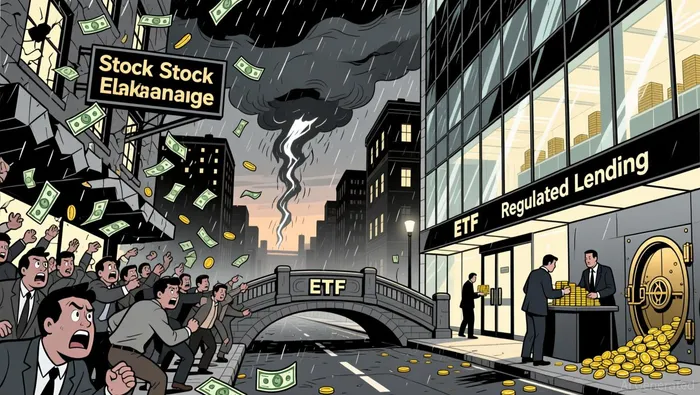
Crypto's performance during past downturns offers critical insights. The 2018 bear market saw Bitcoin plummet 83% from its $19,100 peak, while EthereumETH-- fell 93.8% according to CoinMarketCap. This crash was panic-driven, with little institutional infrastructure to absorb the shock. By contrast, the 2022 downturn-though severe-was more orderly. Bitcoin fell 73%, but structural factors like ETF launches and regulated lending mitigated panic-driven deleveraging.
The 2022 correction also revealed institutional maturity. While smaller investors rapidly adopted direct crypto holdings, larger institutions lagged due to operational and regulatory hurdles according to Bridgewater. This dichotomy persists in 2026: family offices and decentralized autonomous trusts are aggressively buying Bitcoin, while traditional allocators remain cautious according to CryptoNews. The recent partnership between Binance and Franklin Templeton underscores crypto's growing legitimacy but also highlights the sector's reliance on hybrid models to bridge traditional and digital finance according to FinanceMagnates.
Risks of a Lackluster Rebound
A "lackluster rebound" in 2026 is not inconceivable. Several risks could undermine the current bull case:
1. Inflation Resurgence: If sticky inflation forces the Fed to maintain higher rates, real yields could rise, making crypto's non-yielding profile less attractive.
2. Regulatory Uncertainty: While frameworks like MiCA provide clarity, inconsistent global regulations could stifle adoption.
3. Geopolitical Shocks: Escalating conflicts or trade wars could trigger risk-off sentiment, prioritizing gold and Treasuries over crypto.
4. ETF Outflows: A repeat of Q4 2025's outflows could signal waning institutional confidence, particularly if macroeconomic data disappoints.
Moreover, the 2026 market's reliance on AI-driven growth introduces a paradox: while AI investment fuels corporate capex, it could exacerbate K-shaped inequality, polarizing investor sentiment and amplifying volatility.
Conclusion: Navigating the Crossroads
The 2026 crypto market is poised for a pivotal year. Macroeconomic conditions and institutional adoption trends suggest a bull case, but structural risks-sticky inflation, regulatory fragmentation, and geopolitical instability-could cap gains. For investors, the key lies in hedging against macroeconomic fragility while capitalizing on institutional tailwinds. Diversification into yield-generating crypto instruments, a focus on regulated ETFs, and a cautious stance on macroeconomic signals may offer the best path forward.
As the market navigates this crossroads, one truth remains: crypto's journey in 2026 will be defined not by its potential, but by its resilience.







Comentarios
Aún no hay comentarios