
Crypto Market Downturn: Are Whale Shorting and Social Panic Indicators a Bearish Confirmation?
Whale Shorting: Strategy or Panic?
Recent movements by EthereumETH-- (ETH) whales underscore the complexity of large-holder behavior. A notable whale, previously linked to shorting 66,000 ETHETH--, recently withdrew 16,937 ETH from Binance. Analysts caution that such activity may reflect strategic shifts in custody or liquidity management rather than direct bearish signals. However, the sheer scale of these transactions-often five times the median order size-creates liquidity shocks akin to monetary stimulus in traditional markets. Portfolio analysis reveals that whales operate with a mean leverage of 6.9×, with some employing 10× leverage, suggesting aggressive positioning aligned with macroeconomic expectations.
Yet, whale behavior is not purely algorithmic. Behavioral biases, such as anchoring and reward anticipation, shape their decisions. For instance, whales cluster orders at specific price levels and exhibit decision fatigue as intraday activity wanes. This human element introduces volatility that cascades through retail markets, where panic can amplify whale-driven sell-offs into broader liquidation spirals.
Social Panic: Fear as a Double-Edged Sword
Social panic indicators, such as the Fear & Greed Index, paint a stark picture. As of November 2025, the index hit 25-a level of "extreme fear"-yet on-chain data reveals strong institutional accumulation and stable long-term holder activity. This divergence historically precedes reversals, with an average 24.3% return in the 30 days following such readings.
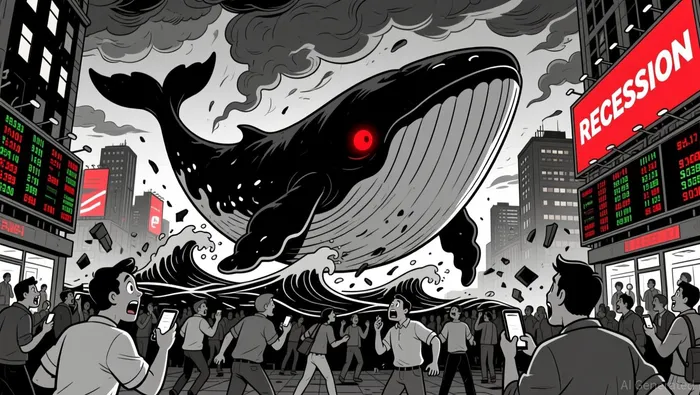
Meanwhile, the Nodiens Mood Index and Bull Bear Power (BBP) highlight a disconnect between negative sentiment and price stability. During the 2025 bearish phase, assets like BNBBNB--, TRX, and HBAR showed resilience, attracting defensive demand. SolanaSOL-- (SOL), however, underperformed, underscoring the need to combine sentiment metrics with fundamentals. These mixed signals suggest that while retail panic dominates social discourse, institutional actors may be positioning for a rebound.
Macroeconomic Headwinds and Behavioral Amplification
Macroeconomic factors in 2025-such as rising unemployment and shifting consumer behavior-create a challenging backdrop. For example, JD Sports Fashion's profit forecasts reflect broader economic strain, which could spill over into crypto markets. Here, behavioral indicators like whale activity and social panic act as accelerants. Whale-driven liquidity shocks in mid-cap assets (e.g., ARB, SOL) exacerbate volatility, while retail panic triggers cascading liquidations.
The interplay between macroeconomic expectations and behavioral biases is critical. Whales, leveraging high-debt portfolios, may adjust strategies in response to macroeconomic signals, further influencing market sentiment. Conversely, social panic can distort whale behavior, leading to overzealous trading driven by dopamine-linked reward systems.
Bearish Confirmation or Reversal Signal?
The current market environment resists simple bearish confirmation. While whale shorting and social panic indicators suggest heightened risk, their interplay with macroeconomic factors and institutional behavior introduces ambiguity. For instance, extreme fear readings historically precede reversals, and institutional accumulation during downturns hints at undervaluation.
Investors must adopt a multi-layered approach:
1. Whale Monitoring: Track large transfers and leverage ratios to gauge strategic shifts.
2. Sentiment Divergence: Watch for gaps between retail panic and institutional activity to identify divergence.
3. Macro-Linked Positioning: Align strategies with macroeconomic trends, such as consumer behavior shifts.
Conclusion
The crypto market's 2025 downturn is not merely a function of whale shorting or social panic but a confluence of behavioral and macroeconomic forces. While these indicators amplify bearish risks, they also create opportunities for sentiment-aware strategies. As history shows, fear can be a prelude to recovery-provided investors navigate the noise with discipline and data.






Comentarios
Aún no hay comentarios