
Crypto Market Data Integrity and XRP: Navigating Algorithmic Trading Risks and Misinformation in Fragmented Markets
Algorithmic Trading: A Double-Edged Sword
Algorithmic trading has amplified XRP's liquidity and institutional adoption, particularly through platforms like CME GroupCME--, which reported $1.47 billion in XRP open interest compared to Binance's $660.69 million, as noted in a U.Today analysis. This dominance of centralized exchanges (CEXs) reflects the appeal of institutional-grade infrastructure but also exposes XRP to risks such as high-frequency trading (HFT) manipulation and liquidity imbalances. On CEXs, algorithmic strategies can exploit low market depth to artificially influence prices, while decentralized exchanges (DEXs) face challenges like smart contract vulnerabilities and slippage due to lower liquidity, as explained in an Atomic Wallet article.
The XRP Ledger's integration of institutional tools, including Multi-Purpose Tokens (MPTs) and tokenized real-world assets (RWAs), has bolstered its appeal. The RWA market on the XRP Ledger grew 215% quarter-over-quarter to $364.2 million, driven by tokenized U.S. Treasuries and commercial paper, according to a Coin Edition report. However, this growth also attracts algorithmic arbitrageurs who may exacerbate volatility during periods of macroeconomic uncertainty or regulatory shifts.
Misinformation and Market Volatility
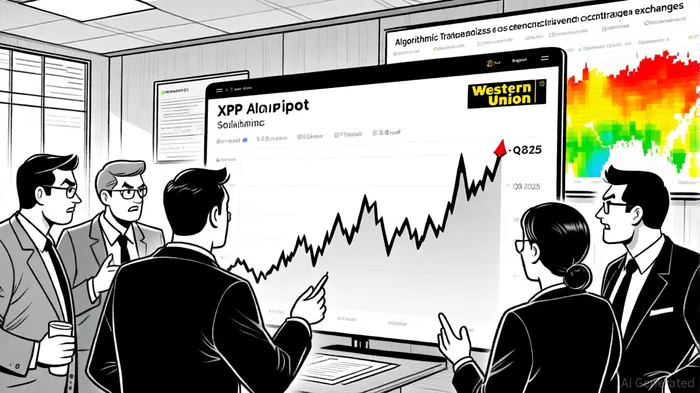
Misinformation campaigns have further complicated XRP's market integrity. In October 2025, Western Union's decision to adopt Solana for its blockchain initiatives triggered a wave of skepticism, with critics labeling it "embarrassing to hold XRP in 2025," as described in a CryptoBasic piece. Such narratives, amplified on social media, can drive panic selling or speculative buying, distorting price signals. Algorithmic trading systems, which often rely on sentiment analysis and real-time data, may misinterpret these narratives, compounding volatility.
A case in point is the coordinated liquidation tactics observed during XRP's "staggering flash crash," where leveraged long positions were targeted on platforms like Binance, according to a CryptoRobotics analysis. While the exact role of misinformation in this event remains unclear, the incident underscores how algorithmic strategies can amplify the impact of false or misleading information.
Fragmented Markets and Liquidity Challenges
XRP's fragmented market structure-spanning CEXs, DEXs, and tokenized asset platforms-exacerbates these risks. Price discrepancies across exchanges are common, with XRP's reserve on Binance dropping to 2.74 billion tokens in Q3 2025, signaling accumulation by long-term holders. However, this fragmentation also creates arbitrage opportunities and liquidity inefficiencies. For instance, the launch of XRP ETFs in March 2025 attracted $1 billion in inflows, yet regulatory delays and geopolitical uncertainties (e.g., Trump's re-election) have introduced volatility, as discussed in a OneSafe blog post.
Institutional players like Evernorth Holdings Inc. have sought to mitigate these challenges by accumulating 95% of their 409.16 million XRP target, valued at over $1 billion, per a Blockchain Reporter article. Yet, even as Ripple secures partnerships with SBI and Santander, competition from CBDCs and stablecoins like USDCUSDC-- threatens XRP's utility as a settlement layer, as argued in a Medium post.
Implications for Investors
Investors must navigate a landscape where algorithmic trading and misinformation can drive both rapid gains and abrupt losses. The approval of spot XRP ETFs, if realized, could inject $550 billion in liquidity, potentially propelling XRP toward a $100 price target, according to a Coinpedia projection. However, this optimism contrasts with the risks of regulatory "whiplash" and regional adoption disparities.
To safeguard market integrity, stakeholders should advocate for transparency in algorithmic trading practices and robust on-chain data tools to detect manipulation. Regulators, meanwhile, must address the unique challenges of fragmented markets, ensuring that both CEXs and DEXs adhere to stringent compliance standards.
Conclusion
XRP's 2025 trajectory reflects the transformative power of institutional adoption and technological innovation. Yet, the risks posed by algorithmic trading and misinformation in fragmented markets cannot be ignored. As the XRP Ledger evolves into a multi-use ecosystem, its success will depend on balancing growth with governance-ensuring that market integrity remains intact in the face of volatility and external pressures.





Comentarios
Aún no hay comentarios