
The Crypto Industry's Globalization: Web3's Next Growth Catalyst
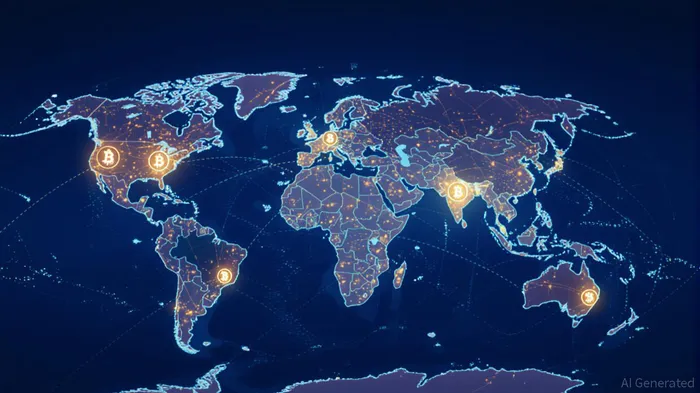
The crypto industry is no longer a niche experiment—it's a global force reshaping finance, technology, and geopolitics. In 2025, over half of the world's nations have legalized cryptocurrency, with countries like El Salvador, Cuba, and the Central African Republic embracing BitcoinBTC-- as legal tender [1]. Meanwhile, the U.S. has taken a historic step by approving 11 Bitcoin spot ETFs, signaling a seismic shift toward mainstream financial integration [1]. These developments are not isolated; they are part of a broader, event-driven narrative where strategic regulatory, technological, and geopolitical shifts are creating unprecedented investment opportunities in Web3.
Regulatory Tailwinds: The U.S. and Global Policy Shifts
The 2024 U.S. election and the appointment of crypto-friendly officials have catalyzed a pro-crypto regulatory environment. The anticipated removal of SAB 121—a policy that previously restricted banks from engaging with crypto—has lowered barriers for financial institutionsFISI-- to enter the space [4]. This shift is mirrored globally: the BRICS nations, now accounting for 37.4% of global GDP, are leveraging blockchain to bypass Western-dominated systems like SWIFT. China's Hong Kong has emerged as a crypto hub, while Russia is using digital assets to circumvent sanctions [1].
For investors, these regulatory changes represent a green light for capital flows into crypto infrastructure. The U.S. alone is expected to see a surge in institutional allocations, with 83% of institutions planning to increase their crypto holdings in 2025 [3]. This trend is further amplified by legislative clarity, such as the GENIUS and STABLE Acts, which are creating frameworks for stablecoin usage and digital asset governance [4].
BRICS and the Rise of Decentralized Infrastructure
The BRICS bloc is redefining global finance through blockchain. The BRICS Pay system, a decentralized, blockchain-powered platform, enables cross-border transactions in local currencies, reducing reliance on the U.S. dollar [1]. Complementing this, BRICS nations have officially adopted cryptocurrencies for investment payments, a move announced by Russian President Vladimir Putin during the 2024 Business Forum [5].
This initiative is not just about financial sovereignty—it's about infrastructure. The BRICS+ bloc, representing 54% of the global population, is investing in blockchain-based solutions to streamline trade and investment. For example, tokenized real-world assets (RWAs) are enabling fractional ownership of real estate and commodities, with Swiss and German banks already adopting these models [2]. Investors should watch projects like Seturion, which tokenizes physical assets, and FRNT, a state-backed stablecoin bridging regulatory legitimacy and decentralization [2].
DePIN: The New Frontier of Decentralized Infrastructure
Decentralized Physical Infrastructure Networks (DePIN) are emerging as a cornerstone of Web3's next phase. By leveraging blockchain to crowdsource infrastructure like 5G networks, energy grids, and GPU computing, DePIN projects are creating tangible, scalable value. In Q1 2025 alone, DePIN projects raised $150 million, with Render Network (GPU rendering), Helium (wireless connectivity), and Filecoin (cloud storage) leading the charge [3].
These projects are not speculative—they're solving real-world problems. For instance, Render's $2.8 billion market cap reflects its role in democratizing access to high-performance computing for creators [5]. Similarly, Helium's 1 million hotspots globally demonstrate the viability of decentralized wireless networks [2]. Investors seeking long-term, infrastructure-driven growth should prioritize DePIN projects with clear use cases and strong token economics.
Institutional Adoption: From Hype to Mainstream
Institutional interest in crypto has reached a tipping point. 86% of institutional investors are either already invested or planning to allocate capital to crypto in 2025 [4]. This shift is driven by regulatory clarity and the maturation of products like stablecoins and tokenized assets. For example, 84% of institutions are using or considering stablecoins for yield generation and cash management, with firms like Fidelity and Custodia launching bank-issued stablecoins on major blockchains [4].
The rise of tokenized RWAs is another key trend. 57% of institutions are exploring these assets to diversify portfolios and access illiquid markets like real estate and commodities [3]. BlackRockBLK-- and Fidelity have already launched tokenized Treasury products, signaling a shift toward asset tokenization as a core investment strategy [4].
Funding the Future: Web3's Capital Surge
The Web3 funding landscape has evolved from speculative hype to strategic, infrastructure-focused investments. In Q2 2025, $9.6 billion was raised, with a focus on AI integration, blockchain infrastructure, and RWA tokenization [1]. Notably, blockchain AI startups secured $637 million in 2025, leveraging AI for automated smart contracts and governance systems [1].
For founders and investors, this environment prioritizes projects with proven product-market fit. Blockchain-specific grants, such as the Ethereum Ecosystem Support Program and Base Builder Grants, are also fueling innovation, offering non-dilutive capital for open-source and infrastructure projects [2].
Conclusion: The Globalization Playbook
The crypto industry's globalization is not a passing trend—it's a structural shift driven by regulatory progress, geopolitical realignment, and technological innovation. From BRICS' blockchain-powered trade systems to DePIN's decentralized infrastructure, the opportunities are vast and event-driven. For investors, the key is to align with projects that address real-world problems, benefit from institutional adoption, and capitalize on regulatory tailwinds.
As the world moves toward a multipolar financial system, Web3 is not just the next growth catalyst—it's the foundation of a new economic order.





Comentarios
Aún no hay comentarios