
Crypto Giant DCG Settles SEC Charges for $38.5M
Generado por agente de IAWesley Park
viernes, 17 de enero de 2025, 2:24 pm ET1 min de lectura
GBTC--
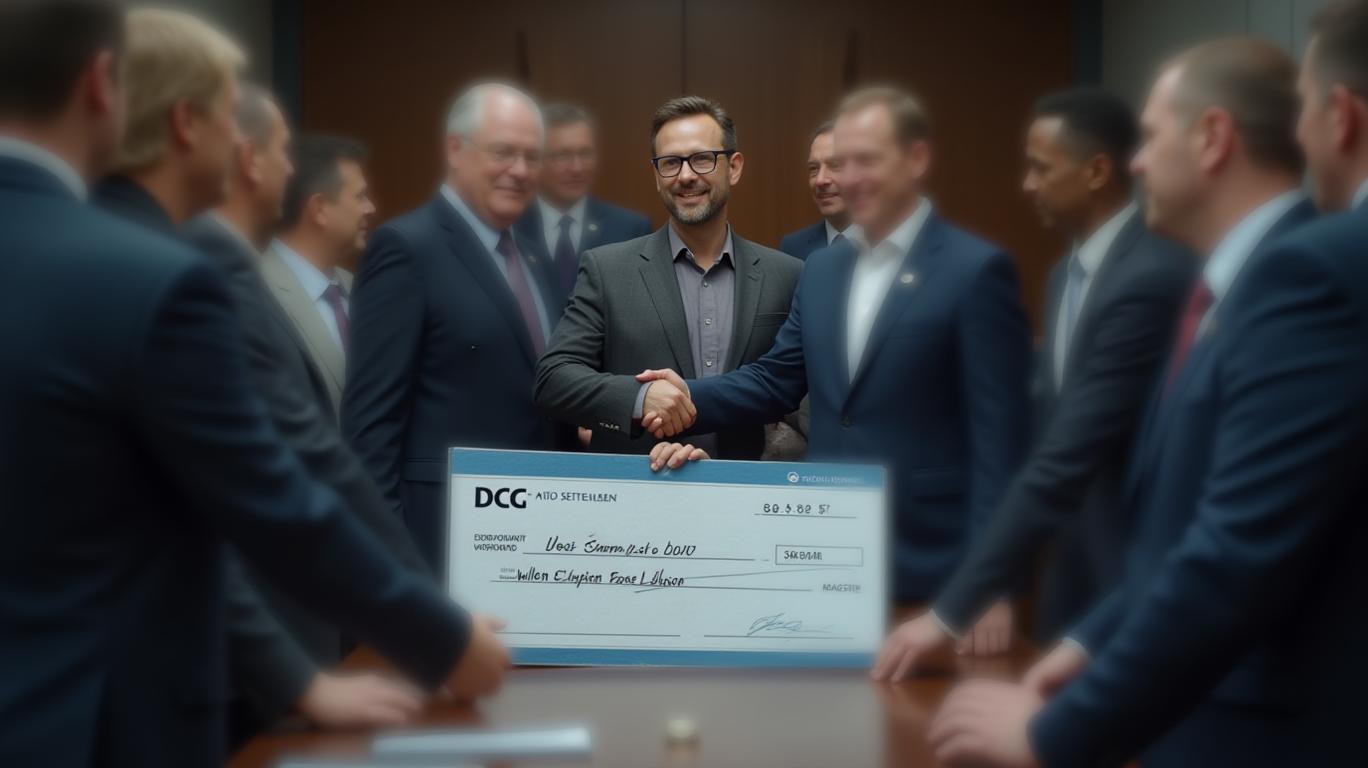
Digital Currency Group (DCG), the crypto conglomerate founded by Barry Silbert, and its former CEO, Soichiro "Michael" Moro, have agreed to pay a combined $38.5 million to settle charges brought by the U.S. Securities and Exchange Commission (SEC). The settlement, announced on January 17, 2025, resolves allegations that DCG and Moro misled investors about the financial health of DCG's now-defunct subsidiary, Genesis Global Capital (GGC).
The SEC's order, issued by the Crypto Assets and Cyber Unit, found that DCG and Moro negligently engaged in conduct that misled investors about GGC's financial condition. In mid-June 2022, Three Arrows Capital (3AC), one of GGC's largest borrowers, defaulted on a margin call, compromising GGC's business. Despite the significant loss, DCG and Moro downplayed the impact and exaggerated the efforts made to help GGC in the aftermath.
Moro made false or misleading statements on Twitter, characterizing GGC's balance sheet as strong and falsely stating that GGC had shed the risk related to the 3AC default. DCG executives retweeted certain of these statements, further perpetuating the misleading narrative. Additionally, after DCG and GGC entered into a promissory note with a 10-year term, Moro misleadingly tweeted that DCG had ensured that GGC had "adequate capital to operate" when, in fact, DCG had not transferred any capital to GGC.
DCG issued a $1.1 billion promissory note to GGC on June 30, 2022, to inflate GGC's balance sheet and avoid negative equity at a crucial reporting date. However, the terms of the note were not disclosed to investors, leading to a materially false impression of GGC's stability. By November 2022, GGC was overwhelmed with redemption requests and suspended withdrawals, leading to its Chapter 11 bankruptcy filing in January 2023.
Without admitting or denying the SEC's findings that they violated Section 17(a)(3) of the Securities Act of 1933, DCG and Moro agreed to a cease-and-desist order and to pay civil penalties of $38 million and $500,000, respectively. The SEC's investigation was conducted by Yael Berger, Joy Guo, Amanda Rios, Ben Kuruvilla, Sam Wasserman, and William Garnett, assisted by Kenneth Gottlieb, and supervised by Mark R. Sylvester of the Crypto Assets and Cyber Unit and Jorge G. Tenreiro.
This settlement serves as a reminder of the importance of transparency and accurate disclosure in the crypto industry, particularly during times of financial instability. As the crypto market continues to evolve, investors and regulators alike must remain vigilant to ensure the integrity and stability of the market.
Digital Currency Group (DCG), the crypto conglomerate founded by Barry Silbert, and its former CEO, Soichiro "Michael" Moro, have agreed to pay a combined $38.5 million to settle charges brought by the U.S. Securities and Exchange Commission (SEC). The settlement, announced on January 17, 2025, resolves allegations that DCG and Moro misled investors about the financial health of DCG's now-defunct subsidiary, Genesis Global Capital (GGC).
The SEC's order, issued by the Crypto Assets and Cyber Unit, found that DCG and Moro negligently engaged in conduct that misled investors about GGC's financial condition. In mid-June 2022, Three Arrows Capital (3AC), one of GGC's largest borrowers, defaulted on a margin call, compromising GGC's business. Despite the significant loss, DCG and Moro downplayed the impact and exaggerated the efforts made to help GGC in the aftermath.
Moro made false or misleading statements on Twitter, characterizing GGC's balance sheet as strong and falsely stating that GGC had shed the risk related to the 3AC default. DCG executives retweeted certain of these statements, further perpetuating the misleading narrative. Additionally, after DCG and GGC entered into a promissory note with a 10-year term, Moro misleadingly tweeted that DCG had ensured that GGC had "adequate capital to operate" when, in fact, DCG had not transferred any capital to GGC.
DCG issued a $1.1 billion promissory note to GGC on June 30, 2022, to inflate GGC's balance sheet and avoid negative equity at a crucial reporting date. However, the terms of the note were not disclosed to investors, leading to a materially false impression of GGC's stability. By November 2022, GGC was overwhelmed with redemption requests and suspended withdrawals, leading to its Chapter 11 bankruptcy filing in January 2023.
Without admitting or denying the SEC's findings that they violated Section 17(a)(3) of the Securities Act of 1933, DCG and Moro agreed to a cease-and-desist order and to pay civil penalties of $38 million and $500,000, respectively. The SEC's investigation was conducted by Yael Berger, Joy Guo, Amanda Rios, Ben Kuruvilla, Sam Wasserman, and William Garnett, assisted by Kenneth Gottlieb, and supervised by Mark R. Sylvester of the Crypto Assets and Cyber Unit and Jorge G. Tenreiro.
This settlement serves as a reminder of the importance of transparency and accurate disclosure in the crypto industry, particularly during times of financial instability. As the crypto market continues to evolve, investors and regulators alike must remain vigilant to ensure the integrity and stability of the market.

Divulgación editorial y transparencia de la IA: Ainvest News utiliza tecnología avanzada de Modelos de Lenguaje Largo (LLM) para sintetizar y analizar datos de mercado en tiempo real. Para garantizar los más altos estándares de integridad, cada artículo se somete a un riguroso proceso de verificación con participación humana.
Mientras la IA asiste en el procesamiento de datos y la redacción inicial, un miembro editorial profesional de Ainvest revisa, verifica y aprueba de forma independiente todo el contenido para garantizar su precisión y cumplimiento con los estándares editoriales de Ainvest Fintech Inc. Esta supervisión humana está diseñada para mitigar las alucinaciones de la IA y garantizar el contexto financiero.
Advertencia sobre inversiones: Este contenido se proporciona únicamente con fines informativos y no constituye asesoramiento profesional de inversión, legal o financiero. Los mercados conllevan riesgos inherentes. Se recomienda a los usuarios que realicen una investigación independiente o consulten a un asesor financiero certificado antes de tomar cualquier decisión. Ainvest Fintech Inc. se exime de toda responsabilidad por las acciones tomadas con base en esta información. ¿Encontró un error? Reportar un problema




Comentarios
Aún no hay comentarios