
Crypto Funds Diversifying Into Altcoins and DeFi: Capital Reallocation and Risk-Adjusted Returns
In 2025, the crypto asset landscape has witnessed a seismic shift in capital reallocation strategies, as institutional and retail investors increasingly diversify away from BitcoinBTC-- and stablecoins toward high-beta altcoins and DeFi protocols. This trend, driven by evolving risk appetites, ETF speculation, and the maturation of decentralized finance, is reshaping the crypto market's risk-return profile.
Capital Reallocation: From Stability to Speculation
According to Bybit's Q3 report, Ethereum's portfolio weight surged from 0.14 in April 2025 to 0.32 by August, reflecting its growing role as a "treasury token" for DeFi participation and staking yields. Meanwhile, Bitcoin's dominance, though still significant at 31.7% of total user assets, has faced pressure from altcoins like XRPXRP-- and SolanaSOL--. XRP allocations rose 30% between May and August due to expectations of a U.S. Spot ETF approval, with Polymarket traders pricing in a 90–95% probability of approval, and Solana's wallet share also hit 2025 highs, mirroring Bitcoin and Ethereum's adoption patterns.
This reallocation is not limited to retail investors. Institutional actors have reduced stablecoin exposure and shifted into tokenized strategies, signaling a broader trend of risk-seeking behavior. For instance, DeFi's total value locked (TVL) surpassed $123.6 billion by Q2 2025, with EthereumETH-- hosting 63% of the total, according to the same report. Protocols like Lido ($34.8 billion TVL) and EigenLayerEIGEN-- have become central to liquidity redistribution, while Ethena's TVL grew 1083.84% in Q1 2025, driven by its yield-bearing USDeUSDe-- stablecoin.
Risk-Adjusted Returns: Altcoins Outperform, but at a Cost
Data from Grayscale's Q4 2025 report indicates that the Financials and Smart Contract Platforms sectors dominated volatility-adjusted price returns, with Ethereum and Solana leading the charge. A trend-following strategy for altcoins achieved a Sharpe ratio of 1.57 and a maximum drawdown of 11% in 2025, outperforming Bitcoin's 1.83 Sharpe ratio over the same period, according to a CoinGecko study.
However, this outperformance comes with elevated volatility. Altcoins like XRP and Solana exhibit daily price swings exceeding 10%, amplifying both upside and downside risks. For example, smaller altcoins such as LUNA1 and BRISE depreciated 90% from all-time highs in under two months, underscoring the fragility of speculative assets. In contrast, Bitcoin's worst drawdown remains at 93.18%, but its long-term store-of-value proposition continues to anchor portfolios.
DeFi's Role in Capital Reallocation
DeFi has emerged as a critical beneficiary of capital reallocation, with cross-chain protocols like ArbitrumARB-- and OptimismOP-- seeing TVL surges, as noted in Bybit's findings. Lending platforms (Aave, Compound) and DEXs (Uniswap V4) now hold $51.2 billion in outstanding loans and trading volume, respectively. This growth is partly fueled by institutional demand for yield, as liquid staking protocols (Lido, Marinade) offer competitive returns.
Yet, DeFi's risk profile remains distinct. While it provides low interconnectedness with traditional markets in many periods, macroeconomic shocks-such as inflationary pressures in 2022-have increased its correlation with equities, per the CoinGecko study. This duality makes DeFi a double-edged sword: a diversifier in stable environments but a source of contagion during systemic stress.
Implications for Investors
The 2025 reallocation trends highlight a maturing crypto market where diversification and risk management are paramount. For investors, the key lies in balancing Bitcoin's stability with the high-growth potential of altcoins and DeFi. A 5% Bitcoin allocation in a traditional 60/40 portfolio increased the Sharpe ratio from 0.77 to 0.96, according to CoinGecko, but adding altcoins via trend-following strategies could further enhance returns while mitigating drawdowns, as Grayscale's analysis suggests.
However, the elevated volatility of altcoins and DeFi necessitates tailored strategies. For instance, liquid staking tokens (LSTs) and cross-chain bridges offer yield without full exposure to price swings, while hedging mechanisms like options can protect against sharp corrections. As ETF speculation intensifies, investors must also weigh regulatory risks against potential liquidity gains.
Conclusion
The 2025 reallocation of crypto capital into altcoins and DeFi marks a pivotal shift in investor behavior, driven by the pursuit of higher risk-adjusted returns and the maturation of decentralized ecosystems. While Bitcoin remains a critical anchor, the rise of Ethereum, Solana, and DeFi protocols signals a more diversified and dynamic market. For investors, the challenge lies in navigating this complexity through strategic diversification, active risk management, and a nuanced understanding of macroeconomic interdependencies.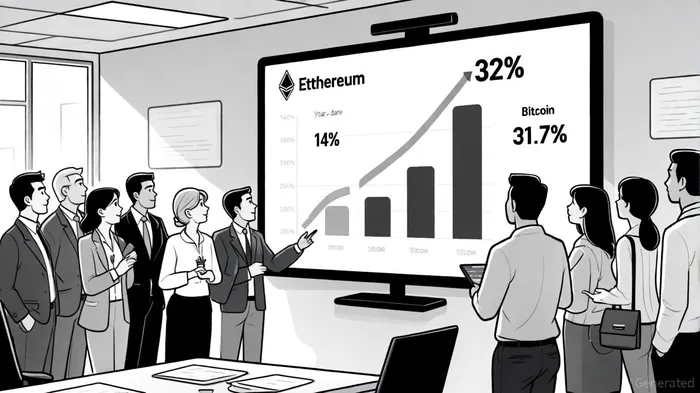






Comentarios
Aún no hay comentarios