
The Crypto Fear and Greed Index: A Contrarian Indicator for Timing Entry Points
The Crypto Fear and Greed Index, a widely followed sentiment metric in cryptocurrency markets, has emerged as a critical tool for contrarian investors seeking to identify potential entry points amid volatile price swings. Ranging from 0 (extreme fear) to 100 (extreme greed), the index synthesizes data on volatility, market momentum, social media sentiment, BitcoinBTC-- dominance, and search trends to gauge collective investor psychology. While its utility as a contrarian signal has been debated, recent academic and industry analyses from 2023 to 2025 highlight both its potential and limitations in navigating crypto markets.
Historical Effectiveness and Contrarian Logic
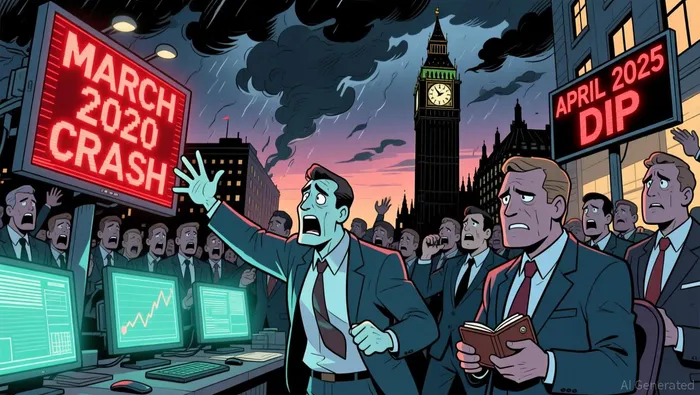
The index's contrarian framework is rooted in behavioral finance principles. Extreme fear readings-typically below 25-have historically signaled oversold conditions, often preceding market rebounds within 30–180 days. For instance, during the March 2020 market crash, the index plummeted to near-zero levels, coinciding with a subsequent rapid recovery and the start of a new bull market. Similarly, in April 2025, the index dropped below 10 amid Bitcoin's consolidation in the $80,000–$85,000 range, suggesting a potential buying opportunity despite the lack of immediate price action.
However, the index's predictive power has faced challenges in recent years. In 2025, repeated extreme fear readings failed to trigger consistent rebounds, with investor confidence in recovery dropping from 69% in October to 34% in November. This divergence underscores the growing influence of macroeconomic factors-such as U.S.-China trade tensions and Federal Reserve policy-on market dynamics, which can overshadow sentiment-driven signals (https://blog.cex.io/ecosystem/fear-and-greed-index-2025-35105).
Strategic Frameworks and Academic Insights
Academic studies from 2023 to 2025 emphasize the index's value when combined with technical and on-chain data. A 2023 study simulated contrarian strategies using the index and found that such approaches outperformed passive investing, suggesting crypto markets remain inefficient. For example, during extreme fear periods, mean-reversion strategies-buying into oversold conditions-have historically yielded gains, while extreme greed readings (above 75) often precede corrections, prompting defensive tactics like purchasing put options (https://moss.sh/reviews/crypto-fear-greed-index-hits-extreme-levels-trading-strategy/).
Case studies further illustrate this synergy. In October 2025, the index reached 68, signaling growing optimism alongside stabilizing Bitcoin prices and increased institutional activity. Conversely, November 2025 saw the index drop to 12, reinforcing bearish sentiment but failing to trigger a clear reversal (https://finance.yahoo.com/news/bitcoin-crashes-extreme-fear-history-123010939.html). These examples highlight the need for a multifaceted approach, integrating sentiment analysis with tools like on-chain metrics (e.g., whale accumulation patterns) and technical indicators (e.g., RSI, moving averages) (https://www.okx.com/learn/fear-greed-opportunity-bitcoin-market-cycles).
Challenges and Limitations
Despite its insights, the index is not without flaws. In 2025, markets exhibited a tendency to consolidate rather than capitulate during extreme fear, with investors favoring stablecoins and Bitcoin as hedges (https://blog.cex.io/ecosystem/fear-and-greed-index-2025-35105). This behavior complicates traditional contrarian strategies, as prolonged consolidation can erode the effectiveness of "buy the dip" tactics. Additionally, the index's reliance on aggregated data means it may lag behind real-time market shifts, particularly in fast-moving crypto environments.
Academic discourse cautions against overreliance on the index. While it captures emotional extremes, its accuracy depends on contextual factors such as regulatory developments, macroeconomic trends, and technological innovations (https://www.onesafe.io/blog/crypto-fear-greed-index-market-sentiment). For instance, the absence of a December 2025 Federal Reserve rate cut led to sharp declines in the index, yet these were not consistently followed by price corrections.
Conclusion: A Tool, Not a Panacea
The Crypto Fear and Greed Index remains a valuable component of a contrarian investor's toolkit, particularly for identifying psychological turning points. However, its effectiveness hinges on integration with broader analytical frameworks. As one academic study notes, "The index is not a standalone solution but a lens through which to view market sentiment in conjunction with technical and fundamental analysis" (https://www.onesafe.io/blog/crypto-fear-greed-index-market-sentiment). For investors navigating the 2023–2025 crypto landscape, a disciplined approach that balances sentiment signals with macroeconomic and on-chain insights will likely yield the most robust outcomes.






Comentarios
Aún no hay comentarios