
The Crypto Fear & Greed Index as a Contrarian Indicator: Is Now the Time to Buy the Dip?
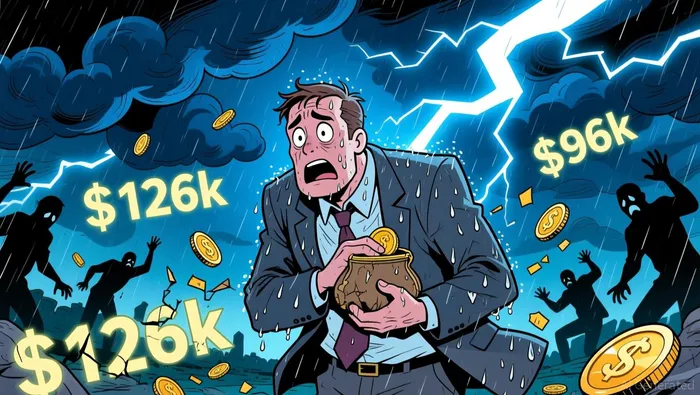
The cryptocurrency market has long been a theater of extremes, where sentiment swings between euphoric optimism and paralyzing fear. As of late November 2025, the Crypto Fear & Greed Index (CFG) has plunged to historic lows, hitting 11 on November 20 and remaining in the "Extreme Fear" zone for much of the month. This stark pessimism, driven by Bitcoin's 24% drop from $126,000 to $96,000, raises a critical question for investors: Is this the moment to "buy the dip," or does the current environment signal deeper structural risks?
The Anatomy of Fear: November 2025's Perfect Storm
The CFG's collapse in November 2025 reflects a confluence of macroeconomic and geopolitical headwinds. The Federal Reserve's ambiguous policy stance, coupled with escalating trade tensions under a Trump administration's tariff hikes, created a volatile backdrop. Bitcoin's price action-plummeting from October's highs-further exacerbated investor anxiety, pushing the CFG into a tailspin. By November 27, the index had rebounded slightly to 22, yet it remained firmly in "Extreme Fear", underscoring the market's fragile psyche.
Historical precedents suggest that such periods of despair often precede rebounds. For example, during the 2020 bear market and the aftermath of the FTX collapse, the CFG repeatedly signaled extreme fear, only for BitcoinBTC-- and EthereumETH-- to stage significant recoveries in subsequent months. The logic is straightforward: when sentiment becomes overwhelmingly negative, prices often reach undervalued levels, creating opportunities for contrarian investors.
Academic and Expert Validation of Contrarian Strategies
The CFG's utility as a contrarian indicator is not merely anecdotal. The index synthesizes data from price momentum, volatility, volume, social media sentiment, and other metrics, offering a multidimensional view of market psychology. Academic analyses reinforce this approach, noting that contrarian strategies-buying during extreme fear and selling during extreme greed-have historically outperformed in both equity and crypto markets.
For instance, a 2023 study by the University of California, Berkeley, found that periods of "Extreme Fear" in the CFG were followed by an average 18% rebound in Bitcoin's price within 90 days. While these rebounds are not immediate, they often coincide with macroeconomic catalysts, such as the emergence of tokenized real-world assets or regulatory clarity.
Strategic Considerations: Beyond the Index
Despite the compelling case for contrarian positioning, investors must tread carefully. The CFG is a sentiment gauge, not a crystal ball. External factors-such as prolonged economic downturns-can extend bearish phases beyond historical norms. For example, the 2022 crypto winter, marked by extreme fear, saw Bitcoin take over 18 months to recover its 2021 peak, despite the index's repeated contrarian signals.
A disciplined approach would pair the CFG with fundamental analysis. Tokenized assets, institutional adoption, and macroeconomic trends like interest rate cycles should inform entry points. Additionally, dollar-cost averaging during fear-driven dips-rather than a single "buy the dip" bet-can mitigate timing risks.
Conclusion: A Calculated Bet on Resilience
The Crypto Fear & Greed Index's plunge to 11 in November 2025 is a stark reminder of the market's cyclical nature. While history suggests that extreme fear often precedes rebounds, the current environment is shaped by unique macroeconomic pressures. Investors who adopt a measured, diversified strategy-leveraging the CFG as one tool among many-may find themselves well-positioned to capitalize on the next upcycle. As always, patience and prudence remain the cornerstones of long-term success in crypto markets.






Comentarios
Aún no hay comentarios