
Crypto Exchange Security and Regulatory Risk in South Korea: Assessing the Long-Term Implications of the Upbit Solana Hack
Security Vulnerabilities and Institutional Trust
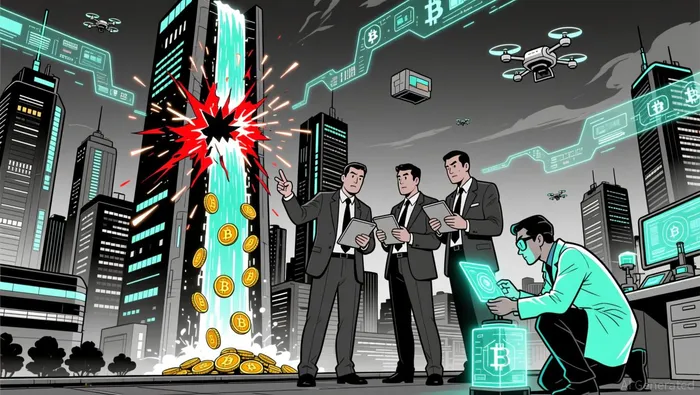
The Upbit hack exploited weaknesses in Solana-based hot wallets, with stolen assets including SOL, USDCUSDC--, and smaller tokens like BONKBONK-- and JUPJUP--. Upbit's immediate response-suspending Solana transactions, freezing stolen funds, and absorbing losses from its own reserves-was lauded for prioritizing customer protection. However, the recurrence of a major breach on the same date (November 27) as its 2019 EthereumETH-- hack, attributed to North Korean groups like Lazarus, has eroded trust in centralized custody models.
Institutional investors are now scrutinizing the broader implications. A report by Bloomberg notes that the hack has intensified calls for layered custody solutions, including increased use of cold storage and multi-signature wallets. Yet, the reliance on hot wallets remains a systemic risk, particularly for high-volume exchanges like Upbit. The breach also occurred amid Upbit's $10.29 billion merger with Naver Financial, a deal aimed at advancing KRW-pegged stablecoins and blockchain infrastructure. This timing has amplified concerns about whether corporate ambitions could compromise security protocols.
Regulatory Fragmentation and Stablecoin Stalemates
South Korea's regulatory response has been equally complex. The Financial Services Authority (FSA) launched an on-site inspection of Upbit, extending until December 5, 2025, to assess compliance and security measures. Meanwhile, the Bank of Korea (BOK) and financial regulators remain deadlocked over stablecoin frameworks. The BOK insists banks must hold at least 51% of stablecoin issuers to mitigate risks, while regulators and lawmakers advocate for open participation by tech firms. This stalemate has delayed the introduction of a stablecoin framework into 2026, despite the sector's rapid growth-reaching $60 billion in domestic transactions by mid-2025.
The Upbit hack has further complicated these debates. A report by Coindesk highlights that the incident has intensified scrutiny of stablecoin infrastructure, with regulators now prioritizing reserve transparency and 100% collateral requirements. However, the lack of consensus on key issues-such as whether interest can be paid on stablecoin holdings-remains a barrier to clarity. For investors, this regulatory limbo creates uncertainty, particularly for stablecoins pegged to the KRW, which are central to Naver and Dunamu's blockchain ambitions.
Crypto ETFs and the Path to Institutional Adoption
While the Upbit hack has not yet directly impacted crypto ETFs, it has accelerated discussions about their regulatory viability. The Financial Services Commission (FSC) is drafting a roadmap for digital asset spot ETFs, aligning with President Lee Jae-myung's pledge to enable Bitcoin-linked investment vehicles. However, the hack has underscored the need for robust custodial safeguards, as ETFs would require secure storage of underlying assets.
A critical challenge lies in balancing innovation with oversight. The FSC's openness to allowing tech giants like Naver to issue stablecoins contrasts with the BOK's caution, reflecting broader tensions in South Korea's approach to digital finance. For ETFs to gain traction, regulators must resolve these disputes and establish clear guidelines for asset-backed tokens and custody standards.
Market Stability and Investor Considerations
The hack's immediate market impact was muted, with Solana's price remaining stable despite short-term volatility in tokens like BONK and JUP. However, the long-term implications for market stability are more profound. Institutional investors are now demanding stricter compliance from exchanges, including enhanced AML/KYC protocols and transparent indemnification policies [according to recent reports]. Upbit's $25 million fine for prior AML violations and the Financial Intelligence Unit's (FIU) "first-in, first-out" enforcement strategy-targeting Korbit, GOPAX, and Bithumb next-signal a shift toward punitive compliance.
For stablecoins and ETFs, the path forward hinges on regulatory alignment. If the BOK's 51% bank ownership rule prevails, it could stifle innovation but enhance stability. Conversely, a more open framework might attract tech-driven players but risk monopolistic practices. Investors must also weigh the potential for delayed ETF approvals and the volatility of stablecoin valuations amid regulatory uncertainty.
Conclusion
The Upbit Solana hack is a watershed moment for South Korea's crypto sector. It has exposed vulnerabilities in exchange security, amplified regulatory fragmentation, and forced a reckoning with the balance between innovation and stability. For institutional investors, the incident underscores the need for rigorous due diligence on custodial practices and regulatory alignment. While the FSC's push for ETFs and the BOK's stablecoin debates continue, the long-term health of South Korea's crypto market will depend on resolving these tensions-and ensuring that security and compliance keep pace with ambition.






Comentarios
Aún no hay comentarios