
Crypto Exchange Credibility in 2025: CEO Transparency and Regulatory Resilience as Pillars of Investor Trust
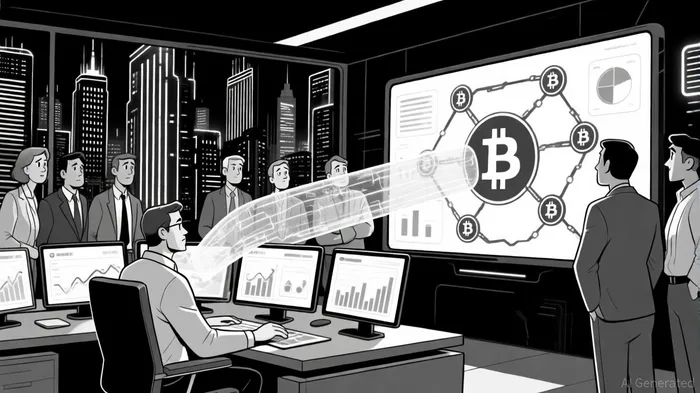
The collapse of FTX in 2022 and the subsequent regulatory scrutiny of Binance marked a turning point for the crypto industry. By 2025, the sector has undergone a profound transformation, with CEO transparency and regulatory resilience emerging as critical factors in rebuilding investor trust. This shift is not merely reactive but reflects a strategic alignment with traditional financial standards, driven by both market demand and legislative momentum.
The CEO as a Trust Architect
In the wake of high-profile scandals, crypto exchange leaders have redefined their roles as stewards of transparency. Binance's CEO, Richard Teng, has prioritized financial disclosure, mandating public access to board compositions and audited financial statements [1]. Similarly, BitGo's Mike Belsche has championed public listings as a “non-negotiable” step for crypto firms seeking Wall Street credibility [2]. These efforts underscore a broader recognition that CEO accountability is no longer optional but foundational to institutional and retail investor confidence.
Data from 2025 reinforces this trend: a study of 458 U.S. investors revealed that 78% now prioritize CEO transparency as a key criterion for investment decisions, with detailed disclosures about token supply schedules and vesting timelines reducing uncertainty and boosting trading volumes [3]. However, challenges persist. Centralized exchanges (CeFi) like OKX and KuCoin continue to face criticism for opaque token listings and informal compensation practices, highlighting gaps in cross-platform standards [4].
Regulatory Resilience: CLARITY, GENIUS, and Global Frameworks
The U.S. regulatory landscape has evolved dramatically since 2023. The CLARITY and GENIUS Acts of 2025 have established a dual oversight model, assigning the CFTC authority over digital commodities and the SEC jurisdiction over investment-linked assets [5]. These laws mandate 100% reserve backing for stablecoins and stringent anti-money laundering (AML) protocols, directly addressing risks exposed by the FTX collapse [6].
Globally, Hong Kong and Singapore have emerged as regulatory innovators, balancing crypto-friendly policies with robust licensing regimes for exchanges and stablecoins [7]. Meanwhile, the European Union's MiCA regulations have set a precedent for transparency in tokenized assets, further pressuring U.S. firms to align with international benchmarks [8].
Investor Trust Metrics: From Compliance to Cultural Shift
Investor trust is no longer measured solely by regulatory compliance but by cultural commitments to transparency. A 2025 report by CryptoEdu found that platforms offering real-time transaction tracking and public smart contract audits saw a 40% increase in user retention compared to those without such features [9]. This aligns with findings that female investors, in particular, prioritize regulatory clarity over technological novelty [10].
Yet, trust remains fragile. The $LIBRA memecoinMEME-- case illustrates how centralized actors can manipulate markets even in regulated environments, exposing vulnerabilities in projects lacking clear governance [11]. Such instances reinforce the need for continuous oversight and community-driven accountability mechanisms.
The Path Forward: Balancing Innovation and Accountability
For crypto exchanges to sustain credibility, they must embed transparency into their operational DNA. This includes:
1. Public Listings: Following BitGo's lead, exchanges should pursue IPOs to demonstrate compliance with traditional financial standards [12].
2. Decentralized Governance: Integrating DeFi protocols can foster trust by enabling community-driven decision-making [13].
3. Regulatory Collaboration: Proactive engagement with frameworks like the Digital Asset Working Group will ensure alignment with evolving laws [14].
As the industry matures, the line between crypto and traditional finance continues to blurBLUR--. The CEOs who succeed will be those who treat transparency not as a checkbox but as a dynamic, investor-centric strategy—one that turns skepticism into trust and volatility into stability.







Comentarios
Aún no hay comentarios