
Crypto Exchange Accountability and Investor Protection in a $19B Liquidation Crisis
The cryptocurrency market's $19 billion liquidation crisis of October 10, 2025, marked a watershed moment for the industry. Triggered by President Donald Trump's 100% tariff announcement on Chinese imports, the crash exposed systemic vulnerabilities in leverage, liquidity, and exchange resilience. BitcoinBTC-- plummeted 12% to $101,500, while altcoins like XRPXRP-- and DOGEDOGE-- lost up to 30% of their value in hours. Over 1.6 million traders faced margin calls, and the total crypto market cap dropped from $4.3 trillion to $3.74 trillion in a single day, according to a CCN report. This event underscored the urgent need for regulatory frameworks to protect retail investors and stabilize institutional-grade participation.
The Crisis Unfolds: A Systemic Wake-Up Call
The liquidation wave was not merely a market correction but a structural collapse. Derivatives platforms like Hyperliquid processed $10.28 billion in liquidations, while Binance's futures insurance fund lost $188 million attempting to mitigate negative balances, as Coin360 reported. The crisis revealed a dangerous concentration of leverage, with long positions accounting for $16.6 billion of the losses. As one trader put it, "It felt like the floor vanished-no safety nets, just freefall."
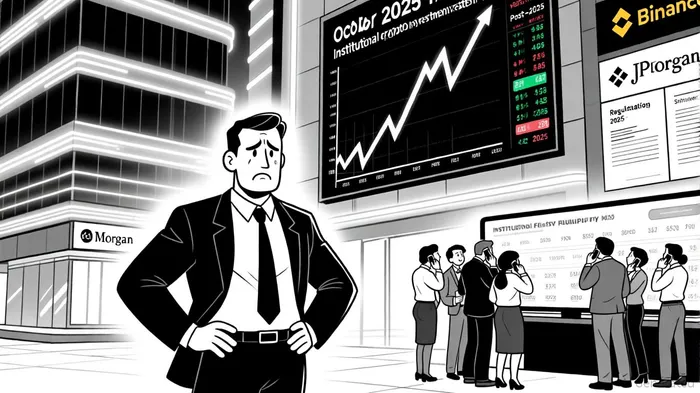
The U.S. Court of Appeals' August 2025 ruling against Trump's tariffs added another layer of uncertainty, delaying enforcement until October 14 and creating a volatile trading environment, according to a BitcoinChaser analysis. This regulatory ambiguity exacerbated the sell-off, as investors grappled with both geopolitical and legal risks.
Regulatory Responses: From Crisis to Clarity
Post-crisis, governments and regulators moved swiftly to address systemic gaps. The U.S. passed the GENIUS Act in July 2025, mandating 1:1 reserve backing for stablecoins and subjecting them to AML/KYC rules and independent audits, as detailed in a CoinEdition overview. This framework restored confidence in stablecoins like Tether's new USAT, which became a cornerstone for institutional cross-border payments.
In parallel, the European Union's Markets in Crypto-Assets (MiCA) regulation, fully implemented by late 2024, harmonized rules across member states, requiring licensing, transparency, and governance standards for crypto service providers, as reported by Finance Monthly. These measures reduced arbitrage risks and elevated compliance expectations, making crypto markets more attractive to institutional players.
India and the UK also introduced robust safeguards. India mandated cybersecurity audits for exchanges, while the UK lifted restrictions on crypto ETNs for retail investors, according to Caldwell Law. Collectively, these actions signaled a global shift toward accountability, with 34% of global stablecoin activity occurring in the EU by 2025, according to Stablecoin Flows.
Institutional Adoption: The New Era of Crypto Integration
Regulatory clarity became the catalyst for institutional adoption. By Q3 2025, institutions allocated $47.3 billion into stablecoin-based yield strategies, leveraging platforms like EthenaENA-- and Goldfinch for risk-managed returns, according to a Stablecoin Insider report. Major banks, including JPMorgan and Citi, began offering crypto custody and trading services, while the U.S. Strategic Bitcoin Reserve-holding 200,000 BTC-normalized digital assets as part of national treasuries, as noted in a CryptoToolsHub overview.
The approval of Bitcoin and EthereumETH-- ETFs by BlackRock and Fidelity further legitimized crypto as a core asset class. These funds attracted $12 billion in inflows within months, with institutions citing "regulatory certainty" as a primary driver, according to a Pinnacle Digest analysis. Even traditional players like Visa and HSBC integrated stablecoins into cross-border payment systems, reducing settlement times from days to minutes, as noted in a Tech Champion piece.
The Path Forward: Stability Over Speculation
The 2025 crisis and its aftermath illustrate a critical lesson: crypto's future hinges on regulatory frameworks that balance innovation with investor protection. While the $19 billion liquidation was a painful reset, it accelerated the adoption of rules that now underpin institutional-grade participation. As one analyst noted, "The market didn't just survive the crash-it evolved."
For investors, the takeaway is clear: regulatory oversight is no longer a barrier but a foundation. With stablecoins, ETFs, and custody solutions now embedded in traditional finance, crypto is transitioning from a speculative niche to a strategic asset. The next chapter of this story will be written not by volatility, but by the institutions now building on this new bedrock.
---






Comentarios
Aún no hay comentarios