
Crypto ETF Flow Divergence: Why Ether and Altcoins Are Outperforming Bitcoin in 2026
The crypto ETF landscape in 2026 has become a battleground for capital reallocation, with EtherETH-- (ETH) and altcoins outpacing BitcoinBTC-- (BTC) in inflows and price performance. This divergence, driven by market rotation and shifting investor sentiment, reflects a maturing ecosystem where institutional and retail capital are increasingly prioritizing utility-driven assets over speculative narratives.
K-Shaped Divergence and the Rise of High-Beta Alts
The 2026 crypto market is characterized by a "K-shaped" divergence, where Bitcoin and select top-tier altcoins rally while the broader market lags. However, recent data reveals a nuanced twist: Ether and specific altcoins like XRPXRP-- and SolanaSOL-- (SOL) have outperformed Bitcoin in ETF flows and price action. For instance, XRP-based ETFs attracted $13.59 million in inflows in early 2026, while Ethereum ETFs like Grayscale's ETHE secured $53.69 million. This trend underscores a shift in capital toward assets perceived as having clearer utility, such as blockchain infrastructure or real-world asset (RWA) integration.
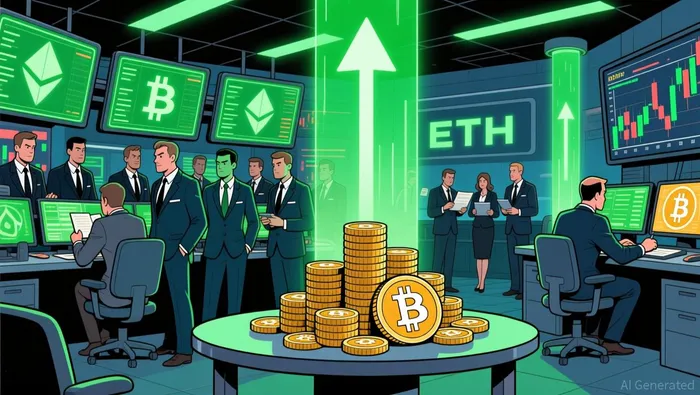
ETF-Driven Rotation: Institutional and Retail Dynamics
The rotation into altcoins is fueled by institutional-grade ETF inflows and retail-driven speculative momentum. XRP, for example, surged 27.3% in early 2026, driven by $1 billion in spot ETF inflows and a 42.3% spike in open interest (OI) as traders added exposure to high-beta assets. Similarly, Ethereum's 10.0% weekly gain was supported by $97 million in short-covering liquidations, signaling a reversal of its prior underperformance. These movements highlight how ETFs are evolving from speculative tools into structured allocation vehicles, with investors seeking exposure to projects with emerging infrastructure potential.
Macroeconomic Tailwinds and Risk-On Sentiment
Broader macroeconomic conditions have amplified this rotation. A cooling U.S. labor market and potential Federal Reserve rate cuts have bolstered risk-on sentiment, with analysts noting that a weaker dollar disproportionately benefits crypto markets. Additionally, geopolitical events-such as the U.S. military strike on Venezuela-triggered a disinflationary impulse, further incentivizing capital to flow into digital assets. Bitcoin's underperformance relative to altcoins, despite its traditional safe-haven appeal, suggests that investors are now prioritizing assets with tangible use cases over pure store-of-value narratives.
Resolving the Contradiction: External Factors Over Bitcoin's Cycle
The apparent contradiction between Bitcoin's four-year halving cycle and its relative underperformance in 2026 can be explained by external macroeconomic forces. While historical expectations tied Bitcoin's price to its halving event, 2026's rally has been driven by record stock-market highs, falling inflation, and declining interest rates. This shift indicates that institutional investors are increasingly viewing Bitcoin as a mispriced asset within a broader macroeconomic framework, rather than a standalone cycle-driven play.
Implications for Investors
The 2026 ETF-driven rotation signals a structural shift in crypto investing. Investors must now balance exposure to Bitcoin's foundational role with high-utility altcoins that align with emerging trends like tokenization and AI-driven applications. However, caution is warranted: low liquidity in spot markets remains a vulnerability, making altcoin rallies more susceptible to sharp corrections.
In conclusion, the outperformance of Ether and altcoins in 2026 reflects a market maturing toward utility-driven narratives and macroeconomic alignment. As ETFs continue to shape capital flows, investors who adapt to this rotation may find themselves better positioned to capitalize on the next phase of crypto's evolution.







Comentarios
Aún no hay comentarios