
Crypto Capital Rotation and the Rise of PayFi: Why Remittix (RTX) Is the Whale-Favored Altcoin of 2026
The crypto market in 2026 is undergoing a seismic shift. As BitcoinBTC-- (BTC) and EthereumETH-- (ETH) consolidate gains following late-2025 rallies, institutional and retail investors are pivoting toward projects with tangible utility. This capital rotation-driven by macroeconomic pressures and a maturing market-has spotlighted PayFi, a sector blending blockchain's speed with traditional finance's accessibility. At the center of this trend is Remittix (RTX), a project that has captured the attention of whales and institutional players alike.
The Capital Rotation Playbook
Bitcoin whales, having offloaded over $3.4 billion worth of BTC in late 2025 at the $88,000 to $94,000 price range, are now reallocating capital into altcoins with clear use cases. This shift mirrors historical patterns where speculative assets give way to infrastructure-driven projects during market cycles. RTX has emerged as a prime beneficiary, with on-chain data revealing significant accumulation by large investors. The project's hybrid model-enabling instant crypto-to-fiat conversions via local banking partners-addresses a critical pain point in global payments, making it a natural destination for capital seeking real-world utility.
PayFi's Infrastructure Edge
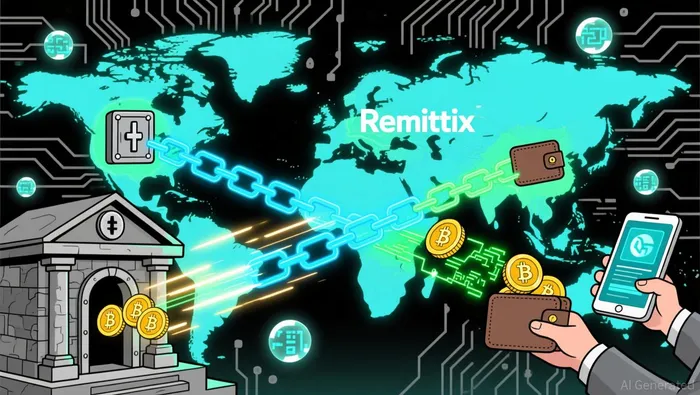
PayFi's appeal lies in its ability to bridge blockchain's efficiency with traditional finance's ubiquity. RTX's platform, set to launch fully on 9 February 2026, allows users to convert crypto into fiat for cross-border transactions, bypassing intermediaries and reducing fees by up to 80%. This is particularly valuable for SMEs, freelancers, and international businesses, which collectively represent a $10 trillion global remittance market. Unlike speculative tokens, RTX's value proposition is rooted in actionable infrastructure: its wallet is already live on the Apple App Store, with Android support imminent, and it has onboarded over 696 million tokens in its presale, raising $28.6 million.
Whale Behavior and Institutional Validation
Whale activity in 2026 underscores RTX's growing institutional credibility. The project's CertiK audit-a rare achievement for pre-launch tokens- ranked it #1 in security, a critical factor for risk-averse investors. Additionally, RTX's strategic partnerships with exchanges like BitMart and LBank have enhanced liquidity and visibility, attracting both retail and institutional buyers. On-chain analysis reveals that large investors are prioritizing RTX due to its 200% early buyer bonus and 15% USDT referral program, which incentivize accumulation. These mechanics, combined with a clear roadmap for merchant onboarding and fiat integration, position RTX as a whale-favored play in the 2026 cycle.
Market Structure and Price Projections
Analysts have drawn wide-ranging price predictions for RTX, with bull-case scenarios projecting a $5 billion market cap contingent on institutional partnerships and staking economics. The project's hybrid model-combining blockchain's transparency with fiat's accessibility-aligns with broader trends in financial infrastructure. As RTX's PayFi platform scales to 30+ countries, its token's utility as a medium for cross-border transactions could drive demand, particularly as traditional remittance corridors face regulatory and cost challenges.
Conclusion: A 2026 Investment Thesis
Remittix's rise is not a speculative anomaly but a reflection of evolving investor priorities. As crypto capital rotates toward projects with real-world utility, RTX's PayFi infrastructure offers a compelling value proposition. With whale accumulation, institutional validation, and a clear path to adoption, the project is well-positioned to capitalize on the 2026 market cycle. For investors seeking exposure to the next phase of crypto's evolution, RTX represents a strategic bet on the future of global payments.






Comentarios
Aún no hay comentarios