
Crypto Asset Recovery and Token Valuation Dynamics: Navigating Liquidity and Market Psychology in Post-Bankruptcy Markets
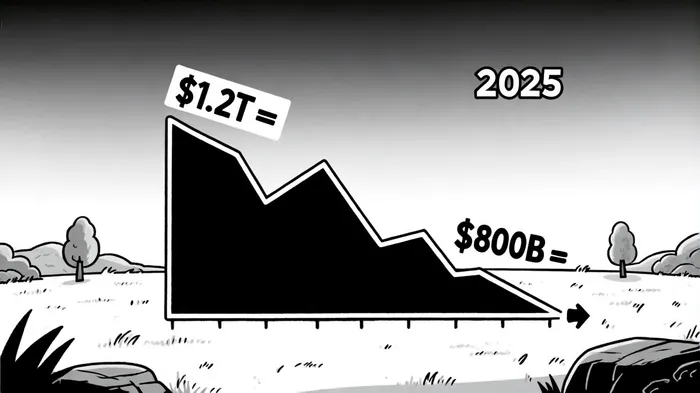
The collapse of major crypto firms like FTX, BlockFi, and CelsiusCELH-- between 2022 and 2025 has reshaped the landscape of digital assetDAAQ-- recovery and valuation. These bankruptcies exposed systemic vulnerabilities in liquidity management, regulatory oversight, and investor psychology, while also catalyzing innovations in legal frameworks and market resilience. This article dissects the interplay between asset recovery mechanisms, token valuation dynamics, and the psychological undercurrents driving post-bankruptcy liquidity re-emergence.
Valuation Challenges in Post-Bankruptcy Crypto Markets
The valuation of crypto assets in insolvency proceedings remains a contentious and evolving domain. Courts have grappled with the unique challenges posed by volatile, illiquid tokens and the concentration of holdings in the hands of debtors. A landmark case emerged in the FTX Chapter 11 bankruptcy, where the U.S. Bankruptcy Court for the District of Delaware applied a modified "Blockage Method" to value utility tokens. This approach accounted for the price impact of large-scale liquidations and used the Ghaidarov Model to estimate discounts for lack of marketability. For instance, the court applied a 100% discount to MAPS and a 99.9% discount to OXY, reflecting skepticism about the reliability of market prices for thinly traded tokens[3].
Such methodologies highlight the tension between historical valuations and real-time market conditions. For example, FTX's bankruptcy proceedings relied on November 2022 prices (when BitcoinBTC-- was ~$20,000), which diverged sharply from 2025 valuations. This discrepancy raises fairness concerns for creditors, as asset recoveries are often disproportionately affected by market timing[2].
Legal and Technological Innovations in Asset Recovery
The post-bankruptcy era has seen a surge in legal and technological tools to trace and recover stolen or mismanaged crypto assets. The proposed GENIUS Act, for instance, empowers federal agencies to seize or burn stablecoins linked to sanctions violations or criminal activity, while establishing a Digital Asset Crime Enforcement Task Force[2]. Internationally, frameworks like the Budapest Convention on Cybercrime and Mutual Legal Assistance Treaties (MLATs) have enabled cross-border cooperation, as seen in a 2024 case where €1.4 million was recovered through collaboration among Austria, Cyprus, and the Czech Republic[3].
Blockchain forensics tools, including Chainalysis and Elliptic, have become indispensable in identifying illicit transaction patterns. Meanwhile, software developers of centralized crypto assets now face legal obligations to assist in recovery efforts. For example, courts can compel developers to burn misappropriated tokens and reissue them to rightful owners, as affirmed by Dubai's Court of Appeal[1]. These advancements underscore the growing recognition of crypto assets as property under law, even in un-hosted or multi-signature wallets.
Liquidity Re-Emergence and Credit Market Rebuilding
The 2022 liquidity crisis, triggered by the collapse of stablecoins and leveraged lending platforms, left a lasting scar on crypto markets. Unsecured credit conditions tightened, with firms now requiring collateral or pre-funding for transactions—a stark contrast to the pre-2022 era of speculative lending[1]. However, protocols like Cycles are pioneering decentralized clearing mechanisms to rebuild sustainable credit markets. By reducing reliance on centralized counterparties, these platforms aim to enhance capital efficiency during market stress[1].
Stablecoins, once a cornerstone of liquidity, have also faced prolonged recovery. USDCUSDC--, for instance, only regained its 2022 all-time high market cap in early 2025, reflecting the slow normalization of trust in fiat-backed tokens[3]. Institutional participation, regulatory clarity, and cross-chain liquidity protocols are now seen as critical to restoring market depth. Automated market makers (AMMs) and decentralized finance (DeFi) platforms are increasingly filling the void left by retreating centralized liquidity providers[3].
Market Psychology and Investor Behavior
The psychological dynamics of crypto markets during and after bankruptcies reveal a unique interplay of fear, hope, and herd behavior. The 2022 crash, fueled by the collapse of TerraLUNA-- and FTX, triggered a "flight to safety" into stablecoins and Bitcoin, while also exposing the fragility of leveraged positions. Over 300 million crypto holders—many young and inexperienced—faced cascading liquidations, with losses exceeding $1 billion in 24-hour periods[3].
Interestingly, crypto enthusiasts exhibited distinct behavioral patterns compared to traditional investors. While traditional markets often see heightened negativity post-crash, crypto communities leaned into optimismOP--, using phrases like "wagmi" (We're all gonna make it) to foster collective resilience[3]. Social media platforms like Twitter amplified these dynamics, with herding behavior and sentiment-driven trading dominating decision-making[2]. Regulatory scrutiny further complicated investor psychology, as investigations by the SEC and DOJ introduced new layers of uncertainty[3].
The Path Forward
The post-bankruptcy era has underscored the need for robust liquidity management, diversified risk exposure, and adaptive legal frameworks. While challenges persist—such as regulatory fragmentation and the pseudo-anonymous nature of crypto assets—the sector is gradually maturing. Innovations in DeFi, cross-border cooperation, and psychological resilience among investors suggest a market capable of learning from its past.






Comentarios
Aún no hay comentarios