
Crypto 2025: AVAX, BCH, and the BullZilla Price Catalyst
AVAX: Consolidation, Institutional Backing, and On-Chain Explosiveness
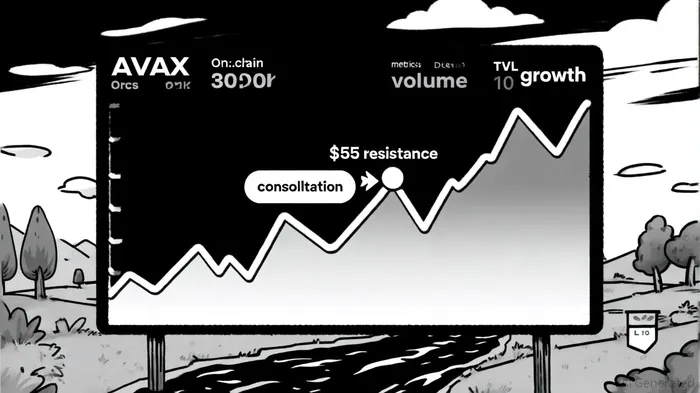
Avalanche (AVAX) has been consolidating around the $30 level since early 2025, forming a robust accumulation zone with historical support[1]. Analysts at EtherNasyon and CryptoPulse argue that a breakout above the $55 resistance could trigger a move toward $100–$150, driven by growing institutional interest[1]. This optimism is underpinned by on-chain metrics: weekly bridged TVL increased by $115 million, stablecoin market capitalization hit $1.85 billion, and DEX volume surged to $4.2 billion in a single week[1].
A critical catalyst for AVAXAVAX-- is the $1 billion token purchase plan announced by Avalanche Treasury Co. in October 2025[4]. This move is expected to reduce circulating supply and signal long-term value retention, attracting further institutional inflows. Additionally, DeFi yields on Avalanche reached 90% APY in Q3 2025, while real-world asset (RWA) adoption grew by 16% month-over-month[1]. These fundamentals suggest AVAX is notNOT-- just a speculative play but a platform gaining traction in decentralized finance and enterprise use cases.
Strategic Entry Points for AVAX:
- Short-term: A breakout above $35 could validate the $55 target, with $30–$32 as key support[1].
- Long-term: A sustained close above $55 would likely trigger a retest of $100, with $8.2 billion in weekly trading volume acting as a liquidity buffer[1].
BCH: Protocol Upgrades, MVRV Momentum, and Retail FOMO
Bitcoin Cash (BCH) has surged past $500 in late 2025, breaking a 15-month consolidation pattern[1]. The Velma hard fork in May 2025 introduced smart contract capabilities (VM Limits and BigInt), expanding BCH's utility beyond payments[1]. On-chain metrics further validate its bullish case: the MVRV ratio (~0.665) indicates the asset is still below previous profit-taking levels, while open interest in derivatives rose by 8% in September 2025[1].
Technical indicators paint a compelling picture. BCHBCH-- is trading above key moving averages, with a MACD histogram in bullish territory and RSI readings (55–60) suggesting room for further gains without overbought conditions[2]. Analysts at CoinCodex and Changelly project a $669–$800 range by October 2025, contingent on breaking through $634.30 and $629.80 resistance levels[2]. In a stretched scenario, BCH could reach $1,000 by year-end, driven by merchant adoption and macroeconomic resilience[3].
Strategic Entry Points for BCH:
- Short-term: A pullback to $600–$620 offers a high-probability entry, with $550 as a critical support[3].
- Long-term: A sustained close above $669 could trigger a retest of $800, with protocol upgrades and faster block times as tailwinds[1].
BullZilla Catalyst: AVAX vs. BCH – Risk vs. Reward
While both AVAX and BCH exhibit bullish momentum, their risk profiles differ. AVAX's larger market cap ($25 billion) and institutional backing provide liquidity advantages, but its $30–$35 consolidation zone remains vulnerable to bearish breakdowns[1]. BCH, with a $10 billion market cap, offers higher volatility and speculative potential but faces liquidity constraints and regulatory uncertainties[1].
For investors, the BullZilla phase in 2025 hinges on macroeconomic stability and continued on-chain adoption. AVAX's ecosystem funding ($250 million) and RWA growth[1] suggest a more sustainable long-term play, while BCH's protocol upgrades and merchant adoption position it as a high-conviction short-term trade.
Conclusion: Positioning for 2025's Altcoin Surge
The 2025 BullZilla phase is being driven by two distinct narratives: AVAX's institutional-grade infrastructure and BCH's protocol-driven utility. Strategic entry points for AVAX lie in its $30–$35 support zone and $55 breakout level, while BCH's $600–$620 pullback offers a high-reward opportunity. Investors should balance exposure based on risk tolerance, leveraging on-chain metrics and technical indicators to time entries.
As the crypto market enters Q4 2025, the convergence of macroeconomic tailwinds and on-chain innovation suggests that AVAX and BCH could outperform broader market indices, provided they clear key resistance levels.






Comentarios
Aún no hay comentarios