
Crude Oil Edges Higher Amid Policy Crosscurrents: OPEC, Trade Wars, and the $61.53 Question
On April 15, 2025, the May WTI Crude OilWTI-- contract settled at $61.53 per barrel, a marginal gain of $0.03. This slight uptick masks a complex landscape where geopolitical tensions, OPEC’s fractured strategy, and demand headwinds collide. Below, we dissect the forces shaping today’s price—and what they portend for investors.
OPEC’s Divergent Pathways: A Price Floor or a Free Fall?
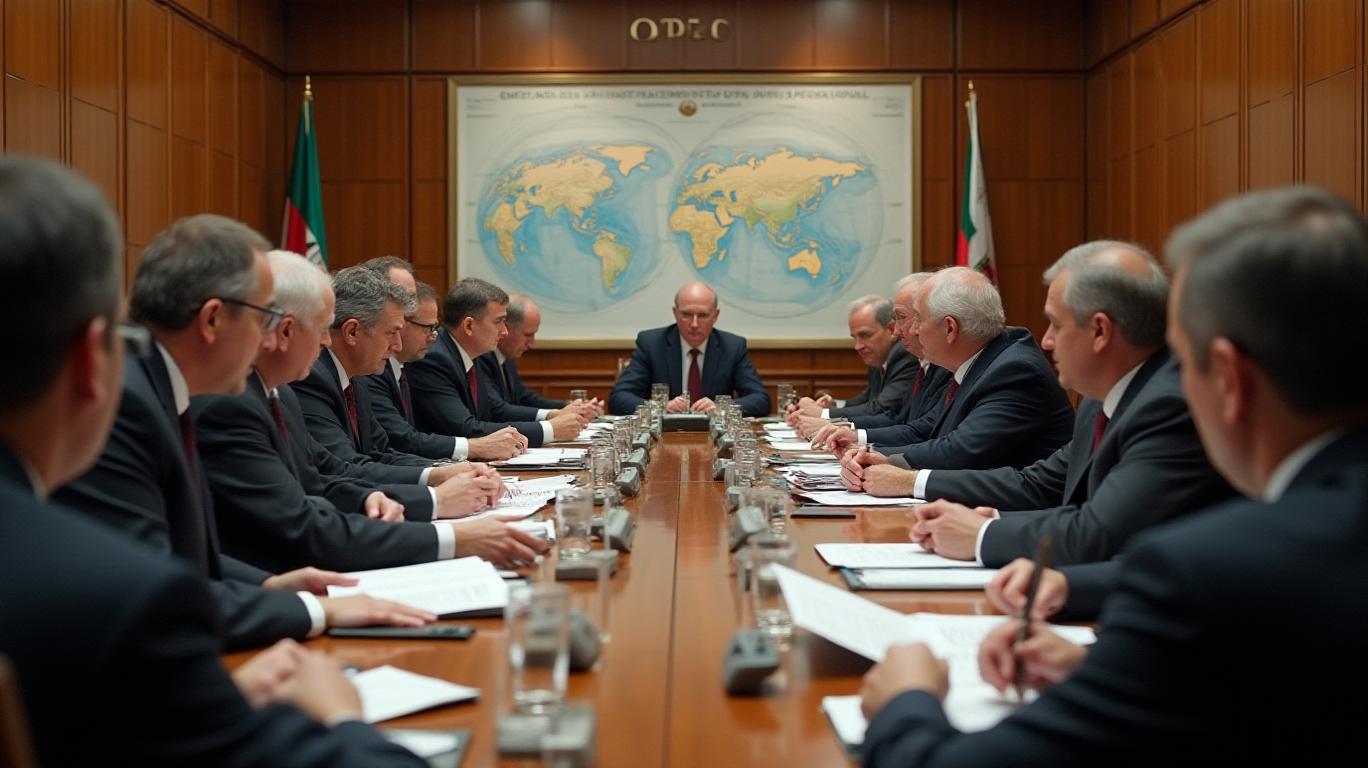
OPEC+’s internal rifts remain a critical wildcard. While Saudi Arabia insists on maintaining a $80/b Brent floor to stabilize budgets, Russia and others prioritize market share. Recent production adjustments—advancing output increases to May—drove a 14% Brent collapse in early April, underscoring the cartel’s coordination challenges.
A reveals a volatile trajectory, with prices oscillating between $61 and $76/b since January. Analysts speculate that OPEC+ may deepen cuts by 300,000–500,000 b/d if inventories surge mid-year, but political divides could delay consensus.
U.S. Inventories: A Balancing Act Between Supply and Sanctions
The U.S. Energy Information Administration (EIA) forecasts global crude inventories to swell from mid-2025, pressuring prices downward. Propane markets offer a stark example: China’s 34% tariffs on U.S. imports have inflated Gulf Coast inventories by 13.6% in 2025, pushing Mont Belvieu prices to $0.80/gal—down 18% year-on-year.
Meanwhile, U.S. natural gas faces its own dynamics. A shows Henry Hub averaging $4.30/MMBtu in 2025, up $2.10 from 2024, driven by robust LNG exports. However, rising propane inventories and slowing crude demand could create a “spillover” effect, weakening both energy sectors.
Demand Downgrades: Trade Wars and the EV Tsunami
OPEC slashed 2025 demand growth by 100,000 b/d, citing U.S.-China tariffs that have already cut Chinese factory output by 2.3% and Pacific shipping volumes by 7.4%. The ripple effects are stark: bunker fuel demand fell 85,000 b/d, and diesel consumption in Asia remains depressed.
Structural shifts amplify the pain. EV adoption in Europe hit 19% of new sales in early 2025, exceeding projections, while carbon pricing looms. Each $10/ton carbon tax could erode 200,000 b/d of oil demand.
Geopolitical Crosscurrents: Sanctions, Discounted Crude, and Middle East Tensions
Russia’s discounted Urals crude sales to Asia and U.S. sanctions on Venezuela and Iran inject unpredictability. While these measures temporarily tighten supply, OPEC+’s oversupply risks dominate. Middle East tensions—exemplified by drone attacks on Saudi infrastructure—add a premium to Brent but remain localized.
The $61.53 Crossroads: What’s Next?
The May WTI settlement at $61.53 reflects short-term stabilizing factors, including seasonal refinery demand and Plaquemines LNG’s ramp-up boosting U.S. exports. However, long-term risks are mounting:
- OPEC’s Production Policy: If OPEC+ fails to cut supply, Brent could test $60/b by mid-2025.
- Trade Policy Uncertainty: Escalating tariffs could shave another 0.3–0.5% off global GDP growth, worsening demand.
- Energy Transition: EV adoption and policy-driven demand erosion will persist, with gasoline demand projected to decline 1.2% annually through 2030.
Conclusion: A Fragile Equilibrium
The $61.53 WTI close is a fleeting victory in a market teetering between oversupply risks and geopolitical shocks. Key takeaways:
1. OPEC’s Fragmentation: Without coordinated cuts, prices could sink toward $55/b by year-end.
2. U.S. Inventory Pressures: Rising crude and propane stocks—projected to hit 96 million barrels in 2026—will test storage capacity.
3. Demand Downgrades: Trade wars and EV adoption justify a cautious outlook, with global oil demand growth constrained to 1.3 million b/d in 2025.
Investors should brace for volatility. While short-term factors may stabilize prices around $60–$65/b, the structural decline in demand and OPEC’s inability to align could redefine the oil market’s floor. Monitor OPEC+ meetings and U.S. inventory reports closely—this is a race between policy intervention and market realities.






Comentarios
Aún no hay comentarios