
Cross-Strait Tensions Escalate: Geopolitical Risks and Investment Implications
The Taiwan Strait has become the epicenter of geopolitical tension as China’s military exercises, U.S. military presence, and Taiwan’s defensive preparations signal a new phase of instability. This week’s developments underscore the high stakes for global markets, regional alliances, and investors exposed to East Asia.
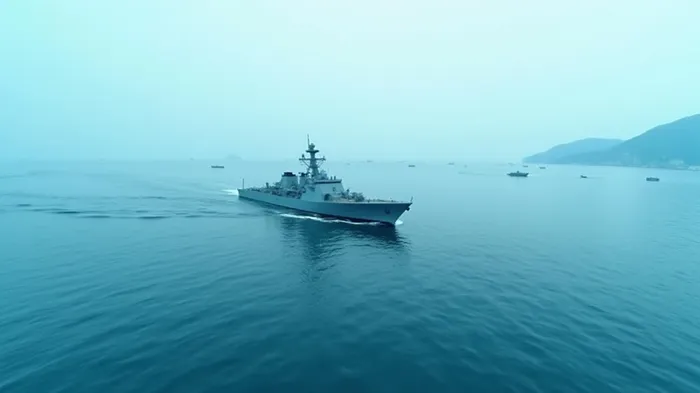
The Trigger: PLA’s Military Show of Force
On April 22, 2025, the Chinese People’s Liberation Army (PLA) launched a large-scale exercise in the Taiwan Strait, deploying warships, fighter jets, and ballistic missiles. The PLA Southern Theater Command framed the drills as a “defensive response” to U.S. military activities, including the nearby USS Carl Vinson aircraft carrier strike group. This move marked the largest visible military mobilization in the strait since the 1995-96 crisis, with analysts noting its proximity to Taiwan’s critical shipping lanes.
The U.S. Department of Defense responded on April 25 by issuing an evacuation alert for American citizens in Taiwan, citing intelligence of PLA missile deployments to Fujian Province. Defense officials emphasized that Beijing’s actions reflected “heightened military readiness,” raising fears of accidental escalation.
Market Impact: Defense Sectors Soar, Tech Stocks Falter
The PLA’s exercises sent shockwaves through global markets, with defense and cybersecurity stocks surging while tech and export-reliant companies faced headwinds.
- Defense Contractors Thrive: U.S. defense giants like Lockheed MartinLMT-- (up 8.2% week-on-week) and Raytheon (up 6.5%) benefited from renewed demand for missile systems and cyber defense tools.
- Tech and Supply Chains Wobble: Taiwan Semiconductor Manufacturing Company (TSM) shares dipped 3.1% amid concerns over disruptions to global semiconductor supply chains.
Investors also turned cautious on regional ETFs, with the iShares MSCI Taiwan ETF (EWT) falling 2.8% as geopolitical risks outweighed economic data optimism.
Regional Alliances Tighten: Japan and the U.S. Pivot
The U.S. and Japan moved swiftly to counterbalance Beijing’s assertiveness. On April 26, Japan deployed two Aegis-equipped destroyers and F-35 fighter jets to the East China Sea, invoking Article 5 of the U.S.-Japan Security Treaty. This marked the first time Japan’s Self-Defense Forces explicitly cited the treaty’s collective defense clause in response to cross-strait tensions.
Analysts at Nomura noted that Tokyo’s actions reflect a shift from “passive deterrence” to proactive alignment with U.S. Indo-Pacific strategy. Meanwhile, U.S. arms sales to Taiwan—including a $12 billion deal for HIMARS rocket systems—highlighted growing bipartisan support for Taipei’s defense capabilities.
ASEAN’s Delicate Balancing Act
On April 27, ASEAN foreign ministers issued an emergency statement urging “maximum restraint” but avoided naming China or Taiwan to preserve internal unity. The bloc’s reluctance to take sides underscores its economic dependency on Beijing, despite regional security concerns.
However, Singapore’s defense minister privately warned that prolonged tension could force ASEAN members to “pick sides,” with implications for trade and investment flows.
Conclusion: Navigating the New Geopolitical Reality
Investors must prepare for prolonged volatility in East Asia, where military posturing and diplomatic brinkmanship are here to stay. Key takeaways:
- Defense Sectors: Allocate to firms with exposure to missile defense, cybersecurity, and advanced manufacturing (e.g., Northrop Grumman, Palantir).
- Tech and Supply Chains: Diversify semiconductor investments beyond Taiwan, exploring U.S. or European alternatives (e.g., Intel’s $20B Ohio chip plant).
- Geopolitical Hedging: Consider commodities like gold or Treasury bonds as safe havens during crises, while monitoring regional ETFs for rebounds.
The PLA’s April 22 exercise and subsequent military moves underscore that cross-strait tensions are no longer a theoretical risk but a material driver of global markets. For now, the “no war” scenario prevails, but investors must remain vigilant—history shows that miscalculations in the Taiwan Strait can rewrite economic outcomes overnight.
Data sources: U.S. DoD reports, Nikkei Asian Review, Bloomberg Intelligence, Taiwan Ministry of National Defense statements.





Comentarios
Aún no hay comentarios