
AT&T's Crisis Response and Its Implications for Shareholder Value
Strategic Spectrum Acquisitions: A Regulatory and Competitive Lifeline
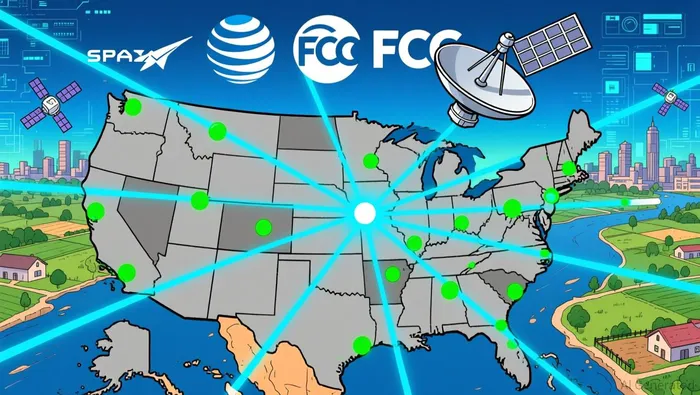
AT&T's acquisition of spectrum from EchoStar was a pivotal move to comply with Federal Communications Commission (FCC) mandates requiring spectrum holders to deploy 5G networks, as reported by Cordcutters News. This transaction, part of a broader $44.25 billion industry-wide reallocation of spectrum rights (including deals with SpaceX), allowed AT&T to bolster its infrastructure while enabling EchoStar to clear regulatory hurdles, according to the same report. Analysts argue that such deals are emblematic of a sector-wide shift toward collaborative compliance, where companies trade assets to meet federal obligations, as noted in a Voip Review article. For AT&T, the acquisition provided a critical bandwidth boost, particularly in rural markets, enhancing its ability to deliver high-speed mobile services and maintain its competitive edge against rivals like Verizon and T-Mobile, as Cordcutters News reported.
Financial Metrics and Shareholder Value: A Double-Edged Sword
While the spectrum deal strengthened AT&T's infrastructure, it also exacerbated financial risks. By Q3 2025, the company's net debt-to-EBITDA ratio had climbed to 3.0x, with total debt reaching $139.5 billion despite $4.9 billion in free cash flow, according to a Forbes analysis. This debt load, coupled with a P/E ratio of 14.2 and a 15.8% free cash flow margin, highlights the tension between aggressive capital expenditures and investor expectations, as Forbes noted. Historically, AT&T's stock has been prone to sharp corrections-over 30% declines in less than two months-suggesting that even robust financial metrics may not insulate it from market volatility, the Forbes analysis observed.
Investors must weigh these risks against AT&T's long-term growth prospects. The company's Q3 2025 financial report showed resilience, with $30.7 billion in revenue and $6.1 billion in operating income, according to a Yahoo Finance report. Additionally, partnerships like the one with Thales to deploy eSIM solutions for IoT devices underscore AT&T's innovation efforts, potentially opening new revenue streams in sectors like smart cities and healthcare, Yahoo Finance reported.
Investor Confidence and Trust: A Mixed Picture
Analyst opinions on AT&T's crisis response are cautiously optimistic. The spectrum deals are praised for addressing regulatory risks and enhancing 5G capabilities, according to the Voip Review. But questions linger about the company's debt sustainability. Roger Entner of Recon Analytics notes that while AT&T's actions demonstrate corporate resilience, the telecom sector's reliance on large-scale acquisitions could deter long-term trust if debt burdens persist, the Voip Review added.
Investor sentiment is further complicated by the broader telecom landscape. The sector is forecasted to see growth in mobile and fixed broadband revenues, driven by initiatives like the BEAD program, as outlined in a Global Newswire report. AT&T's ability to leverage its spectrum holdings in this environment will be key to restoring trust. For now, the company's reiterated 2025 adjusted EBITDA growth guidance of 3% or better offers a glimmer of stability, Yahoo Finance reported.
Conclusion: Balancing Resilience and Risk
AT&T's 2025 crisis response illustrates the delicate balance between strategic investment and financial prudence. While the spectrum deals have fortified its 5G infrastructure and regulatory compliance, the associated debt load and stock volatility pose challenges for long-term trust. For utility/telecom investors, the lesson is clear: corporate resilience in this sector requires not just bold moves but also disciplined capital management. As AT&T navigates these crosscurrents, its ability to convert short-term fixes into sustainable value will determine its place in a 5G-centric future.







Comentarios
Aún no hay comentarios