
Cramer's Roblox Call: A $70 Speculative Bet on a $38.5B Flywheel
The immediate event is clear. On Monday, CNBC's Jim Cramer gave RobloxRBLX-- his explicit blessing, calling it a "real deal" and advising investors to "put on a position in Roblox right now, right here." The stock was trading around $70 per share at the time, having climbed 8.5% since its direct listing almost two weeks prior. This isn't a casual recommendation; it's a tactical endorsement of a high-valuation name without consistent profits, framed squarely as a speculative bet.
Cramer's qualification is critical to the setup. He stated, "although I'd like it of course at a much lower level," immediately framing the entry point as suboptimal. He then defined the speculative framework: owning such names is fine "as long as you understand that you can lose a great deal of money when you're wrong." He characterized these as companies with high valuations but not necessarily much profit, creating a high-risk, high-reward profile. This is the core of the event-driven trade: Cramer is not recommending a core holding, but a calculated, high-stakes position for those willing to accept the volatility.
The catalyst, therefore, is Cramer's stamp of approval on a stock already up sharply from its IPO. The investment question is whether this endorsement, coupled with the stock's elevated price, creates a mispricing or simply validates a premium already priced in. The risk/reward hinges entirely on the speculative thesis-whether Roblox's "flywheel-like momentum" can justify its current valuation of over $38 billion, or if the recent pop leaves it vulnerable to a pullback as the economy reopens.
The Mechanics: Growth Flywheel vs. New Safety Costs
The speculative bet hinges on a simple equation: can Roblox's massive user base and creator ecosystem keep accelerating its revenue flywheel? The company's narrative rests on that momentum, but a new, mandatory safety initiative introduces a direct cost and behavioral risk.
The core driver remains its scale. With millions of daily active users building and playing in its virtual worlds, Roblox has a powerful network effect. The goal is to convert that engagement into bookings through in-game purchases and premium subscriptions. The recent stock pop suggests the market is betting this flywheel is still spinning fast.
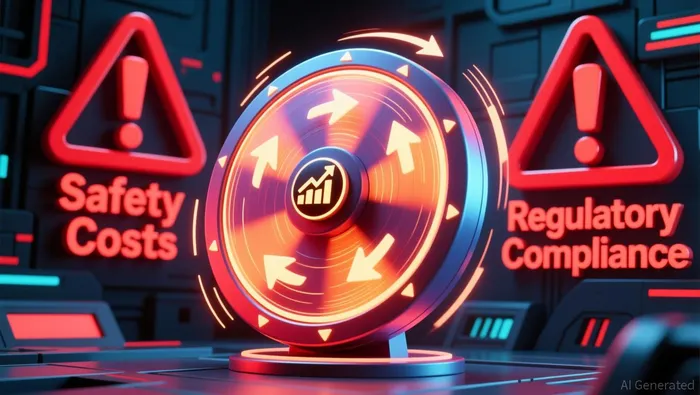
Yet the immediate financial impact of a new global safety push is now in play. In early January, Roblox began rolling out mandatory, privacy-focused facial age verification for chat worldwide. This is a significant operational and infrastructure investment, aimed at strengthening regulatory compliance and platform safety. While necessary, such measures add to the company's already heavy costs for content moderation, developer payouts, and server operations.
The risk is a potential trade-off. Stricter age gating and verification could dampen user interaction, particularly in social features that drive engagement. If chat becomes less fluid or more cumbersome, it might pressure the very user activity that fuels the revenue flywheel. This creates a near-term vulnerability: higher safety and infrastructure costs are now being incurred, and the company's path to profitability depends on these expenses not outpacing monetization gains from a stable or growing user base.
For the event-driven strategist, this is the tension. Cramer's call is a bet on the flywheel's strength. The new safety costs, however, represent a tangible headwind that could slow it down. The setup now requires watching whether engagement holds firm against these added pressures.
The Setup: Valuation, Momentum, and Key Catalysts
The stock is trading at $70 per share, up 8.5% from its direct listing almost two weeks ago, with a market cap of roughly $38.5 billion. This places it squarely in the speculative zone, with a wide 52-week range from $50.10 to $150.59 that underscores its high volatility. Cramer's endorsement arrives at a point of elevated price action, making the immediate risk/reward setup critical.
Valuation is the central tension. The stock trades at about 17 times next year's forecast bookings, a premium that Cramer himself acknowledged as "pretty expensive." He noted it's cheaper than Unity but still commands a high multiple, justified only by the expectation of sustained "flywheel-like momentum." The setup now is whether this multiple can hold as the company navigates new costs and a reopening economy.
The primary near-term catalyst is clear: evidence that user engagement and bookings can stabilize. After a period of share price weakness, the market needs proof that the core growth engine remains intact. This is the thesis Cramer is betting on, arguing the stay-at-home economy helped Roblox break out and that it can maintain momentum. Any data showing bookings growth holding firm or user metrics stabilizing would validate the speculative bet.
The biggest risk, however, is a margin squeeze. The company is incurring new, mandatory safety and infrastructure costs, like the mandatory facial age verification rollout in early January. At the same time, it faces heavy, ongoing expenses for content moderation and developer payouts. The path to profitability depends on these revenue-generating costs not outpacing the growth in bookings. If they do, the high valuation becomes unsustainable, and the stock's wide trading range could compress sharply lower.
The bottom line is a classic event-driven trade. The catalyst is Cramer's call on a stock already up from its IPO. The setup hinges on the next few quarters delivering booking growth that justifies the premium, while the company manages its rising cost base. For a tactical investor, the entry point is not ideal, but the trade is defined by this binary outcome: the flywheel continues to accelerate, or the new safety costs and reopening pressures break the momentum.





Comentarios
Aún no hay comentarios