
Cracker Barrel's Strategic Rebound: Assessing Brand Resilience and Operational Turnaround Potential Post-Logo Controversy
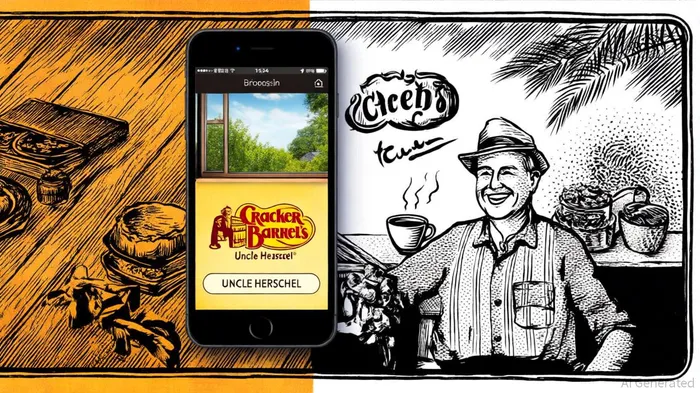
In the wake of a high-profile rebranding misstep, Cracker Barrel Old Country StoreCBRL--, Inc. (NASDAQ: CBRL) has embarked on a strategic recalibration to restore its brand equity and operational momentum. The company's 2025 logo and store design overhaul, which sparked an 8% drop in customer traffic and a $100 million stock market loss[1], has been swiftly reversed. CEO Julie Felss Masino's roadmap now prioritizes nostalgia-driven engagement, loyalty program expansion, and menu innovation—a strategy that could either rekindle consumer trust or underscore the challenges of balancing modernization with heritage.
Brand Resilience: Nostalgia as a Strategic Anchor
Cracker Barrel's core identity has long been rooted in Americana, with its “Uncle Herschel” mascot and “Old Country Store” tagline evoking a sense of warmth and tradition. The 2025 rebrand, which stripped these elements in favor of a minimalist aesthetic, was met with accusations of eroding the brand's soul[1]. According to a report by Forbes, 76% of surveyed customers—including 83% of Gen Z respondents—preferred the original design, highlighting the enduring power of nostalgia in consumer decision-making[1].
Masino's pivot back to heritage-centric messaging aligns with broader industry trends. A 2025 prediction report by Modern Restaurant Management notes that 65% of off-premises diners are influenced by loyalty programs that emphasize personalized, emotionally resonant experiences[2]. Cracker Barrel's “Front Porch Feedback” initiative, which invites customers to share preferences post-visit, and its renewed focus on menu staples like Uncle Herschel's breakfast, reflect this shift. The company has also reintroduced freshly-made biscuits—a nod to its roots—to drive value perception[3].
Operational Adjustments: Loyalty Programs and Cost Management
The loyalty program has emerged as a critical lever for Cracker Barrel's recovery. With 9 million members—35% of whom now drive tracked sales—the program has expanded to include experiential rewards such as exclusive menu access and personalized feedback loops[4]. This strategy mirrors industry best practices: AI-powered loyalty platforms, as noted by SimpleLoyalty, have demonstrated a 45% higher engagement rate and 20-25% retention gains[5].
However, operational challenges persist. Tariff-related cost pressures and SKU rationalization efforts complicate profit margins, with adjusted EBITDA projected to fall to $150–$190 million in fiscal 2026[6]. While the company has paused remodeling efforts to conserve capital, critics argue that this delay risks stagnation in a competitive market. Analysts at Bloomberg caution that Cracker BarrelCBRL-- must “strike a balance between innovation and authenticity” to avoid further reputational damage[7].
Financial Outlook and Investor Sentiment
Cracker Barrel's Q4 2025 results—5.4% higher comparable store sales and 4.4% revenue growth—were achieved before the rebrand backlash, masking underlying vulnerabilities[8]. For fiscal 2026, the company forecasts revenue of $3.35–$3.45 billion, below the $3.52 billion analyst consensus[9]. Despite a post-reversal 8% stock surge[10], long-term investor confidence remains fragile. A major shareholder had previously labeled the rebranding “obvious folly,” warning of a disconnect between leadership's vision and customer sentiment[11].
Conclusion: A Delicate Balancing Act
Cracker Barrel's recovery hinges on its ability to harmonize nostalgia with innovation. While the loyalty program's growth and menu-driven value propositions offer hope, the company must navigate cost pressures and rebuild trust with a skeptical customer base. As Stephen Hahn of RepTrak notes, “The brand's promise of old-world hospitality must be consistently delivered—both in design and experience—to regain its competitive edge[13].” For investors, the path forward remains fraught with uncertainty, but the resilience of Cracker Barrel's heritage suggests a potential for long-term stabilization—if executed with cultural sensitivity.





Comentarios
Aún no hay comentarios