
Cracker Barrel's Governance Crossroads: Activist Investor Sardar Biglari and the Battle for Board Control
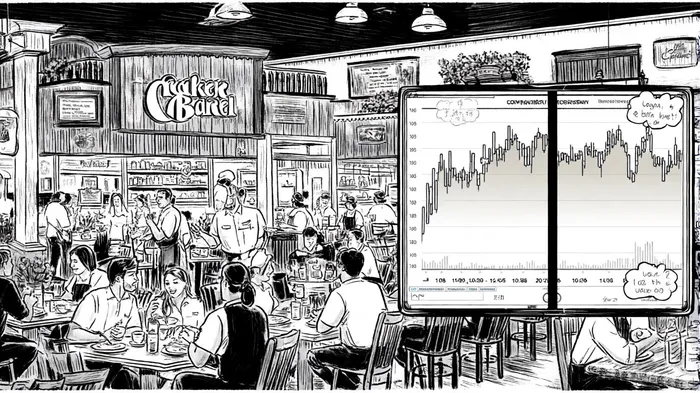
The ongoing tug-of-war between activist investor Sardar Biglari and Cracker BarrelCBRL-- Corporation's board has escalated into a high-stakes governance battle, raising critical questions for shareholders about strategic direction, risk management, and the long-term value of the 65-year-old restaurant chain. With Biglari seeking to overhaul the board and push for short-term shareholder returns, the company's leadership has doubled down on its $700 million transformation plan, framing the conflict as a clash between speculative activism and disciplined, long-term stewardship.
Biglari's Aggressive Campaign and Historical Precedents
Biglari, a seasoned activist with a controversial track record in the restaurant sector, has launched his sixth attempt in 13 years to seize control of Cracker Barrel's board. Holding a 9.3% stake in the company, he is targeting five of the 10 available seats, leveraging his ownership to amplify pressure on management[1]. His strategy mirrors past efforts at Steak 'n Shake and Western Sizzlin', where his interventions were marked by aggressive cost-cutting and dividend hikes—approaches critics argue prioritized short-term gains over sustainable growth. For instance, under Biglari's leadership, Steak 'n Shake saw same-store sales decline by 12% annually between 2018 and 2022, while Western Sizzlin' shuttered 107 locations, leaving just 33 units by 2024[2].
The activist's latest move has been amplified by his public criticism of Cracker Barrel's leadership, including a vocal backlash against the company's August 2025 rebranding effort. The rollout of a modernized logo, which removed the chain's signature “CB” monogram in favor of a minimalist design, sparked widespread consumer backlash. Biglari seized the moment, using social media and his investment firm, Biglari HoldingsBH--, to call for the CEO's resignation and frame the logo change as emblematic of “tone-deaf decision-making”[3].
Board's Defense of Long-Term Strategy
Cracker Barrel's board has responded with a detailed investor presentation, emphasizing its $700 million transformation plan as a blueprint for revitalizing the brand. The initiative includes menu modernization, store renovations, and expanded digital capabilities—moves the board argues are essential to competing in a fragmented restaurant market[2]. “Biglari's proposals ignore the foundational work required to position Cracker Barrel for sustained growth,” the board stated in its presentation, which was shared with shareholders in late August 2025.
The board has also scrutinized Biglari's nominees, particularly Milena Alberti-Perez, a former investment banker with no experience in the restaurant or consumer goods sectors. In a pointed rebuke, the board highlighted Alberti-Perez's admission that she had never visited a Cracker Barrel location—a stark contrast to the deep industry expertise of current directors like Carl Berquist (former CEO of Darden Restaurants) and Meg Crofton (retired COO of Starbucks)[2].
Governance Risks and Investor Implications
The conflict underscores broader risks for investors in companies facing activist campaigns. While Biglari's focus on capital returns—such as boosting dividends or repurchasing shares—could appeal to shareholders seeking immediate gains, the board warns that such tactics risk undermining long-term value. “Extracting capital through unsustainable dividends would leave Cracker Barrel vulnerable to macroeconomic headwinds and competitive pressures,” the board's presentation cautioned[2].
Data from the restaurant sector supports this concern. Chains that have pursued aggressive shareholder return strategies without reinvesting in operations, such as Chili's parent company Brinker InternationalEAT--, have seen eroded brand equity and declining same-store sales in recent years. Cracker Barrel's current strategy, by contrast, aligns with industry trends toward omnichannel integration and experiential dining—areas where the company has lagged behind peers like Applebee's and Red Lobster[2].
The Path Forward
As the proxy battle nears its climax, investors must weigh the competing visions. Biglari's camp argues that Cracker Barrel's board has been slow to adapt, pointing to stagnant same-store sales growth (1.2% in 2024) as evidence of complacency[2]. The board, however, maintains that its multiyear plan is already yielding results, citing a 4.5% increase in digital orders and a 7% rise in customer satisfaction scores since 2023[2].
The outcome will likely hinge on shareholder sentiment toward risk. If Biglari secures a board majority, the company could pivot toward cost-cutting and asset sales—a path that may boost short-term earnings but risks alienating the brand's loyal customer base. Conversely, a victory for the current board would reinforce its commitment to a measured, long-term strategy, albeit one that has yet to fully address the challenges of a rapidly evolving restaurant landscape.
For now, the battle remains unresolved. But one thing is clear: Cracker Barrel's governance drama is a microcosm of a larger debate in corporate America about the role of activist investors—and the delicate balance between innovation and tradition in preserving brand legacy.





Comentarios
Aún no hay comentarios