
Crédit Agricole's Strategic Move into Crelan Group: Assessing the Investment Implications of Cross-Border Banking Consolidation in Europe
The recent acquisition of a 9.9% minority stake in Crelan Group by Crédit Agricole marks a pivotal moment in European banking consolidation. This strategic partnership, finalized in October 2025, underscores the growing trend of cross-border collaboration among European banks to enhance scale, diversify risk, and navigate regulatory complexities. For investors, the deal offers a lens through which to evaluate the opportunities and challenges of a fragmented banking landscape and the potential for value creation in an increasingly integrated market.
Strategic Rationale: Synergies and Financial Resilience
Crédit Agricole's investment in Crelan is rooted in a mutual alignment of cooperative banking principles and complementary strengths. By leveraging Crelan's deep local expertise in Belgium and its strong ties to regional SMEs and individuals, Crédit Agricole gains a foothold in a market where it previously had limited presence. Conversely, Crelan benefits from Crédit Agricole's global capabilities in asset management (via Amundi), private banking (via Indosuez Wealth Management), and leasing (via CA Leasing & Factoring), as noted in Crédit Agricole's press release.
Financially, the partnership is a win-win. Crelan's phased CET1 capital ratio is projected to rise by 2.1%, bolstering its capacity for organic growth and risk management, according to a GlobeNewswire release. For Crédit Agricole, the transaction has a negligible impact on its own capital ratios, minimizing regulatory friction while enabling access to Crelan's €45 billion asset base, as highlighted in an SSM speech. This structure-a minority stake rather than full acquisition-reflects a cautious approach to cross-border integration, mitigating cultural and operational risks while preserving Crelan's cooperative identity.
Broader Trends: Cross-Border Consolidation in a Fragmented Market
Crédit Agricole's move aligns with broader trends in European banking. According to an Oliver Wyman report, cross-border M&A accounted for 30% of deal value since 2020, driven by the need for scale and cost synergies. However, structural barriers persist. Regulatory fragmentation, inconsistent supervisory practices, and the absence of a unified European Deposit Insurance Scheme (EDIS) continue to hinder deeper integration, as documented in an AFME report. For instance, the average EU merger approval process takes 285 days-far longer than in the U.S. or Switzerland-compounding execution risks and costs, according to an AcuityKP analysis.
Despite these challenges, subregional consolidations, particularly in culturally or economically aligned markets, are gaining traction. The ECB has emphasized the benefits of cross-border integration in an ECB Financial Stability article. Yet, as seen in UniCredit's stalled bid for Commerzbank, political resistance and integration complexities remain significant hurdles, as argued in a Retail Banker analysis.
Investment Implications: Opportunities and Risks
For investors, the Crédit Agricole-Crelan partnership highlights both opportunities and cautionary signals. On the positive side, the deal exemplifies how strategic minority stakes can unlock value without overextending balance sheets. Crelan's improved CET1 ratio and expanded service offerings position it to capitalize on Belgium's stable economic environment, while Crédit Agricole's exposure to a high-growth regional bank could enhance its fee-based income streams, in line with analyses of bank M&A dynamics.
However, risks linger. Cross-border deals often face execution challenges, as evidenced by the mixed performance of past consolidations. A study by the European Central Bank found that while cross-border mergers historically delivered stronger profitability gains than domestic deals, post-crisis regulatory scrutiny has dampened returns, as noted in the EBA's June 2025 report. Additionally, geopolitical tensions and economic protectionism could escalate, particularly in sectors deemed strategically sensitive, according to a Financier Worldwide article.
Conclusion: A Model for Prudent Integration
Crédit Agricole's partnership with Crelan offers a blueprint for cross-border consolidation in Europe: a measured, collaborative approach that balances ambition with risk management. While the deal avoids the pitfalls of full-scale acquisitions, it still requires careful execution to realize synergies. For investors, the transaction underscores the importance of evaluating not just financial metrics but also the political, regulatory, and cultural dynamics that shape European banking. As consolidation trends accelerate, banks that prioritize strategic alignment and stakeholder engagement-like Crédit Agricole and Crelan-are likely to emerge as leaders in a more integrated European financial landscape.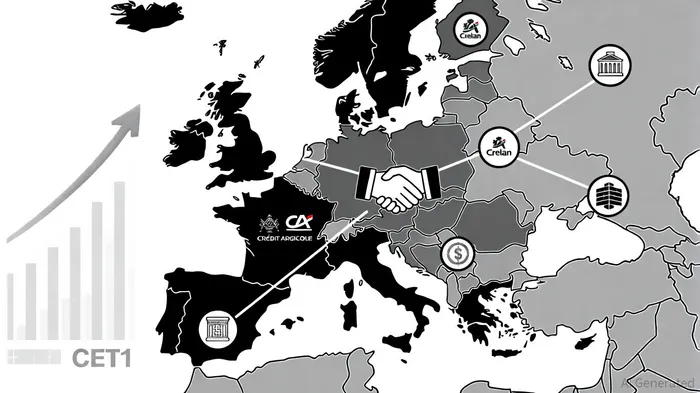







Comentarios
Aún no hay comentarios