
U.S. CPI and Its Strategic Implications for Crypto Allocation
The interplay between U.S. inflation metrics, Federal Reserve policy, and liquidity-driven market dynamics remains a critical axis for crypto asset allocation strategies. As we approach late 2025, the absence of real-time CPI data for December 2025 necessitates a reliance on historical correlations, forward-looking projections, and pre-December 2025 trends to assess how inflationary pressures and monetary policy might shape crypto markets. This analysis synthesizes these elements to provide actionable insights for investors navigating the evolving macroeconomic landscape.
The Fed's Inflation Fight: A Historical Lens
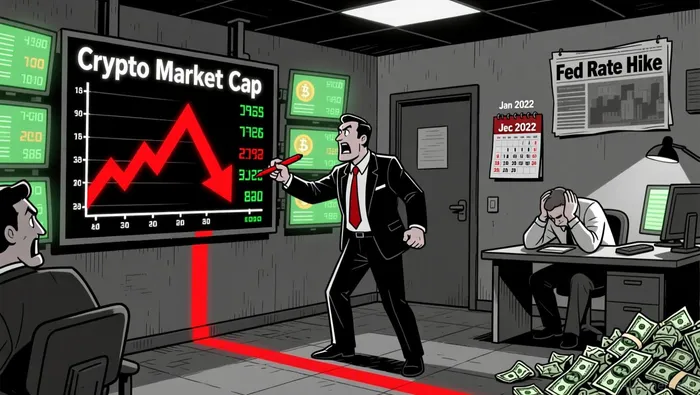
The Federal Reserve's response to inflation has historically dictated liquidity conditions across asset classes. For instance, during the 2022 tightening cycle, the Fed's aggressive rate hikes-aimed at curbing multi-decade-high CPI figures-led to a 60% drawdown in the crypto market, as liquidity contracted and risk appetite waned. This underscores crypto's sensitivity to monetary policy, particularly its reliance on cheap, abundant liquidity to sustain speculative demand.
While December 2025 CPI data remains elusive, pre-December 2025 trends suggest a Fed leaning toward caution. If inflationary metrics align with the Fed's 2.1% target-a scenario implied by soft inflation data observed in late 2024-policymakers may prioritize economic stability over further tightening, potentially extending a pause in rate hikes. Conversely, persistent inflationary surprises could reignite hawkish sentiment, tightening liquidity and pressuring crypto valuations.
Liquidity-Driven Dynamics: The Crypto Nexus
Crypto markets are inherently liquidity-sensitive, with institutional flows and margin debt acting as amplifiers of Fed policy. A 2023 study by the Federal Reserve Bank of St. Louis highlighted that a 100-basis-point increase in the federal funds rate historically correlates with a 15–20% decline in crypto market capitalization, driven by reduced leveraged speculation and higher opportunity costs for capital.
In late 2025, this dynamic remains pertinent. If the Fed signals prolonged low-rate environments-perhaps through extended quantitative easing (QE) or yield curve control-liquidity inflows could reinvigorate risk-on assets like crypto. Conversely, a pivot toward tightening would likely trigger outflows, exacerbating volatility. Investors must monitor forward guidance in Fed minutes and speeches, as even perceived shifts in policy intent can trigger liquidity-driven selloffs.
Strategic Implications for Crypto Allocation
Given these dynamics, crypto allocation strategies in late 2025 must balance macroeconomic signals with liquidity risk management. Three key considerations emerge:
Hedging Against Policy Uncertainty: A diversified crypto portfolio-weighted toward deflationary assets (e.g., BitcoinBTC-- with capped supply) and layer-1 protocols with strong institutional adoption-can mitigate downside risks during liquidity crunches. For example, Bitcoin's performance during the 2022 tightening cycle outpaced altcoins, reflecting its role as a liquidity proxy.
Timing the Fed's Pivot: Historical data suggests that crypto markets often bottom before Fed policy shifts. If inflation data in late 2025 indicates a slowdown, early positioning in crypto could capitalize on a potential dovish pivot. However, this requires rigorous risk management, given the sector's volatility.
Leveraging Derivatives for Liquidity Management: Perpetual futures and options markets offer tools to hedge against liquidity shocks. For instance, during the 2024 crypto rally, institutional investors used Bitcoin options to lock in gains while maintaining exposure to upside potential.
Conclusion
While the absence of December 2025 CPI data complicates precise forecasting, historical patterns and pre-December 2025 trends provide a framework for strategic crypto allocation. Investors must remain agile, prioritizing liquidity risk management and aligning allocations with Fed policy expectations. As the Fed's balance sheet and inflation trajectory remain pivotal, crypto's role as both a speculative and inflation-hedging asset will hinge on the delicate interplay between monetary policy and market liquidity.
According to Bloomberg, "2022 Fed Rate Hikes and Crypto Market Volatility," 2022.
According to the Federal Reserve Bank of St. Louis, "Interest Rates and Crypto Market Correlations," 2023.
According to CoinDesk, "Bitcoin's Performance During 2022 Tightening Cycle," 2023.
According to Reuters, "Institutional Use of Crypto Derivatives in 2024," 2024.






Comentarios
Aún no hay comentarios