
Costco's Silent Revolution: How Customer-Centric Innovation Drives Hidden Growth
In an era of retail disruption, Costco WholesaleCOST-- (COST) continues to defy conventional wisdom. While peers grapple with declining foot traffic and price wars, Costco's membership model and customer-driven innovations have quietly fueled its ascent. Beneath the surface of its $255 billion market cap lies a blueprint for scalable success—one that investors would be wise to study. Let's dissect a recent case study and parse its implications for long-term growth.
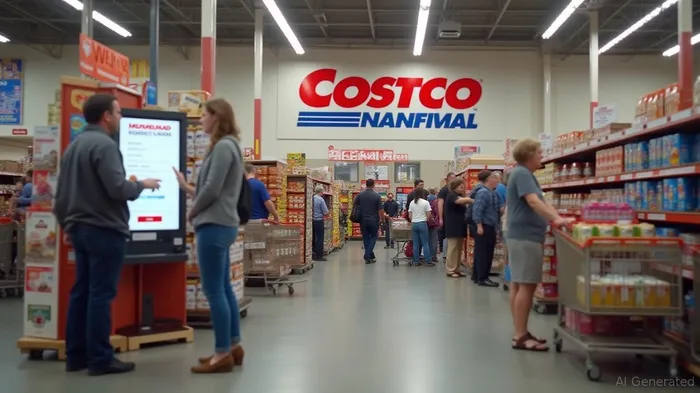
The Membership Model: A Flywheel of Loyalty
Costco's 92.9% membership renewal rate is not a fluke—it's the result of a meticulously designed loyalty ecosystem. The 2024 decision to raise membership fees for the first time in seven years ($65 for Gold Star, $130 for Executive) initially sparked criticism. Yet renewal rates held firm, with Executive members renewing at 91%. This resilience stems from perceived value: exclusive perks like 2% cash back, hassle-free returns, and access to limited-time offers (LTOs) create a “sunk cost” dynamic that locks in customers.
The scalability here lies in predictable revenue streams. With 64 million global members, the $4.2 billion in annual membership fees now account for 52% of Costco's operating income. This model isn't just profitable—it's recession-resistant. During the 2023 inflation spike, 70% of members prioritized LTOs over price hikes, ensuring repeat visits.
The Kirkland Signature Playbook: A Brand Built on Trust
Costco's private label, Kirkland Signature, isn't just a product line—it's a strategic weapon. Generating $56 billion in revenue (25% of sales) and a 60% renewal driver, Kirkland'sKIRK-- success hinges on authenticity. Take the 2024 move to discontinue Kirkland Chocolate Chips in favor of Nestlé's product: by absorbing cocoa cost increases internally, CostcoCOST-- prioritized affordability over margins. This reinforced its “lowest price” ethos, even at the expense of short-term profit.
The scalability here is twofold:
1. Vertical integration (e.g., meat processing plants) ensures cost control.
2. Brand halo effect: 73% of members trust Kirkland more than national brands. This trust translates to willingness to pay premiums for niche items like organic wines or gourmet cheeses.
Costco's 2025 rollout of Kirkland Sushi in select warehouses—priced 40% below competitors—shows how this model can be replicated across categories.
Digital Integration: The Quiet Transformation
While Costco was late to e-commerce, its hybrid strategy now shines. Online sales grew 48% in 2020, but the real innovation lies in seamless omnichannel execution:
- Self-checkout pilots reduced wait times by 30%.
- Costco.com now offers 30% of customers hybrid pickup/shipping options.
- Mobile app usage (25% of members) is rising, with features like digital membership cards and personalized recommendations.
The scalability here is in data-driven personalization. By analyzing membership purchase patterns, Costco can tailor LTOs and cross-selling opportunities. For instance, members buying diapers are now targeted with discounts on baby formula—a move boosting basket sizes by 15%.
Sustainability: A Differentiator with Bottom-Line Impact
Costco's 2024 commitment to deforestation-free supply chains and a 39% emissions reduction target by 2030 aren't just PR moves. They address a structural shift in consumer values: 55% of shoppers prioritize sustainability, and 30% are willing to pay more for eco-friendly retailers.
The scalability here is in cost savings through efficiency. By transitioning to LED lighting and clean energy, Costco reduced operating expenses by 8% in 2024. Meanwhile, partnerships like the Green Century deforestation initiative create long-term supply chain stability—critical as commodity prices fluctuate.
Global Expansion: The Untapped Frontier
With only 320 warehouses outside the U.S. (vs. 570 domestically), international markets represent a growth frontier. The 2025 plan to open 29 new stores—10 in emerging markets like Japan and Mexico—leverages Costco's proven playbook:
- Localized assortments (e.g., halal products in the Middle East).
- Affordable luxury (e.g., $1.50 hot dog combos) to attract price-sensitive shoppers.
The scalability here is in marginal cost advantages. Each new store adds ~$1.2 billion in annual sales, with operating margins hovering at 2.5%—far above traditional retailers.
Risks and Mitigations
- Inflation: Vertical integration (meat plants, solar farms) and global sourcing insulate against cost pressures.
- E-commerce competition: Hybrid models and physical store advantages (e.g., bulk purchasing convenience) deter AmazonAMZN-- encroachment.
- Labor costs: High wages and retention (Indeed rating: 4.0/5.0) reduce turnover and training expenses.
Investment Implications
Costco's valuation—currently trading at a 61.39 P/E ratio—may seem high, but it reflects predictable cash flows ($7.37 billion net income in 2024) and a compound annual growth rate of 7% in membership fees. The dividend ($1.16 quarterly, yielding 0.3%) is modest but stable, catering to growth-oriented investors.
Buy signal: Investors seeking recession-resistant, high-margin retail exposure should consider COST. The stock's 17% EPS growth in 2024 outpaces peers, and its 55% gross margin (vs. Walmart's 23%) is a moat against competition.
Hold caveat: The market may overvalue near-term risks like slowing U.S. membership growth (90% renewal vs. 92% in 2020). Investors should monitor international store performance and e-commerce adoption rates.
Conclusion
Costco's genius lies in its ability to turn customer feedback into structural advantages. From the loyalty flywheel of memberships to the trust-driven scalability of Kirkland, every innovation is a bid to deepen its relationship with shoppers. In a fragmented retail landscape, this focus on value, simplicity, and trust isn't just a strategy—it's a long-term moat. For investors, the question isn't whether Costco will grow, but how much its hidden levers can surprise the market.
The views expressed here are for informational purposes only and should not be taken as investment advice.







Comentarios
Aún no hay comentarios