
Costco's Resilient Growth: A Testament to Its Enduring Value Proposition in a Shifting Retail Landscape
In the ever-evolving retail landscape, Costco WholesaleCOST-- has once again demonstrated its resilience and adaptability. The company's September 2025 sales results, reported at $26.58 billion-a robust 8.0% increase compared to the same period in 2024-underscore its ability to navigate macroeconomic headwinds while maintaining a compelling value proposition for consumers and investors alike[2]. This performance, coupled with a 26.1% surge in digitally enabled sales[2], highlights Costco's strategic alignment with shifting consumer behaviors and its commitment to long-term growth.
The Power of the Membership Model
Costco's enduring success is rooted in its membership-based business model, which generates consistent revenue and fosters customer loyalty. Membership fees accounted for 65% of the company's operating income in 2024[1], a testament to the stability this model provides. The shift toward premium Executive memberships-now responsible for 73.6% of worldwide net sales[3]-further amplifies this advantage. By offering tiered benefits such as 2% cashback and exclusive perks, CostcoCOST-- not only secures recurring revenue but also deepens customer relationships, creating a flywheel effect that drives both retention and spending.
This model is particularly well-suited to today's consumer climate, where shoppers are increasingly price-conscious and demand tangible value. According to a report by Impact.com, while online engagement with brands has risen, actual spending growth remains muted at just 0.4% year-over-year[1]. Costco's low product markups (11–14% on average[1]) and curated selection of high-quality goods, including its Kirkland Signature line, position it as a destination for value-driven consumers who prioritize quality without sacrificing affordability.
Digital Transformation and Strategic Partnerships
Costco's digital sales, which now include all transactions initiated via digital devices, grew by 26.1% in September 2025[2]. This outpaces the broader retail sector's e-commerce growth and reflects the company's aggressive investments in digital infrastructure. The partnership with Uber Eats, for instance, has expanded Costco's reach into the on-demand economy, allowing it to tap into new customer segments and revenue streams[2].
Moreover, Costco's omnichannel strategy-encompassing same-day delivery, Priority Delivery, and a robust online marketplace-mirrors the convenience-driven expectations of modern shoppers. As e-commerce accounts for 16% of net sales[3], the company is poised to capitalize on the growing intersection of physical and digital retail. This adaptability is critical in an era where consumers demand flexibility, yet remain wary of overspending.
Competitive Positioning and Expansion Plans
Costco's dominance in the warehouse club sector-accounting for 80% of total segment sales alongside Sam's Club[3]-is underpinned by its strategic advantages. Unlike Sam's Club, which relies on Walmart's purchasing network and national brands, Costco's limited SKU count (3,800 items[3]) and emphasis on private-label products create a distinct value proposition. Its economies of scale and high renewal rates (over 90%[3]) further reinforce customer loyalty, making it difficult for competitors to replicate its model.
Looking ahead, Costco's capital expenditures of $6.0 billion to $6.5 billion in 2026[3]-funding the opening of up to 35 new warehouses-signal confidence in its unit economics. This expansion, combined with its ability to negotiate favorable supplier terms and mitigate inflationary pressures[2], positions the company to sustain growth in both domestic and international markets.
Conclusion: A Model for Long-Term Value
Costco's September 2025 results are more than a quarterly win; they are a validation of a business model that prioritizes customer value, operational efficiency, and strategic foresight. In a retail environment marked by cautious consumer spending and digital disruption, Costco's membership model, digital innovation, and disciplined expansion offer a blueprint for long-term resilience. For investors, the company's ability to balance growth with profitability-while maintaining its core principles-makes it a compelling asset in an uncertain economic landscape.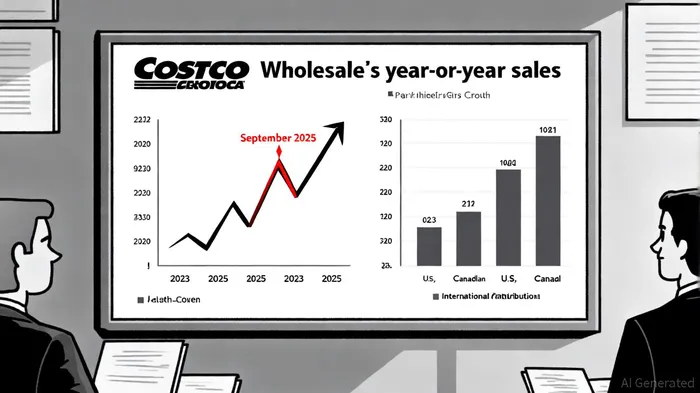







Comentarios
Aún no hay comentarios