
Costco vs. Dollar Tree: Which Retail Stock Offers a Stronger Long-Term Buy Opportunity in a Downturn?
The retail sector has long been a barometer of economic health, with consumer behavior shifting dramatically during downturns. As of 2025, two prominent players-Costco and Dollar Tree-stand at opposite ends of the retail spectrum, each offering distinct value propositions. This analysis evaluates their business model resilience and valuation trade-offs to determine which stock might better withstand or capitalize on a prolonged economic downturn.
Business Model Resilience: Membership vs. Price Sensitivity
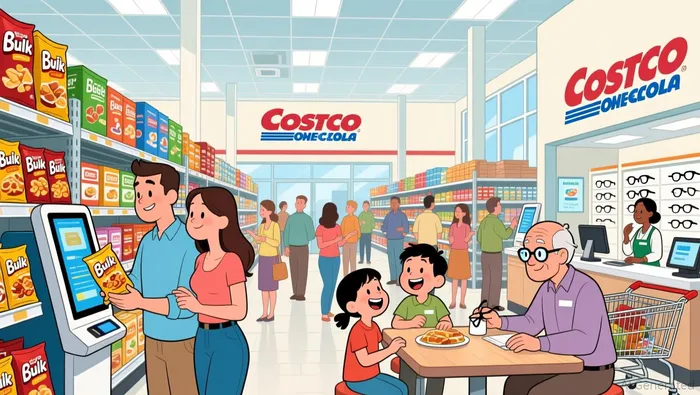
Costco's membership-based model has proven remarkably resilient during the 2020–2025 downturn. Its digitally enabled comparable store sales surged by 20.5% in Q1 2026, while membership fee revenue grew by 14.0% to $1.33 billion, underscoring the stickiness of its customer base. The company's ecosystem-encompassing bulk sales, in-store services (e.g., food courts, optical centers), and digital integration-has allowed it to maintain top-line growth even as broader economic pressures persist. However, Costco's stock has underperformed relative to the S&P 500 and Walmart, suggesting market skepticism about its ability to sustain these gains.
 Dollar Tree, by contrast, has thrived on its low-price, convenience-driven model. By 2025, it had attracted a surprising 60% of new customers earning over $100,000 annually, reflecting a broader shift toward value-conscious shopping across income brackets. This trend, driven by inflation and stagnant wage growth, has transformed dollar stores from supplemental destinations to primary shopping hubs. Dollar Tree's ability to adapt-raising prices strategically amid supply chain disruptions and expanding its multi-price strategy-has further solidified its appeal. However, its reliance on price sensitivity exposes it to margin pressures if economic conditions stabilize and consumers return to discretionary spending.
Valuation Trade-Offs: Overpriced Growth vs. Undervalued Potential
Costco's valuation metrics highlight a disconnect between its financial performance and market expectations. As of December 2025, its P/E ratio stands at 48.49, significantly above its 10-year average of 37.84. A PEG ratio of 5.5x suggests the stock is trading at a premium relative to earnings growth, raising questions about its long-term sustainability. Additionally, Costco's dividend yield of 0.5% lags behind both the market and peers like Dollar General (2.1% yield), making it less attractive for income-focused investors.
Dollar Tree's valuation story is more complex. While its P/E ratio is reported as -9.23 (TTM), indicating losses in the trailing twelve months, other sources suggest a forward P/E of 24.29 as of December 2025. A PEG ratio of 0.04 implies the stock is undervalued relative to earnings growth, though this metric's reliability is clouded by conflicting data. Analysts have mixed views: some argue the stock is overvalued by 13% compared to its fair value estimate of $115.27, while others maintain a "Hold" rating with a consensus price target of $112.30. Dollar Tree's lack of a dividend history further complicates its appeal, though its 70% year-to-date total shareholder return signals strong growth potential.
Strategic Considerations for Long-Term Investors
The choice between CostcoCOST-- and Dollar TreeDLTR-- hinges on divergent risk-return profiles. Costco's premium valuation reflects confidence in its durable membership model and ecosystem-driven loyalty, but it also implies limited upside if economic recovery outpaces expectations. Conversely, Dollar Tree's valuation appears more attractive on a growth-adjusted basis, though its exposure to margin volatility and execution risks demands closer scrutiny.
For investors prioritizing resilience amid prolonged downturns, Costco's diversified revenue streams and high customer retention may offer superior stability. However, those willing to tolerate short-term volatility for growth potential might find Dollar Tree's value-driven model more compelling, particularly as affordability remains a dominant consumer priority.
Conclusion
In a downturn, both Costco and Dollar Tree demonstrate strengths aligned with their business models. Costco's premium pricing and membership stickiness provide a buffer against economic shocks, albeit at a higher valuation cost. Dollar Tree's affordability appeal and expanding customer base position it to capitalize on sustained value-seeking behavior, though its valuation metrics remain ambiguous. For long-term investors, the decision ultimately depends on whether they prioritize defensive resilience or growth-driven upside-a trade-off that underscores the nuanced nature of retail investing in uncertain times.







Comentarios
Aún no hay comentarios