
Corporate Social Responsibility as a Strategic Shield: How Tech Giants Navigate Political Controversies to Mitigate Brand Risk
Case Studies: CSR in Action
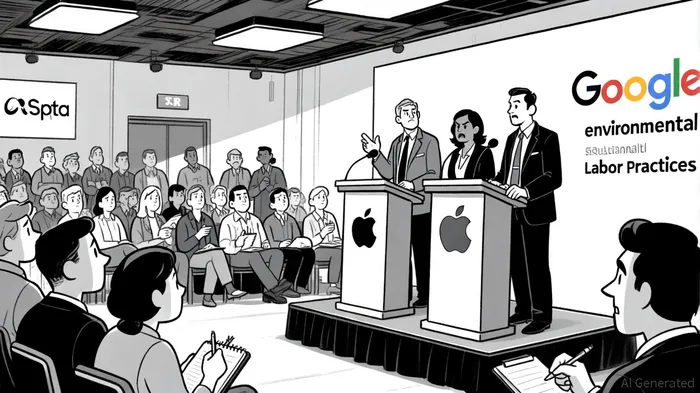
Apple has faced allegations of unethical labor practices in its supply chain, threatening its reputation for innovation and ethical business. In response, the company has prioritized supply chain transparency, including audits and partnerships with organizations like the Fair Labor Association. These efforts have helped restore consumer trust, though challenges persist, such as allegations of labor issues in Xinjiang, China [3].
Google has navigated antitrust lawsuits in the U.S. and EU, with a 2025 court ruling allowing it to retain its default search engine agreements with Apple. While avoiding a forced breakup, Google's compliance measures-such as adjusting its advertising practices-reflect a broader strategy of voluntary commitments to mitigate regulatory risks [1].
Meta has been fined under the EU's Digital Markets Act for its "pay-or-consent" advertising model and faces U.S. antitrust lawsuits over its acquisitions of Instagram and WhatsApp. The company has defended its practices as consumer-beneficial but has also invested in sustainability goals, such as becoming water positive by 2030 [2].
Academic Insights: The Effectiveness of CSR
Research underscores CSR's role in enhancing brand equity and consumer trust. A 2025 study in Sustainability found that CSR initiatives strengthen brand image through perceived quality and loyalty, with male consumers and regular purchasers showing stronger responses [2]. Another study in Corporate Governance noted that CSR aligns with legal frameworks like the EU's Non-Financial Reporting Directive, reducing regulatory risks and fostering stakeholder trust [4].
However, the effectiveness of CSR depends on authenticity. Symbolic efforts-such as greenwashing-can backfire, while substantive actions, like Apple's carbon neutrality goals, build long-term resilience [3].
Financial and Trust Impacts
The interplay between CSR and financial performance is evident in stock market reactions. After a 2025 antitrust ruling, Google's shares rose 5.6% in premarket trading, while Apple's stock climbed 4%, reflecting investor confidence in their strategic responses [3].
Consumer trust metrics, though less granular, reveal trends. A 2025 survey found 72% of users rate Google as the best search engine, yet 65% express concerns about result manipulation, highlighting a trust paradox [5]. Apple's sustainability efforts have bolstered its brand, but Meta lags due to lingering skepticism over data privacy controversies [6].
Conclusion: Strategic Implications for Investors
For investors, CSR is not merely a reputational shield but a strategic asset. Tech firms that integrate CSR into their governance-like Apple's Supplier Clean Energy Program or Google's renewable energy investments-demonstrate resilience in volatile regulatory environments. However, the politicization of CSR, as seen in Meta's alignment with Republican lawmakers over content moderation, complicates its universal effectiveness [2].
Investors should prioritize companies with transparent, measurable CSR goals and avoid those relying on symbolic gestures. As political controversies evolve, the ability to balance compliance, innovation, and stakeholder trust will define the long-term success of tech giants.







Comentarios
Aún no hay comentarios