
Corporate Social Responsibility and Shareholder Value in the Pet Care Sector: How Pet Valu's Companions for Change Program Drives Long-Term Growth
In an era where consumers increasingly prioritize ethical alignment with brands, corporate social responsibility (CSR) has evolved from a peripheral activity to a strategic imperative. Nowhere is this shift more pronounced than in the pet care sector, where pet owners-many of whom view their animals as family members-demand companies that reflect their values. Pet Valu's Companions for Change program, a flagship CSR initiative, exemplifies how purpose-driven strategies can foster brand loyalty, market differentiation, and long-term financial resilience. By analyzing the program's impact on Pet Valu's operations and shareholder value, this article explores the broader implications for the pet care industry.
The Companions for Change Program: A Catalyst for Social and Financial Impact
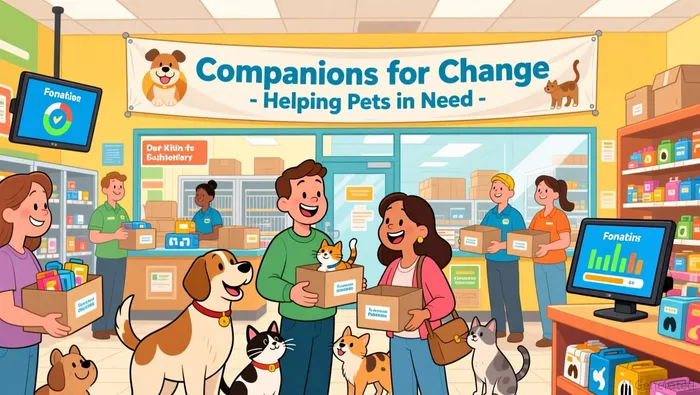
Since its inception in 2010, Pet Valu's Companions for Change program has raised nearly $37 million for Canadian animal rescues, shelters, and charities, with 100% of funds distributed directly to these organizations. In 2025 alone, the program surpassed $4.3 million in donations, a record-breaking year that underscores its growing influence. These contributions have enabled large-scale initiatives, including emergency relief for animals displaced by natural disasters, capital projects like mobile vet clinics, and partnerships with organizations such as the Lions Foundation of Canada Dog Guides, which trains service dogs for people with disabilities.
Financially, the program aligns with Pet Valu's broader ESG (Environmental, Social, and Governance) strategy, which emphasizes community engagement and ethical labor practices. While the program's direct financial returns are difficult to quantify, its indirect benefits-such as enhanced brand reputation and customer trust-are critical in a competitive market. For instance, Pet Valu's 2025 Q3 results showed a 4.9% year-over-year revenue increase to $289.5 million and 2.3% same-store sales growth, despite a 1.5% decline in adjusted EBITDA. These metrics suggest that while CSR initiatives may not immediately boost profitability, they contribute to sustainable revenue streams by reinforcing customer loyalty.
Brand Loyalty and Market Differentiation: The Companions for Change Advantage
Pet Valu's CSR efforts have become a cornerstone of its brand identity. By engaging customers in fundraising activities-such as Pet Appreciation Month and Companions for Change Month-the company fosters emotional connections that transcend transactional relationships. According to a 2024 study on pet-owner loyalty, attitudinal loyalty-driven by trust and shared values-is strongly correlated with long-term customer retention and increased spending. Pet Valu's focus on animal welfare resonates particularly well with younger demographics, such as Millennials and Gen Z, who prioritize ethical consumption.
This alignment has positioned Pet Valu as a market differentiator in a sector crowded with competitors. For example, the company's sponsorship of the Lions Foundation's guide-dog training program and its commitment to finding permanent homes for over 53,000 homeless pets since 2010 highlight its unique value proposition. Such initiatives not only enhance public perception but also create a narrative of responsibility and community stewardship, which competitors struggle to replicate.
Linking CSR to Shareholder Value: Evidence from Pet Valu and Industry Trends
While the direct financial impact of CSR programs can be challenging to isolate, academic research and industry trends suggest a positive correlation between responsible practices and shareholder value. A 2024 study on Korean firms found that CSR activities-particularly social contributions-were statistically linked to higher profitability and corporate value, as measured by Return on Assets (ROA) and Tobin's Q. Similarly, Pet Valu's 2023 ESG report emphasized that responsible business practices, including supply chain governance and emissions reduction, are integral to delivering "profitable growth and long-term value."
Pet Valu's financial performance further supports this link. From 2020 to 2025, the company achieved an average annual revenue growth of 11.5%, outpacing the 4.3% growth rate of the Specialty Retail industry. Its gross profit margin of 33.0% in Q3 2025 and return on equity of 123% reflect operational efficiency bolstered by strategic investments in safety technology and distribution networks. While these gains cannot be attributed solely to CSR, they demonstrate that integrating purpose into business models can enhance resilience and investor confidence.
Challenges and Opportunities in the Pet Care Sector
Despite its successes, Pet Valu faces challenges in balancing CSR commitments with profitability. The 1.5% decline in adjusted EBITDA in Q3 2025 highlights the financial pressures of scaling philanthropy and sustainability initiatives. However, the pet care sector's broader growth trajectory-driven by pet humanization, urbanization, and premiumization-creates opportunities for companies that align with evolving consumer expectations. As noted in a 2025 BCG report, pet owners are increasingly willing to pay premiums for brands that prioritize ethical and sustainable practices.
For Pet Valu, this means doubling down on initiatives like Companions for Change while leveraging data-driven strategies to optimize costs. The company's plans to open 40 new stores in 2025 and its focus on omnichannel convenience underscore its commitment to growth. By continuing to integrate CSR into its core operations, Pet Valu can maintain its leadership in a sector where values and profitability are increasingly intertwined.
Conclusion
Pet Valu's Companions for Change program illustrates how CSR can serve as both a moral compass and a strategic tool for shareholder value creation. By fostering brand loyalty, differentiating itself in a competitive market, and aligning with consumer values, the program has become a linchpin of Pet Valu's long-term success. While financial metrics like EBITDA may fluctuate, the intangible benefits of CSR-trust, resilience, and market relevance-are proving indispensable in the pet care sector. As the industry evolves, companies that embed purpose into their DNA, like Pet Valu, are likely to outperform those that treat CSR as an afterthought.







Comentarios
Aún no hay comentarios