
Corporate Social Responsibility and Shareholder Value: How Community-Driven Campaigns Like Strikeout Diabetes Build Brand Loyalty and Long-Term Gains
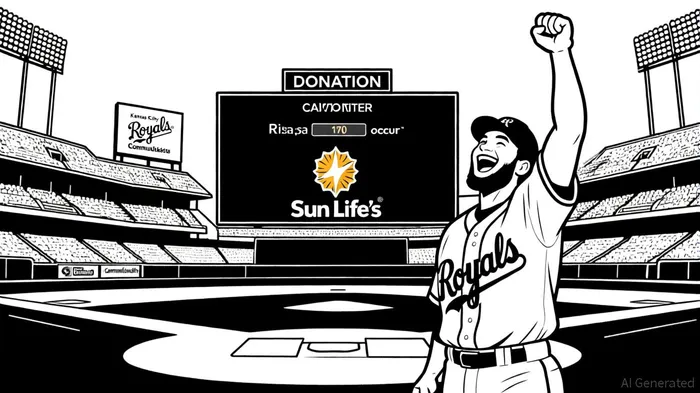
In an era where consumers increasingly align their purchasing power with their values, corporate social responsibility (CSR) has evolved from a reputational tool to a strategic business imperative. Community-driven CSRCSR-- initiatives, in particular, have demonstrated a unique ability to foster brand loyalty, enhance corporate reputation, and indirectly influence long-term shareholder value. A compelling case study is the Strikeout Diabetes campaign by the Kansas City Royals and Sun Life FinancialSLF--, which has raised over $280,000 for local nonprofits since 2018 while reinforcing both brands' commitments to public health and community engagement [1]. This article examines how such initiatives create value for stakeholders and explores the nuanced relationship between CSR and financial performance.
The Strategic Power of Community-Driven CSR
Community-focused CSR campaigns succeed when they align with societal needs and create emotional connections with stakeholders. The Strikeout Diabetes initiative, for instance, donates $23 for every strikeout thrown by the Royals—a figure representing the frequency of diabetes diagnoses in the U.S. [2]. By 2025, the campaign had raised $50,000 for the Boys & Girls Clubs of Greater Kansas City, directly supporting youth health programs [3]. Such efforts not only address critical public health issues but also position companies as socially responsible entities.
Research underscores the value of these initiatives. A meta-analysis published in The Journal of Academic Science found that CSR activities enhance brand loyalty by improving corporate reputation, customer trust, and emotional engagement [4]. These factors, in turn, drive consumer behavior, with studies showing that 66% of global consumers are willing to pay more for products from socially responsible companies [5]. For SunSLF-- Life and the Royals, the campaign has strengthened brand equity by associating their names with health advocacy and community development—a strategy that resonates in today's socially conscious market.
Linking CSR to Financial Performance
While the direct financial impact of CSR on stock performance is often difficult to quantify, indirect benefits are well-documented. For example, companies with strong CSR profiles tend to experience lower capital costs, improved employee retention, and enhanced market share [6]. Sun Life's broader sustainability strategy—including a $1 billion commitment to clean energy projects and diabetes prevention initiatives—reflects a long-term vision that aligns with investor priorities like ESG (environmental, social, and governance) criteria [7].
Sun Life's financial trajectory from 2017 to 2025 offers a mixed picture. Despite a 19.9% revenue decline in 2024 compared to 2023, the company's underlying net income grew by 3%, and it maintained an 8% dividend increase in Q4 2024 [8]. While these results cannot be directly attributed to the Strikeout Diabetes campaign, Sun Life's consistent CSR investments likely contributed to its resilience in a volatile market. A 2021 study in ScienceDirect noted that firms with integrated CSR strategies see improved profitability and operational efficiency, suggesting that such initiatives can buffer against external shocks [9].
The Long-Term Value of Brand Loyalty
Brand loyalty, a critical driver of shareholder value, is increasingly tied to CSR. The Royals and Sun Life's campaign has not only raised funds but also deepened community ties. For example, the Royals' partnership with local youth organizations has reinforced their role as a civic leader in Kansas City [10]. Similarly, Sun Life's global #Dunk4Diabetes campaign with the Boston Celtics demonstrates how CSR can scale brand recognition across markets [11].
Academic research supports this link. A 2019 study in IJMBE found that CSR initiatives increase customer satisfaction and trust, which mediate long-term loyalty [12]. This is particularly relevant for Sun Life, which operates in the insurance sector—a market where trust is paramount. By consistently associating its brand with health advocacy, Sun Life may be cultivating a loyal customer base that values ethical corporate behavior.
Conclusion: CSR as a Strategic Investment
While the financial data on Sun Life's stock performance does not explicitly tie the Strikeout Diabetes campaign to shareholder returns, the broader narrative is clear: community-driven CSR initiatives build brand equity, foster stakeholder trust, and align with long-term value creation. In a competitive landscape where consumers and investors prioritize sustainability, companies like Sun Life and the Royals are leveraging CSR to differentiate themselves and secure future growth.
As markets continue to prioritize ESG factors, the indirect benefits of CSR—enhanced reputation, operational resilience, and customer loyalty—will likely outweigh short-term financial metrics. For investors, this suggests that supporting companies with authentic, community-focused CSR strategies may yield sustainable returns over time.





Comentarios
Aún no hay comentarios