
Corporate Social Responsibility (CSR) as a Strategic Growth Driver in the Restaurant Sector: Denny's Community Engagement and Investor Value
Denny's CSR Framework: A Five-Pronged Approach
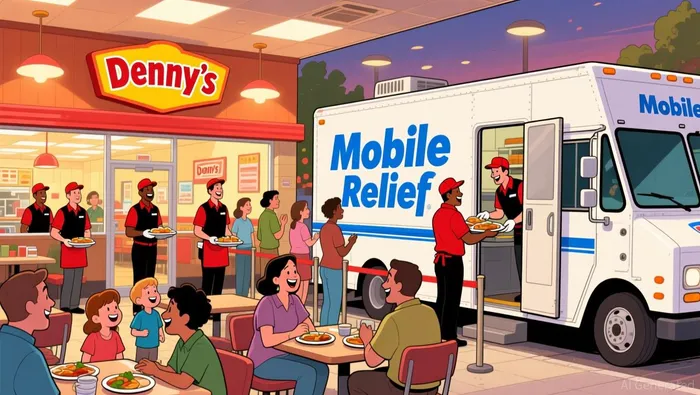
Denny's CSR strategy, encapsulated under the umbrella of "We Love to Feed People™," is structured around five pillars: Family & Community, Our Food, Diversity, Our People, and the Environment according to Denny's public statements. These pillars are not merely aspirational; they are operationalized through programs like the Mobile Relief Diner-a mobile kitchen that provides meals to underserved communities-and its partnership with No Kid Hungry®, which aims to combat childhood hunger. By 2025, these initiatives have become central to the brand's identity, fostering emotional connections with customers while aligning with broader societal expectations of corporate accountability.
The Investor Angle: Balancing Philanthropy and Profitability
While Denny's CSR efforts have bolstered brand loyalty, the company faces a critical juncture in balancing these initiatives with financial performance. Same-store sales have declined in recent years, prompting activist investor JCP Investment Management to acquire a 9% stake in the company and push for strategic overhauls according to financial reports. JCP's involvement highlights a broader tension in the restaurant sector: how to reconcile long-term CSR commitments with short-term investor demands.
Denny's response has been twofold. First, it has doubled down on high-impact partnerships, such as its collaboration with St. Jude Children's Research Hospital®, which not only amplifies its community footprint but also enhances brand sentiment. Second, the company has introduced a revamped loyalty program in 2025, designed to convert CSR-driven goodwill into measurable customer retention. These moves signal an attempt to align social value creation with shareholder value-a delicate act that will determine Denny's trajectory in the coming years.
Challenges and Opportunities
Despite its strategic CSR framework, Denny's lacks publicly available metrics to quantify the direct impact of programs like the Mobile Relief Diner on customer retention or investor confidence. This absence of data complicates efforts to demonstrate ROI to stakeholders. However, the company's emphasis on sustainability-such as waste reduction and energy efficiency-aligns with ESG (Environmental, Social, and Governance) trends that are increasingly influencing investment decisions. As ESG criteria gain prominence, Denny's environmental initiatives could serve as a differentiator in attracting socially conscious capital.
Conclusion: CSR as a Strategic Lever
Denny's journey underscores a pivotal truth: in the restaurant sector, CSR is not a cost center but a strategic lever. By embedding community engagement into its operational DNA, the company has cultivated a brand narrative that resonates with both consumers and investors. Yet, the path forward requires bridging the gap between intangible goodwill and tangible financial outcomes. For Denny's, the challenge lies in translating its "We Love to Feed People" ethos into a sustainable model that satisfies the dual imperatives of social impact and shareholder returns.







Comentarios
Aún no hay comentarios