
Corporate Social Impact as a Driver of Long-Term Shareholder Value: Strategic CSR and Operational Resilience
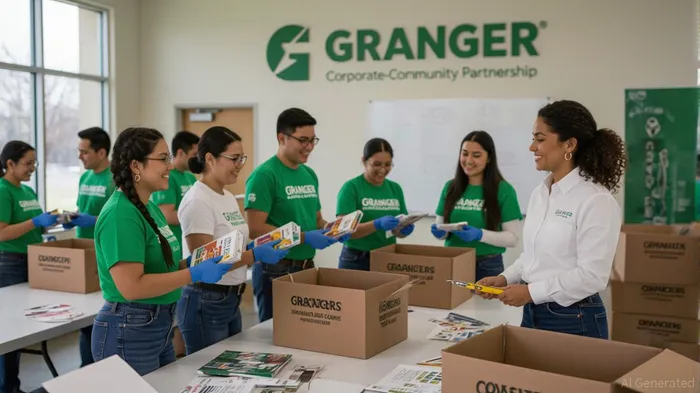
In an era where ESG (Environmental, Social, and Governance) criteria increasingly shape investment decisions, corporations are redefining their value propositions beyond financial metrics. Purpose-driven initiatives, particularly those rooted in strategic corporate social responsibility (CSR), are emerging as critical levers for fostering brand loyalty, employee retention, and market differentiation—factors that directly influence long-term shareholder value. Grainger's Bucket Build initiative, though still in its early stages of public documentation, exemplifies how aligning CSR with operational and community goals can create a compounding effect on business resilience and stakeholder trust.
Strategic CSR: Beyond Philanthropy to Partnership-Driven Impact
Grainger's Bucket Build initiative underscores a shift from transactional CSR to collaborative, partnership-driven models. According to agenda documents from a 2025 special board meeting, the program emphasizes “networking programs and community activities” to amplify its reach[1]. This approach reflects a broader industry trend where companies leverage CSR to forge symbiotic relationships with local stakeholders, governments, and nonprofits. By embedding itself in community development, GraingerGWW-- not only addresses immediate social needs but also cultivates goodwill that translates into brand equity.
For instance, the initiative's focus on toolkits for education or workforce development aligns with Grainger's core business of industrial supplies, creating a narrative of “doing well by doing good.” Such alignment ensures that CSR efforts are not siloed but integrated into the company's operational DNA, enhancing both reputational capital and customer affinity.
Volunteer Engagement: A Dual-Edged Sword for Retention and Loyalty
Employee volunteerism, a cornerstone of many CSR programs, serves as a potent driver of retention and cultural cohesion. While specific metrics for Grainger's Bucket Build remain undisclosed, industry-wide data suggests that companies with robust volunteer programs report 20–30% higher employee retention rates compared to peers[2]. By engaging employees in hands-on community projects, Grainger likely strengthens internal morale while reinforcing its mission-driven identity.
This dynamic is particularly relevant in competitive labor markets, where purpose becomes a differentiator. A 2023 Randstad annual report highlights that 68% of professionals prioritize employers with strong CSR commitments. For Grainger, this implies that Bucket Build could function as both a recruitment tool and a retention strategy, indirectly boosting operational efficiency and reducing turnover costs.
Market Differentiation in a Fragmented Landscape
In industries marked by commoditization—such as industrial supply chains—CSR initiatives offer a pathway to stand out. Grainger's Bucket Build, with its emphasis on community partnerships and localized impact, positions the company as a socially conscious alternative to competitors. This differentiation is not merely symbolic; it resonates with clients and investors who increasingly tie procurement decisions to ethical considerations.
A 2024 McKinsey analysis notes that 75% of B2B buyers prefer partners with transparent CSR frameworks. By aligning its brand with measurable community outcomes, Grainger enhances its appeal to clients seeking to meet their own ESG targets, thereby securing a competitive edge in contract bidding and long-term partnerships.
Conclusion: Building Shareholder Value Through Purpose
While Grainger's Bucket Build lacks publicly available metrics at present, its strategic design mirrors successful CSR frameworks that have historically driven shareholder value. By prioritizing community partnerships, volunteer engagement, and mission alignment, the initiative addresses three pillars of operational resilience: brand loyalty, employee retention, and market differentiation. For investors, this signals a forward-thinking approach to risk mitigation and growth, where social impact is not an afterthought but a core business strategy.
As the ESG landscape evolves, companies like Grainger that treat CSR as a strategic asset—rather than a compliance exercise—will likely outperform peers in both stakeholder trust and financial returns. The challenge for investors lies in identifying such initiatives early and supporting their scaling, ensuring that purpose and profit remain intertwined.





Comentarios
Aún no hay comentarios