
U.S. Corporate Risk Management Under Trump's Return: Sector-Specific Preparedness and Hedging Strategies
The return of a Trump administration in 2025 has reignited debates over the economic and regulatory landscape, with corporate risk management now centering on sector-specific preparedness. From aggressive tariff policies to deregulatory shifts and tax reforms, businesses must navigate a volatile environment. This analysis synthesizes sector-specific risks and hedging strategies, drawing on recent research to outline actionable pathways for resilience.
1. Manufacturing and Textiles: Tariff-Driven Disruptions and Supply Chain Reconfiguration
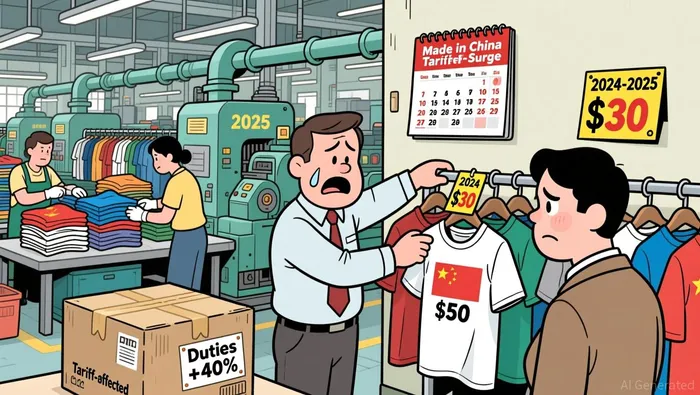
The Trump administration's 10% baseline tariff on all U.S. imports, with higher rates on key partners like China, Vietnam, and Mexico, has already triggered a 6% GDP contraction and 5% wage decline. For manufacturing and textiles, the impact is acute. Apparel prices are projected to rise by 17% under current tariff regimes, disproportionately affecting low-income households.
Hedging Strategies:
- Diversified Sourcing: Companies are shifting production to countries like Cambodia and Bangladesh to avoid tariffs, while some have even returned portions of production to China due to quality and delivery reliability.
- Foreign Trade Zones (FTZs): Leveraging FTZs to defer or reduce tariff costs is gaining traction, as these zones allow goods to be stored, processed, or manufactured without immediate duty payment. According to analysis, FTZs are increasingly being used as a strategic tool.
- Domestic Onshoring: While costly, onshoring is being explored for critical components, supported by targeted tax incentives for domestic manufacturing.
2. Real Estate: Tax Reforms and Deregulation as Double-Edged Swords
The 2025 tax reforms, including permanent 100% bonus depreciation for qualifying properties and streamlined permitting processes, offer real estate investors enhanced cash flow and faster project timelines. However, tariffs on construction materials like steel and aluminum threaten to inflate costs, with potential supply chain bottlenecks.
Hedging Strategies:
- Accelerated Depreciation Utilization: Investors are maximizing 100% bonus depreciation and cost segregation studies to front-load tax deductions, improving after-tax returns.
- Opportunity Zone Investments: The extension of Qualified Opportunity Zones (QOZs) provides tax deferrals for investments in distressed communities, though urgency is mounting as key incentives expire in 2026.
- Supply Chain Diversification: Real estate developers are reevaluating material procurement to mitigate tariff-driven cost spikes, including sourcing from U.S.-friendly partners under USMCA.
3. Energy: Deregulation and Commodity Volatility
Deregulation in the energy sector, including relaxed environmental rules and expanded domestic oil production, aims to boost U.S. energy independence. However, this creates volatility in commodity markets, with risks of oversupply and reduced renewable energy investment.
Hedging Strategies:
- Commodity Hedging: Energy firms are using futures contracts and swaps to lock in prices and mitigate exposure to oil and gas price swings.
- Renewable Energy Reassessment: While Trump's freeze on renewable subsidies poses challenges, companies are exploring hybrid models that blend traditional and green energy to hedge against policy shifts.
- Supply Chain Resilience: Diversifying energy sources and investing in domestic shale production are being prioritized to reduce reliance on imported fuels.
4. Healthcare: Tariffs on Pharmaceuticals and ACA Uncertainty
The healthcare sector faces dual pressures: tariffs on active pharmaceutical ingredients (APIs) from China (up to 245%) and potential rollbacks of ACA subsidies. This could lead to drug shortages and higher costs for hospitals and insurers.
Hedging Strategies:
- Domestic API Production: Major pharma firms like Pfizer are investing in U.S. manufacturing to secure exemptions from tariffs, a trend likely to accelerate.
- Strategic Stockpiling: Hospitals and manufacturers are stockpiling critical raw materials to buffer against short-term supply chain shocks.
- Contractual Flexibility: Incorporating escalation clauses in supplier agreements allows for dynamic cost adjustments as tariff policies evolve.
5. Cross-Sector Preparedness: Proactive Risk Modeling and Scenario Planning
Across all sectors, the common thread is the need for proactive risk modeling. The Economic Policy Uncertainty (EPU) Index has doubled since January 2025, signaling heightened volatility. Businesses must:
- Scenario-Test Tariff Impacts: Simulate best- and worst-case tariff scenarios to stress-test financial models.
- Engage in Political Advocacy: Lobbying to shape policy outcomes is becoming a strategic imperative, particularly in sectors like textiles and healthcare.
- Leverage Tax Incentives: Aggressively utilizing tax reforms (e.g., 100% depreciation, QOZs) can offset regulatory and tariff costs.
Conclusion
Trump's 2025 policies present a mix of opportunities and risks, demanding sector-specific agility. While tariffs and deregulation may boost short-term profitability in some areas, the long-term costs-ranging from inflationary pressures to supply chain fragility-require robust hedging. Companies that adopt diversified sourcing, tax-efficient strategies, and proactive political engagement will emerge as leaders in this uncertain era.







Comentarios
Aún no hay comentarios