
Corporate Pushback Against Tariffs: Costco's Legal Challenge and Implications for Retailers
Legal Stakes: A Question of Executive Authority
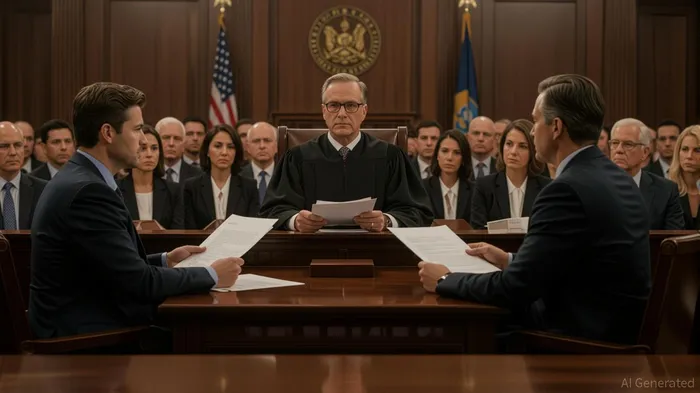
Costco's lawsuit, filed in the U.S. Court of International Trade, argues that IEEPA does not explicitly authorize the president to impose tariffs on imported goods. The company contends that the Trump administration's use of emergency powers to levy duties on thousands of products-ranging from Chinese goods to Canadian softwood-lacks clear statutory backing. This legal challenge is part of a broader effort by businesses to secure refunds should the Supreme Court ultimately rule the tariffs unlawful.
The Supreme Court heard arguments on the matter on November 5, 2025, with justices appearing skeptical of the administration's interpretation of IEEPA. A ruling against the tariffs could unlock nearly $90 billion in potential refunds for companies that paid duties under the program. However, the government's refusal to extend deadlines for refund claims has left businesses like Costco in a precarious position, racing against a December 15 deadline to preserve their right to reimbursement.
Financial Implications: Retail Margins Under Pressure
The financial stakes for retailers are immense. Costco, the third-largest retailer globally, sources roughly one-third of its inventory from imports. The company has absorbed tariff costs to maintain stable pricing on essential goods, a strategy that has shielded consumers but eroded profit margins. According to J.P. Morgan Global Research, the effective tariff rate on imports has surged to 15.8%, with further increases expected in sectors like pharmaceuticals and automobiles. For retailers with already thin margins-averaging 6.1%-passing these costs to consumers is a double-edged sword: it risks demand erosion while squeezing profitability according to PIIE research.
The ripple effects extend beyond individual firms. Analysts project that the average household will face additional costs of $1,100 in 2025 and $1,400 in 2026 due to tariffs. This could dampen consumer spending, a critical driver of retail growth. Meanwhile, companies like Home Depot have pledged to absorb tariff costs, a move that could reduce average retail margins to 3.6%. Such pressures are forcing retailers to rethink supply chains, with some, like Costco, shifting to local sourcing and private-label brands to mitigate exposure.
Investor Sentiment: Uncertainty and Strategic Resilience
Investor reactions to the litigation have been mixed. While the lawsuit introduces regulatory uncertainty, analysts remain cautiously optimistic about Costco's long-term prospects. Telsey Advisory Group maintains an "Outperform" rating for Costco, citing its strategic resilience and legal efforts to recover costs. The firm has set a price target of $1,100 per share, reflecting confidence in the company's ability to navigate trade policy turbulence according to Yahoo Finance.
However, the broader retail sector remains vulnerable. A ruling against the Trump administration's tariffs could create a wave of refund claims, potentially destabilizing government revenue streams and prompting retaliatory measures from trading partners. Conversely, a victory for the administration would reinforce the executive's authority to reshape trade policy, likely leading to further tariff escalations and margin compression for import-dependent retailers according to Economic Times.
Broader Implications: A New Era of Trade Litigation
Costco's case is emblematic of a growing trend: corporations leveraging the courts to challenge trade policies that threaten their financial health. If successful, the lawsuit could establish a precedent for businesses to reclaim costs from past tariffs and deter future overreach by administrations seeking to expand emergency powers. For investors, the litigation underscores the importance of monitoring legal and regulatory risks in trade policy, which now rank alongside traditional factors like consumer demand and supply chain efficiency according to UK Investing.com.
The retail sector's response to tariffs also highlights a shift toward strategic adaptation. Companies are increasingly consolidating suppliers, reshoring production, and absorbing costs to protect pricing stability-a trend that could redefine industry norms in the post-litigation era according to Australian Investing.com.
Conclusion
Costco's legal challenge against the Trump administration's tariffs is more than a fight for refunds; it is a battle over the future of trade policy and its economic consequences. The outcome will not only determine the fate of billions in duties but also shape the resilience of retail margins and investor confidence. As the Supreme Court deliberates, the retail sector-and its stakeholders-stand at a crossroads, where legal outcomes could redefine the rules of global commerce for years to come.





Comentarios
Aún no hay comentarios