
Corporate Governance Risks at PROS and SMLR: Shareholder Value Protection in the Shadow of Legal Scrutiny
In the intricate landscape of modern investing, corporate governance risks have emerged as a critical determinant of shareholder value. Two recent cases—PROS Holdings, Inc. (NYSE: PROS) and Semler Scientific, Inc. (NASDAQ: SMLR)—highlight the growing tension between board accountability and investor protection. Ongoing investigations by Halper Sadeh LLC into these companies underscore systemic vulnerabilities in corporate decision-making, particularly in mergers and acquisitions (M&A) and regulatory compliance. For investors, the implications are stark: governance failures can erode trust, trigger legal liabilities, and destabilize market confidence.
PROS Holdings: The Thoma Bravo Merger Under Scrutiny
Halper Sadeh LLC is investigating whether the $23.25-per-share cash offer by Thoma Bravo for PROS HoldingsPRO-- adequately protects shareholder interests. The firm is examining whether the board of PROSPRO-- violated federal securities laws or breached fiduciary duties by failing to secure the best possible consideration for shareholders or disclose material information about the transaction [1]. According to a report by Business Wire, the investigation centers on whether Thoma Bravo's bid undervalues the company and whether the board's decision-making process was transparent [2].
The stakes are high. PROS, a provider of cloud-based software solutions, agreed to a $1.4 billion acquisition in a deal that would delist the company from the NYSE. Shareholders are now questioning whether the board prioritized speed over value, particularly in a market where software assets often command premium valuations. As stated by Halper Sadeh in its public filings, the firm is seeking to determine if the merger terms reflect “fair and equitable treatment” for investors [3].
Semler Scientific: Concealment and Legal Fallout
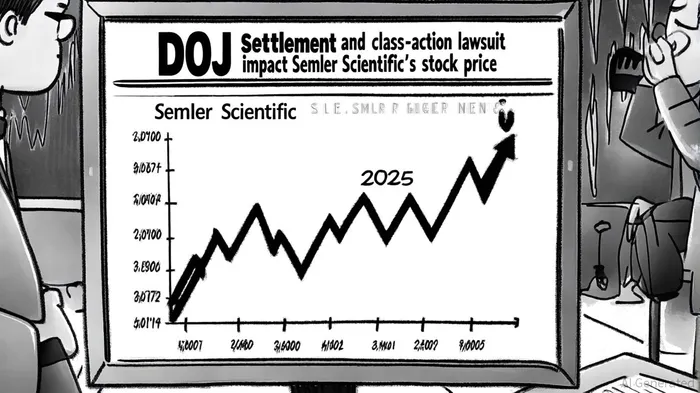
Semler Scientific's case presents a different but equally troubling governance risk. The company recently settled a $29.75 million False Claims Act lawsuit with the U.S. Department of Justice (DOJ) over alleged Medicare reimbursement fraud tied to its QuantaFlo device. Halper Sadeh's investigation into SMLR focuses on whether the board concealed a multi-year DOJ inquiry while publicly downplaying risks and certifying financial accuracy [4]. Data from TradingView reveals that Semler's stock price plummeted by 9.4% in March 2025 following the initial disclosure of the DOJ investigation and another 9.9% in April after the settlement announcement [5].
The firm is also scrutinizing whether Semler's executives misled investors by framing regulatory risks as hypothetical while concealing material liabilities. A class-action lawsuit now alleges that the company's disclosures were insufficient, compounding investor losses [6]. For SMLR shareholders, the fallout extends beyond financial penalties: the company's corporate integrity agreement with the Office of Inspector General (OIG) mandates ongoing compliance measures, which could constrain growth and operational flexibility [7].
Investor Implications and Strategic Adjustments
The PROS and SMLR cases illustrate a broader trend: governance lapses in M&A and regulatory compliance can trigger cascading financial and reputational risks. For investors, the key takeaway is the need for heightened vigilance in assessing board accountability. According to a 2025 report by Financial Content, companies facing shareholder derivative lawsuits often experience prolonged stock underperformance, even after resolving legal disputes [8].
Proactive portfolio adjustments are warranted. Investors should:
1. Monitor governance disclosures: Scrutinize board communications for inconsistencies or delayed material disclosures.
2. Diversify exposure: Reduce concentrated positions in companies with opaque governance structures.
3. Engage with legal counsel: Shareholders in PROS or SMLR should consult with firms like Halper Sadeh to explore potential claims or remedies.
Conclusion
Corporate governance is not merely an internal matter—it is a linchpin of investor trust. The PROS and SMLR investigations serve as cautionary tales for boards and shareholders alike. As legal scrutiny intensifies, investors must prioritize transparency and accountability in their decision-making. In an era of rising ESG (Environmental, Social, and Governance) standards, governance risks are no longer peripheral; they are central to long-term value creation.





Comentarios
Aún no hay comentarios