
Corporate Governance Risks in Post-IPO Healthcare REITs: Leadership Instability and Regulatory Exposure as Warning Signs for Investor Due Diligence
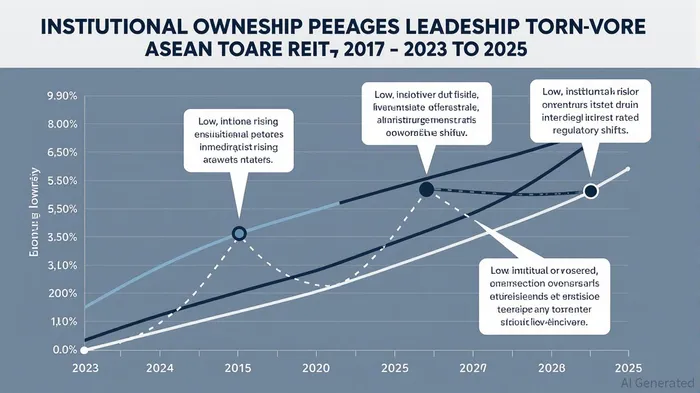
The healthcare real estate investment trust (REIT) sector, a critical component of the broader commercial real estate market, has faced mounting governance risks in the post-IPO phase. As of 2025, these risks are increasingly tied to leadership instability and regulatory exposure, both of which demand heightened scrutiny from investors. The interplay between institutional ownership dynamics, macroeconomic pressures, and evolving regulatory frameworks has created a volatile environment for healthcare REITs, particularly those navigating the transition from private to public markets.
Leadership Instability: A Double-Edged Sword of Institutional Ownership
Institutional ownership, a cornerstone of corporate governance in REITs, exerts a dual influence on leadership stability. On one hand, strong institutional presence is associated with improved operational efficiency and performance, as institutional investors often advocate for robust governance structures [1]. On the other, shifts in institutional strategy—such as divestments or portfolio reallocations—can destabilize leadership teams. For example, the 2024 IPO market saw a resurgence in REIT activity, with three healthcare REITs going public, yet these entities now face pressure to adapt to changing institutional priorities amid rising interest rates and shifting tenant behaviors [3].
The healthcare sector’s unique challenges—such as regulatory compliance, tenant concentration in senior housing and outpatient facilities, and asset-specific risks—amplify the consequences of leadership turnover. Publicly traded healthcare REITs must balance institutional demands for short-term returns with the long-term operational stability required to manage sensitive healthcare assets [4]. This tension is further complicated by the influx of private equity capital, which often prioritizes financial engineering over operational continuity, potentially exacerbating governance risks [5].
Regulatory Exposure: ESG, Fraud Laws, and Compliance Costs
Healthcare REITs are also grappling with a regulatory landscape that has grown increasingly complex. The rise of mandatory ESG disclosure requirements, coupled with heightened scrutiny of fraud and abuse laws, has introduced new compliance burdens. For instance, legal experts like Michael W. Paddock emphasize the critical need for healthcare entities to navigate frameworks such as the False Claims Act, Stark Law, and the Anti-Kickback Statute [3]. Non-compliance can result in severe penalties, reputational damage, and investor distrust.
Moreover, the 2025 commercial real estate outlook underscores how macroeconomic factors—such as elevated interest rates and trade war uncertainties—have indirectly impacted healthcare REITs by increasing borrowing costs and altering tenant occupancy patterns [2]. These pressures are compounded by the sector’s exposure to state-level healthcare market oversight, which has intensified in response to private equity’s growing influence [2].
Investor Due Diligence: Mitigating Governance Risks
For investors, the key to mitigating these risks lies in rigorous due diligence. First, analyzing institutional ownership patterns can provide early warnings about potential leadership instability. REITs with high institutional ownership (≥60%) may experience smoother governance transitions, while those with volatile institutional backing are more prone to leadership upheaval [1]. Second, investors should assess a REIT’s compliance infrastructure, particularly its adherence to ESG standards and healthcare-specific regulations.
The absence of concrete case studies on post-IPO healthcare REITs with documented governance failures does not diminish the urgency of these risks. Instead, it underscores the need for proactive monitoring of macroeconomic and regulatory trends. As Deloitte notes, the anticipated rate cuts and economic recovery from 2024 to 2025 may offer some relief, but challenges like refinancing risks and capital cost pressures will persist [2].
Conclusion
Healthcare REITs post-IPO operate at the intersection of complex governance, regulatory, and market dynamics. Leadership instability, driven by institutional ownership shifts and private equity influence, and regulatory exposure, fueled by ESG and fraud law compliance demands, present significant risks for investors. By prioritizing governance transparency and regulatory preparedness, investors can better navigate this volatile landscape. In an era of heightened scrutiny, the adage “know your REIT” has never been more critical.
Source:
[1] The Effect of Corporate Governance on Investment: Evidence from Real Estate Investment Trusts (REITs) [https://www.researchgate.net/publication/4917697_The_Effect_of_Corporate_Governance_on_Investment_Evidence_from_Real_Estate_Investment_Trusts_REITs]
[2] 2025 Commercial Real Estate Outlook | Deloitte Insights [https://www.deloitte.com/us/en/insights/industry/financial-services/commercial-real-estate-outlook.html]
[3] 2024 IPO Market Trends, And What To Expect Next Year [https://www.paulhastings.com/insights/attorney-authored/2024-ipo-market-trends-and-what-to-expect-next-year]
[4] A Guide for a REIT IPO or Conversion [https://www.pwc.com/us/en/industries/financial-services/library/reit-ipo-strategy.html]
[5] Private Equity and Healthcare Firm Behavior [https://pmc.ncbi.nlm.nih.gov/articles/PMC10528209/]







Comentarios
Aún no hay comentarios