
Corporate Governance and Risk Mitigation in Leveraged Firms: Navigating Unexplained Capital Outflows in a Turbulent Market
In the volatile landscape of leveraged finance, unexplained capital outflows have emerged as a critical risk for firms with high debt levels. Between 2023 and 2025, U.S. leveraged loan funds experienced record outflows, with $6.5 billion withdrawn in a single week in April 2025-the largest in history-driven by investor fears over tariff-driven economic instability and expectations of Federal Reserve rate cuts, according to a Straits Times report. High-yield bond funds also saw historic redemptions, with $9.63 billion pulled in one week, marking the largest outflow in nearly two decades, according to the same report. These trends underscore the urgent need for robust corporate governance frameworks to detect and respond to such disruptions.
The Governance-Risk Nexus in Leveraged Firms
Corporate governance structures play a pivotal role in mitigating risks associated with capital outflows. A 2025 McKinsey survey revealed that 72% of firms added two to five subcommittees to enhance board oversight, while 50% adopted strategic board archetypes to align governance with macroeconomic uncertainties. Strong governance mechanisms, such as risk committees and transparent reporting protocols, enable firms to proactively identify vulnerabilities. For instance, the OECD emphasized that governance must ensure risks are "understood, managed, and communicated" to prevent costly failures.
However, governance maturity varies. Firms with immature GRC (governance, risk, and compliance) systems-often lacking formal risk appetite documentation-struggle to adapt to sudden outflows, a point also highlighted in the McKinsey survey. This was evident in the leveraged loan market, where secondary prices plummeted to 93% of par in early April 2025 before recovering to 95% by June, reflecting the market's reliance on governance-driven stability, as noted in a Debt Explorer commentary.
AI and Real-Time Monitoring: A New Frontier
Advanced technologies are reshaping risk detection. AI-driven tools, such as recurrent neural networks (RNNs) and graph neural networks (GNNs), analyze vast datasets to identify anomalies in capital flows. For example, a Fortune 500 company reduced revenue leakage by 76.3% using AI-powered anomaly detection, preventing $3.2 million in misreported figures per billion dollars in revenue. Similarly, PayPal's AI system flags suspicious transactions in milliseconds, mitigating unexplained outflows linked to fraud, as documented in a GrowthJockey case study.
Private equity firms are also leveraging AI for portfolio oversight. Vista Equity Partners, for instance, mandates AI-driven goals for portfolio companies, achieving a 65% improvement in sales rep response times and $2 million in annual savings per customer, according to Bain field notes. These tools enable real-time monitoring, scenario planning, and stress testing, which are critical for leveraged firms facing liquidity shocks.
Board Protocols and Strategic Resilience
Board-level interventions are equally vital. The Marsh McLennan-NACD Board Risk Oversight Blueprint emphasizes that boards must define risk appetite, integrate risk into corporate strategy, and oversee recovery protocols. In 2025, firms with dedicated risk committees or distributed oversight across existing committees demonstrated faster responses to outflows. For example, NeuroEdge AI, backed by Summit Equity Partners, used a $150 million investment to streamline operations and enhance transparency, aligning with board-mandated AI governance protocols, as shown in DigitalDefynd case studies.
Scenario planning and ESG integration further bolster resilience. Boards with expertise in cybersecurity and digital transformation are better equipped to address third-party risks and supply chain disruptions, which often exacerbate capital outflows, a point also emphasized by the Marsh McLennan–NACD blueprint.
Case Studies: Lessons from the Field
- MedIntel AI: This healthcare firm, supported by HealthCap Equity, leveraged a $120 million investment to refine AI diagnostics and forge strategic partnerships. By aligning board protocols with market demands, it stabilized its capital structure amid sector-specific volatility, as documented in DigitalDefynd case studies.
- Private Equity Portfolio Management: Firms like Vista Equity Partners standardized reporting formats and deployed generative AI to identify value creation opportunities, reducing operational inefficiencies that could trigger outflows, as noted in Bain field notes.
Conclusion: Governance as a Strategic Imperative
The 2023–2025 outflows highlight the fragility of leveraged firms in turbulent markets. While macroeconomic factors like tariffs and interest rates drive volatility, corporate governance remains the cornerstone of resilience. By integrating AI tools, strengthening board oversight, and adopting proactive risk strategies, firms can transform unexplained outflows from existential threats into manageable challenges. As the OECD and McKinsey studies affirm, governance is not merely a compliance exercise-it is a strategic lever for long-term stability.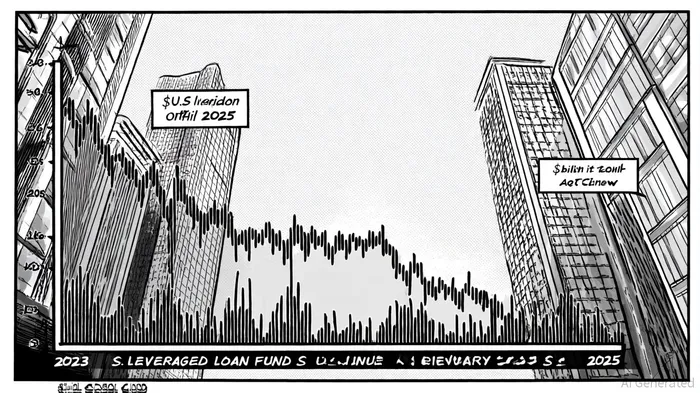







Comentarios
Aún no hay comentarios