
Corporate Bitcoin Adoption as a Strategic Store of Value: MicroStrategy's $99.7M Purchase as a Catalyst for Institutional Onboarding
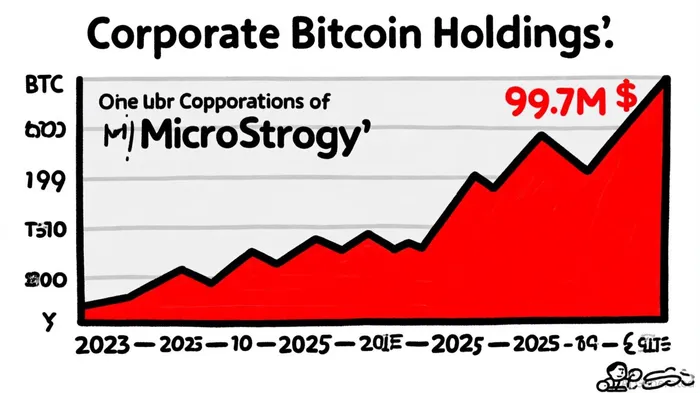
In September 2025, MicroStrategy—now rebranded as Strategy—announced the acquisition of 850 BitcoinBTC-- (BTC) for $99.7 million, averaging $117,344 per coin[1]. This purchase, funded through equity and perpetual preferred stock offerings, brought the company's total Bitcoin holdings to 639,835 BTC, valued at approximately $73.6 billion[1]. The timing of the acquisition coincided with a multiweek high in Bitcoin prices, driven by the U.S. Federal Reserve's interest rate cut[3]. This move notNOT-- only solidified Strategy's position as the largest corporate Bitcoin holder but also reignited discussions about the role of digital assets in institutional portfolios.
The Strategic Rationale: Bitcoin as a Corporate Treasury Asset
Strategy's aggressive Bitcoin accumulation is rooted in a strategic framework that positions the asset as a hedge against fiat currency depreciation and a long-term store of value. By treating Bitcoin as a “strategic corporate treasury asset,” the company has demonstrated how digital assets can diversify balance sheets and generate alpha in an era of macroeconomic uncertainty[1]. This approach has been amplified by the Financial Accounting Standards Board's (FASB) January 2025 rule change, which allows companies to mark Bitcoin to market at fair value[4]. Previously, Bitcoin was classified as an intangible asset, limiting its financial reporting flexibility. The new standard aligns Bitcoin with equities and other financial instruments, enabling real-time recognition of gains and losses[4].
Catalyzing Institutional Adoption
Strategy's Bitcoin purchases have acted as a catalyst for broader institutional adoption. As of August 2025, corporate Bitcoin holdings surpassed 1 million BTC, with public companies alone holding 786,857 BTC[1]. Strategy's influence is evident in the emergence of new Bitcoin treasury firms, including 28 created in July and August 2025 alone[3]. Companies like Grupo Murano, which invested $1 billion in Bitcoin, and Japan's Metaplanet, with 4,206 BTC (34% of its market cap), have followed Strategy's playbook[4].
The ripple effect of Strategy's actions is also reflected in regulatory developments. The U.S. government's Strategic Bitcoin Reserve initiative and the proliferation of spot Bitcoin ETFs have reduced perceived risks for corporations[4]. Meanwhile, Strategy's potential inclusion in the S&P 500—a milestone expected to occur in late 2025—could further legitimize Bitcoin in traditional finance[3].
Market Dynamics and Challenges
Despite the momentum, corporate Bitcoin adoption has slowed in 2025 due to macroeconomic headwinds, including higher interest rates and regulatory scrutiny[3]. Monthly purchases by public companies declined from peaks like Strategy's 134,000 BTC in November 2024 to 3,700 BTC in August 2025[3]. However, the year-to-date total of 415,000 BTC added by public companies still exceeds the 2024 total[3], underscoring long-term conviction.
The market response to Bitcoin treasuries has also evolved. Initial announcements of corporate Bitcoin purchases historically boosted share prices by 1–5%[4], while stock prices of Bitcoin-holding companies increasingly correlate with Bitcoin's performance[4]. For example, Strategy's stock surged 440% in 2024 alone[4], reinforcing the narrative that Bitcoin can drive shareholder value.
The Path Forward
While challenges remain, the institutional adoption of Bitcoin appears irreversible. Regulatory clarity, improved custody solutions, and the success of early adopters have created a self-reinforcing cycle. As Bitwise CIO Matt Hougan predicts, hundreds of companies could add Bitcoin to their treasuries in the next 12–18 months[5]. This trend will likely accelerate if Bitcoin's price continues to outperform traditional assets, as it did in 2025, when it surged to multiweek highs amid Fed easing[3].
For investors, the key takeaway is clear: Bitcoin's integration into corporate treasuries is reshaping traditional finance. Strategy's $99.7M purchase is not an isolated event but a harbinger of a broader shift toward digital assets as a strategic store of value.





Comentarios
Aún no hay comentarios