
Corn Tenders and Supply Chain Strains: Navigating Algeria's Demand in Global Grain Markets
Algeria's recurring corn import tenders have emerged as a pivotal force in global grain markets, reshaping trade dynamics and exposing vulnerabilities in South American supply chains. With annual corn imports projected to hit 5 million tons in the 2024/2025 season—a 25% increase from prior years—the North African nation's poultry and dairy industries are driving a demand pipeline that cannot be ignored. However, logistical bottlenecks in Argentina and Brazil threaten to undermine this growth, creating both risks and opportunities for investors.
The Tenders: A Double-Edged Sword for Global Markets
Algeria's National Office of Livestock Feed (ONAB) has become a bellwether for corn demand, issuing tenders as large as 320,000 tons in 2024 and 240,000 tons in 2025, recurring every 6–8 months. These tenders, once restricted to South American suppliers like Argentina and Brazil, now welcome bids from global exporters. Yet, the dominance of South America persists: Argentina alone supplied 2.3 million tons in 2022/2023, and Brazil's safrinha crop—accounting for 70% of its output—is critical to meeting Algeria's needs.
Supply Chain Strains: The Hidden Cost of Globalization
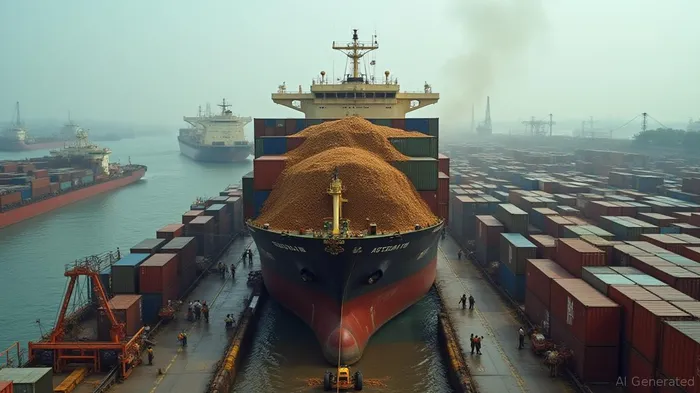
Despite Algeria's soaring demand, logistical inefficiencies in South America are turning tenders into high-stakes gambles. In Argentina, the Rosario Grain Exchange—handling 60% of the country's corn exports—faces chronic port congestion and aging infrastructure. Seasonal river-level fluctuations further delay shipments, while Brazil's storage shortages during its safrinha harvest exacerbate delays. Compounding these issues, overland transit to Brazilian ports costs 30% more per ton than in the U.S., due to underdeveloped rail networks and poor road conditions.
These bottlenecks have led to frequent port delays at Algerian terminals, forcing traders to absorb financial losses. As one commodities analyst noted, “Algeria's tenders are less about securing supply and more about price discovery—ships often wait weeks to unload, making the process a gamble.”
Commodity Pricing: A Disconnect Between Demand and Reality
The logistical chaos has had a paradoxical effect on corn prices. Despite Algeria's insatiable demand—driven by an 8% annual growth in its poultry industry—corn prices dropped to $208/ton in late 2024, a 32% decline from 2022 levels. This divergence reflects a supply chain unable to match demand: delayed shipments create artificial surpluses, while producers in Argentina and Brazil face margin compression due to logistics costs.
Investment Opportunities in the Logistics Value Chain
The challenges in South America's grain supply chain present clear opportunities for firms capable of addressing inefficiencies:
- Port and Storage Infrastructure:
- Argentina's Rosario terminals (e.g., Logistics Port Group) and Brazil's Paranagua port need capital to modernize.
Storage solutions firms like Agrologística (Brazil) and Grains Storage Solutions (GSS, Argentina) can capitalize on Brazil's 40% storage deficit near export hubs.
Transportation:
Rail operators such as Argentina's Trenes Argentinos Cargas and Brazil's Logística Integrada (road logistics) could reduce transit costs by 10–20% with infrastructure upgrades.
Agribusiness Giants:
- Firms like Argentina's Los Grobo and Brazil's Cargill already have ties to Algerian buyers. Their vertically integrated operations—combining production, logistics, and export—position them to dominate tender fulfillment.
Risks and the Case for Caution
Currency volatility in Argentina and Brazil remains a concern, with both nations grappling with inflation and depreciating currencies. However, Algeria's poultry industry—a key consumer of corn—offers a price-inelastic demand anchor, shielding investors from extreme market swings.
Conclusion: Betting on Logistics to Unlock Value
Algeria's corn tenders underscore a simple truth: global commodity markets are only as strong as their supply chains. While logistical bottlenecks have depressed prices, they also highlight a multi-billion-dollar opportunity to invest in infrastructure, storage, and transport. For investors, the path to profit lies in backing firms that can resolve these bottlenecks—turning Algeria's tenders from a price-checking exercise into a sustainable revenue stream.
The next tender cycle, due in late 2025, will test whether South America can meet its logistical challenges. Those who bet on the solutions will reap the rewards.







Comentarios
Aún no hay comentarios