
Corn's Crossroads: Can U.S. Yields Defy Trade Wars and Weather to Deliver Record Profits?
The U.S. corn market stands at a pivotal juncture. Record yield projections, escalating trade tensions, and weather uncertainties have created a high-stakes environment for farmers, traders, and investors. Will the 2025 crop live up to expectations, or will geopolitical and climatic headwinds derail what could be a historic harvest? Let's dissect the data and assess the risks and opportunities.
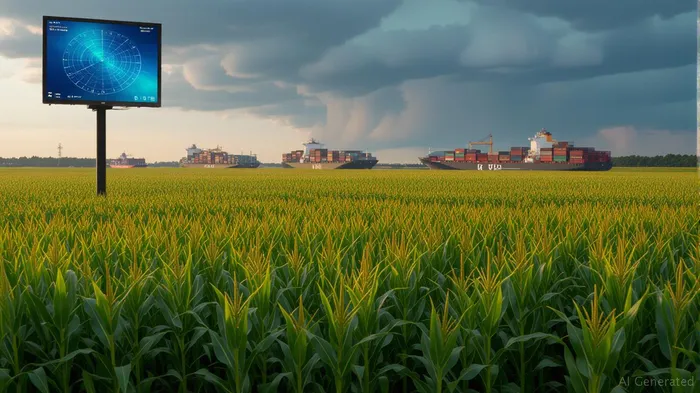
The Yield Outlook: A Record in the Balance
The USDA's July 2025 WASDE report projects a U.S. corn crop of 15.75 billion bushels, supported by an 181 bushels per acre yield—a record trend estimate. This forecast hinges on favorable early-season weather, with moderate rainfall and temperate temperatures boosting crop development. However, late-season risks loom.
Historical data reveals that 85% of USDA yield estimates are revised downward by harvest time due to unforeseen weather events. This year's critical test will come in July and August, when heat and drought could still disrupt pollination and grain fill.
Trade Wars: The Sword of Damocles
While weather is a perennial concern, the bigger threat now is geopolitics. The U.S. corn trade faces two existential challenges:
1. China's Retaliatory Tariffs
China, the world's largest corn importer, imposed 15% tariffs on U.S. corn in April 2025 as part of broader trade tensions. These tariffs have already diverted buyers to cheaper Brazilian and Argentine competitors. The USDA estimates this could reduce U.S. corn exports by 8–10% in 2025/26.
2. Mexico's GM Corn Ban
Mexico, the top buyer of U.S. corn, approved a constitutional reform in February 2025 to ban GM corn planting, framing native varieties as a "national identity." While the U.S. won a USMCA dispute ruling against prior GM restrictions, Mexico's new stance risks further retaliation. Analysts warn this could cost U.S. farmers $5 billion annually in lost exports if trade tensions escalate.
Global Competition: The South American Challenge
Brazil and Argentina, now producing 133 million metric tons of corn annually, are aggressively expanding their market share. Their logistical advantages—cheaper ethanol co-products and proximity to key Asian markets—are squeezing U.S. margins.
Meanwhile, the EU's Carbon Border Adjustment Mechanism (CBAM), set to take effect in 2026, could indirectly penalize U.S. corn exports by favoring lower-carbon competitors.
Market Fundamentals: Demand Holds Steady—For Now
Despite these headwinds, demand remains robust:
- Mexico's corn imports hit 713,000 metric tons in April 2025, driven by ethanol production and livestock feed needs.
- Colombia and Japan are also boosting purchases, with the USDA raising its export forecast to 2.65 billion bushels—a 4% increase from 2024.
However, traders remain cautious. The USDA's ending stocks forecast of 1.71 billion bushels assumes no major weather disruptions. If yields fall short or tariffs deepen, prices could surge.
Investment Implications: A Volatile but Strategic Opportunity
Bullish Case
- Buy-the-dip strategy: If August USDA reports confirm strong yields and demand, prices could rally toward $4.50/bushel (a 12% gain from July lows).
- Long futures: Consider positions in CORN futures with stop-losses below $4.00/bushel.
Bearish Risks
- Short positions: Managed money funds hold record net short positions, suggesting skepticism about the USDA's yield optimism. A downward revision could push prices below $3.80/bushel.
- Geopolitical triggers: Monitor China's tariff policies and Mexico's Senate vote on the GM corn ban (expected by Q4 2025).
Hedging Strategies
- Call options: Use CORN call options with strike prices at $4.25 to capitalize on upside while limiting risk.
- Diversify: Pair corn investments with exposure to agricultural ETFs (e.g., ARKW) to mitigate single-commodity volatility.
Conclusion: A Tightrope Walk for Corn Investors
The U.S. corn market is a study in contrasts. On one hand, record yields and strong export demand create a bullish foundation. On the other, trade wars, logistical hurdles, and weather risks could unravel profits. Investors should remain agile:
- Monitor the August USDA report for yield updates and stock revisions.
- Track trade negotiations (USMCA compliance, China's tariffs) and weather models.
- Stay hedged: Use options to protect against downside while staying long-term constructive on corn's structural demand.
In this high-stakes game, the corn market's resilience will depend on whether its supporters can outpace the forces arrayed against it.
This analysis is for informational purposes only and should not be considered investment advice. Always consult a financial advisor before making investment decisions.







Comentarios
Aún no hay comentarios