
CoreWeave's Energy Play: How CRWV is Powering the AI Infrastructure Revolution
The AI revolution is driving unprecedented demand for high-performance computing (HPC) and data center infrastructure, but its success hinges on one critical factor: energy. As AI workloads consume vast amounts of electricity—projected to account for 10% of global power use by 2030—companies like CoreWeaveCRWV-- (CRWV) are positioning themselves as strategic gatekeepers of this energy-driven transformation. Their recent $9 billion acquisition of Core ScientificCORZ--, finalized in July 2025, marks a pivotal move to vertically integrate power infrastructure and dominate the AI data center market. Let's dissect how CRWV's energy-focused strategy could make it a long-term winner—or a risky bet.
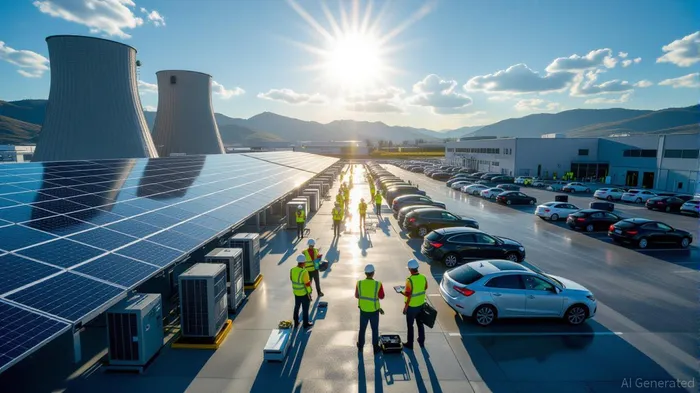
The Energy Efficiency Edge
CoreWeave's core advantage lies in its GPU-native data centers, designed specifically for AI workloads. These facilities use liquid cooling systems and NVIDIANVDA-- GPU-dense racks, reducing energy waste by 30% compared to traditional data centers. This efficiency is critical in an industry where cooling alone accounts for 40% of a data center's energy use.
The company's 2024-2025 expansion into Europe exemplifies its commitment to sustainability. By investing $3.5 billion in renewable-powered data centers in Norway, Sweden, and Spain, CoreWeave has secured 100% green energy for these facilities. This aligns with EU regulations on data sovereignty and green subsidies, positioning CRWVCRWV-- as a preferred partner for European enterprises seeking to avoid U.S. hyperscalers.
Note: The stock's rise post-IPO reflects investor confidence in its AI infrastructure thesis, but volatility remains tied to execution risks.
The Core Scientific Acquisition: A Masterstroke or Overreach?
The July 2025 acquisition of Core Scientific is a landmark deal that delivers 1.3 GW of gross power capacity—including 840 MW dedicated to HPC and 500 MW repurposed from crypto mining. This vertical integration eliminates over $10 billion in future lease costs and unlocks $500 million in annual savings by 2027. The strategic rationale is clear: owning power infrastructure reduces costs, mitigates grid risks, and accelerates scaling for AI developers.
However, the deal's 66% premium over Core Scientific's pre-announcement stock price raises questions about valuation. The transaction's success hinges on CoreWeave's ability to:
1. Repurpose crypto-era facilities for HPC without grid overloads.
2. Navigate Texas's looming power shortages (ERCOT forecasts negative reserve margins by 2026).
3. Integrate Core Scientific's operations smoothly while managing $23 billion in debt.
The rejected 2024 bid for Core Scientific underscores CRWV's persistence. Now, as a post-IPO entity with deeper pockets, it's betting big on vertical integration.
Risks on the Horizon
Despite the strategic logic, risks loom large:
- Grid Constraints: The Denton, Texas, facility—now a CRWV flagship—consumes nearly all of Denton's available grid capacity. Local utilities are investing in backup generators and batteries, but prolonged Texas power shortages could disrupt operations.
- Customer Concentration: 62% of CRWV's revenue comes from MicrosoftMSFT--. Diversifying client relationships is critical to long-term stability.
- Regulatory Hurdles: The acquisition faces SEC scrutiny, and Texas's energy policies remain unpredictable.
Note: Core Scientific's shares surged 66% post-announcement, reflecting investor optimism—but CRWV's stock dipped slightly, hinting at dilution concerns.
Investment Outlook: A High-Reward, High-Risk Play
CoreWeave's model is compelling: control over power infrastructure + energy efficiency + geographic diversification = a moat against hyperscalers. For growth investors, CRWV's stock could thrive if:
- The Denton facility becomes a profitable HPC hub.
- EU data centers meet regulatory and demand targets.
- Debt is managed without dilution.
However, short-term risks—regulatory delays, grid bottlenecks, and execution missteps—could pressure the stock. For now, a cautious “hold” stance makes sense, with a long-term “buy” if CRWV proves it can navigate these hurdles.
Conclusion
CoreWeave's energy-first strategy is a bold response to AI's insatiable appetite for power. The Core Scientific deal cements its leadership in HPC infrastructure, but success depends on converting ambition into operational reality. Investors should watch closely: CRWV's fate may hinge on whether its energy solutions can outpace the grid's limits—and the market's skepticism.
Final thought: In the AI gold rush, those who control the energy will mint the gold.





Comentarios
Aún no hay comentarios