
CoreCivic's Farmville Acquisition Signals Industry Consolidation Amid Rising Detention Demand
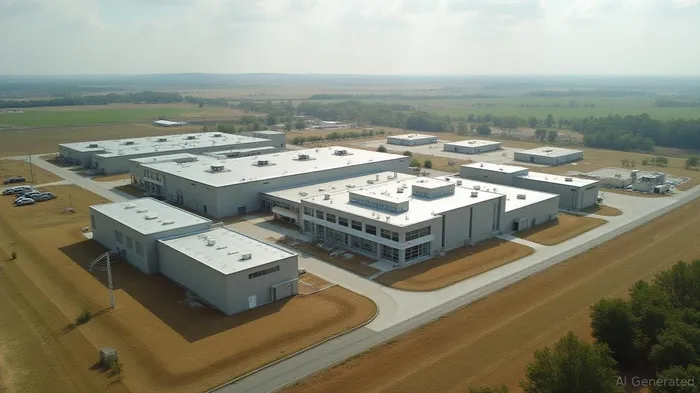
CoreCivic's $67 million acquisition of the Farmville Detention Center in Virginia, set to close on July 1, 2025, marks a pivotal move in the private prison industry's consolidation phase. The deal adds 736 beds to CoreCivic's portfolio under an ICE contract lasting until 2029 and underscores the company's aggressive strategy to capitalize on surging demand for immigration detention services. This move not only strengthens CoreCivic's position as a dominant player but also signals broader trends reshaping the industry's competitive landscape.
A Strategic Play for Market Share
The Farmville acquisition is one piece of CoreCivic's broader reactivation and acquisition strategy. In early 2025, the company also began reactivating the 2,400-bed Dilley Immigration Processing Center in Texas and made progress on activating facilities in Kansas and California, totaling over 6,000 additional beds. These moves align with its stated goal of leveraging its existing real estate footprint to quickly respond to federal detention needs.
The reflects this strategy: revenue rose from $1.86 billion in 2023 to an estimated $2.1 billion by 2025, driven by ICE contract renewals and facility reactivations. The Farmville deal alone is projected to add ~$40 million annually, further boosting margins as occupancy rates climb.
Industry Consolidation: CoreCivicCXW-- vs. GEO Group
CoreCivic's moves contrast sharply with rival GEO Group's recent asset sales, such as its June 2025 sale of the Lawton Correctional Facility to Oklahoma's state department for $312 million. While GEO deleverages, CoreCivic is doubling down on federal detention contracts, which now account for ~30% of its revenue. This divergence highlights two paths: CoreCivic's bet on expanding ICE capacity versus GEO's focus on balance sheet repair.
Both companies, however, share a common challenge: navigating regulatory and public scrutiny. Despite lawsuits over state bans on immigration detention contracts—where CoreCivic has historically won key cases—their business models remain controversial. Critics argue private prisons profit from high incarceration rates, but CoreCivic's focus on ICE's civil detention (non-criminal immigrants) sidesteps some of the stigma tied to criminal sentencing.
Financials and Valuation: A Bullish Case
CoreCivic's Q1 2025 results reinforce its financial resilience. Net income hit $25.1 million on $488.6 million in revenue, with diluted EPS up 15% year-over-year. The company raised its full-year guidance to $91–101 million in net income, driven by facility reactivations and cost controls.
shows CoreCivic outperforming its peer, rising 18% compared to GEO's 5% decline. This gap may widen if CoreCivic's ICE-driven strategy continues to outpace GEO's restructuring efforts.
Risks and Regulatory Uncertainties
The industry's growth hinges on federal detention policies. A shift in administration priorities or ICE contract renegotiations could destabilize revenue. Additionally, lawsuits like the New Jersey detention ban case loom as risks. CoreCivic's legal wins to date are a positive sign, but regulatory headwinds remain a wildcard.
Another concern is operational execution. Reactivating large facilities like Dilley requires smooth transitions, and occupancy rates must stay high to justify investments. A prolonged drop in immigrant arrivals (e.g., due to policy changes) could strain profitability.
Investment Takeaway: CoreCivic as a Play on ICE Demand
For investors, CoreCivic presents a compelling thesis: it's the best-positioned private operator to benefit from rising ICE detention needs, particularly under current policies prioritizing border control. Its strong balance sheet—leverage at 2.5x—provides flexibility for further acquisitions, while its share repurchase program ($131M remaining under a $350M authorization) adds a tailwind.
However, the stock isn't without risks. Investors must weigh the political and operational uncertainties against CoreCivic's execution track record. For those with a long-term view on federal detention spending, CoreCivic's current valuation (14x 2025E EBITDA) appears reasonable.
Historically, this strategy would have yielded moderate capital appreciation but with significant volatility. A backtest from 2020 to June 2025 shows a maximum drawdown of -41.25% during this period, alongside a Sharpe ratio of 0.14. These findings underscore the importance of risk management while acknowledging the potential for gains tied to earnings-driven momentum.
In short, CoreCivic's Farmville deal isn't just a facility acquisition—it's a strategic stake in an industry consolidating around ICE's expanding role. For the bulls, this is only the beginning.





Comentarios
Aún no hay comentarios