
Core Laboratories as a Strategic Enabler of Enhanced Oil Recovery and Energy Transition Technologies
In an energy sector grappling with the dual imperatives of decarbonization and energy security, Core LaboratoriesCLB-- (CLB) stands at the intersection of industrial innovation and sustainability. As the global energy transition accelerates, the company's Enhanced Oil Recovery (EOR) technologies and carbon capture initiatives position it as a critical player in bridging the gap between traditional hydrocarbon extraction and emerging green energy paradigms. Yet, despite its technological prowess and alignment with long-term energy goals, Core LabsCLB-- appears undervalued by current market metrics-a discrepancy that warrants closer scrutiny for investors seeking exposure to resilient industrial innovation.
EOR as a Complementary Force in the Energy Transition
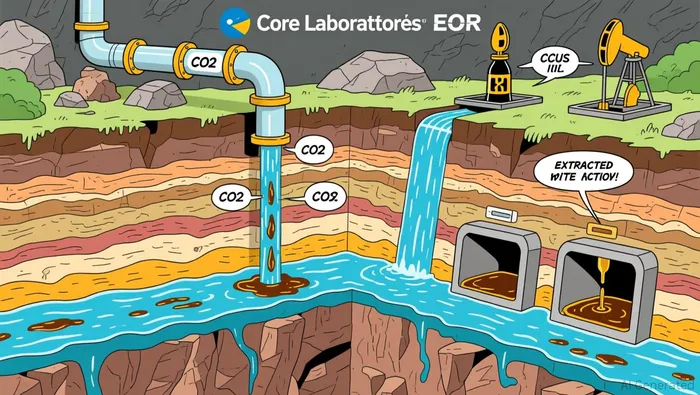
Core Laboratories' EOR portfolio, including its SPECTRAFLOOD™ interwell tracer diagnostic service, is designed to optimize reservoir performance by enhancing sweep efficiency and reducing interfacial tension in both conventional and unconventional fields. These technologies are not merely tools for extending the life of aging oil assets; they also align with broader energy transition objectives. For instance, the company's polymer injection and chemical EOR solutions improve oil displacement efficiency while enabling operators to manage reservoir conditions with real-time adjustments, reducing the need for high-impact exploration.
Moreover, Core Labs' involvement in carbon capture, utilization, and storage (CCUS) underscores its role in decarbonizing the energy sector. The company provides reservoir characterization and flow studies critical for geological CO2 storage, ensuring safe and efficient sequestration. Collaborations with institutions like the University of Houston further highlight its commitment to addressing technical challenges in CCUS, a cornerstone of global climate mitigation efforts. By integrating EOR and CCUS, Core Labs demonstrates how traditional energy infrastructure can evolve to meet sustainability targets without abandoning existing resource bases.
Financial Metrics and Valuation Discrepancies
Core Laboratories' financial performance in 2023–2025 reveals a mixed picture. While the company's trailing P/E ratio of 25.20 in Q3 2025 and projected 15.63% earnings growth for 2026 suggest optimism about future profitability, its stock price has faced headwinds. Over the past year, CLB declined by -2.05%, and despite a 50.08% surge in three months, its 12-month price target of $12.50 implies a potential correction. Revenue growth has also been modest: Q3 2025 saw a 0.1% year-over-year increase to $134.52 million, while 2024 revenue rose by 2.76% to $523.85 million. However, earnings for 2024 fell by 14.38% to $31.40 million, reflecting operational challenges.
Strategic Alignment with Global Sustainability Frameworks
Core Laboratories' sustainability initiatives are deeply embedded in its corporate strategy. The company's Environmental and Climate Strategic Pillar emphasizes reducing its environmental footprint through science-based targets for Scope 1, 2, and 3 emissions, as assessed by S&P Global Sustainable1. Its alignment with the UN Sustainable Development Goals (SDGs) and the Greenhouse Gas Protocol (GHG Protocol) underscores a commitment to transparency and accountability. Additionally, Core Labs' exploration of rare earth minerals-critical for renewable energy technologies- positions it to benefit from the energy transition's material demands.
This strategic alignment is not merely symbolic. By 2025, the global energy transition market is projected to reach $3.11 trillion, with renewable energy and energy storage systems driving growth. While Core Labs' EOR focus may seem at odds with this trajectory, its technologies enable a pragmatic transition. For example, extending the life of mature oil fields through EOR reduces the need for new, high-impact projects, while CCUS integration ensures that carbon emissions are managed responsibly. This dual approach addresses both energy security and climate goals, making Core Labs a unique player in the sector.
The Case for Undervaluation
Despite its technological and strategic advantages, Core Labs remains undervalued relative to its peers. The company's P/E ratio of 26.3x is higher than the energy sector average, yet its projected earnings growth of 8.35% annually and expanding EOR/CCUS markets suggest this premium is justified. Analysts have noted that trade tensions and oil price volatility have dampened investor sentiment, contributing to a 43% stock price decline since early 2025. However, these macroeconomic headwinds are temporary, and Core Labs' 2025 strategic plan-focused on international upstream projects and technology investments-positions it to capitalize on long-term demand for oil and sustainable resource management.
For investors, the key insight is that Core Labs is not a traditional energy stock. Its EOR and CCUS innovations are not just complementary to the energy transition-they are foundational to it. By enabling operators to maximize existing resources while minimizing environmental impact, the company addresses the sector's most pressing challenges. As the energy transition matures, Core Labs' ability to balance profitability with sustainability will likely drive its valuation higher, making it an attractive long-term holding for those seeking exposure to industrial innovation in a resilient sector.





Comentarios
Aún no hay comentarios