
Coral Protocol's Coral v1: A New Era in Decentralized AI Infrastructure
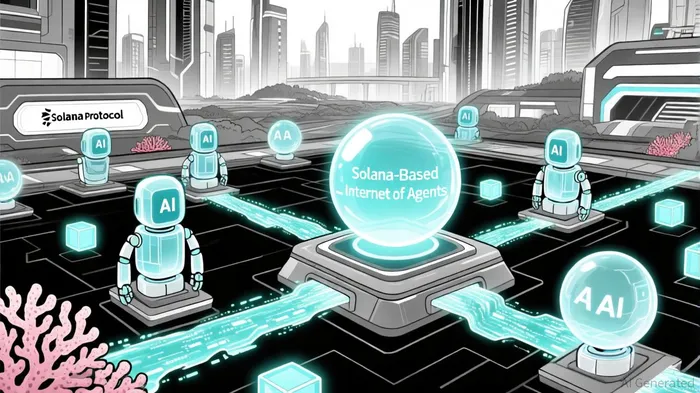
The launch of Coral Protocol's Coral v1 marks a pivotal moment in the evolution of decentralized infrastructure for artificial intelligence. By introducing Remote Agents, Coral v1 addresses critical bottlenecks in multi-agent system development—scalability, interoperability, and fair compensation—while leveraging blockchain's inherent strengths in security and transparency. For investors, this represents a compelling intersection of AI innovation and Web3 infrastructure, with the potential to redefine how autonomous systems collaborate and transact.
Decentralized Infrastructure: The Foundation of Coral v1
Coral v1 positions itself as the first open, decentralized infrastructure for the "Internet of Agents," enabling secure communication, coordination, and on-chain payments between AI agents [1]. Unlike traditional frameworks such as LangChain, which treat agents as isolated functions, Coral v1 introduces protocol-level rules for agent interaction, ensuring seamless collaboration across diverse ecosystems [3]. This is achieved through standardized messaging formats, modular coordination mechanisms, and cryptographic identities that safeguard privacy while enabling auditable interactions [2].
A key innovation is the Coral Registry, a marketplace where developers can list their agents and earn automatic payouts via SolanaSOL-- (SOL) whenever their agents are deployed [4]. This creates a self-sustaining ecosystem where creators are incentivized to build specialized agents, while users can access a growing library of production-ready tools. According to a report by Chainwire, Coral v1's onchain payment system reduces friction in agent transactions, making it easier for developers to monetize their work while ensuring transparency for users [4].
Scalable Agent Deployment: Redefining Development Workflows
Coral v1's Remote Agents eliminate the need for complex local infrastructure, allowing developers to deploy multi-agent systems in minutes [3]. By renting and integrating Remote Agents with local systems, developers can focus on high-level orchestration rather than low-level implementation. For example, a developer could combine a Remote Agent for natural language processing with another for data analysis, all while tracking decisions in real-time via Coral Studio's threads and telemetry [3].
This scalability is further amplified by Coral's interoperability features, which enable agents to collaborate across multiple blockchain networks. As stated by Roman Georgio, Coral's CEO, this architecture allows developers to design systems using organizational structures—defining teams, roles, and workflows—rather than treating agents as mere functions [5]. Such flexibility is critical for complex tasks requiring dynamic team formation, such as decentralized finance (DeFi) automation or cross-chain data aggregation.
Economic Model: Fair Compensation and Long-Term Sustainability
Coral v1's economic model is designed to align incentives across the ecosystem. Every time an agent is used, its creator receives automatic payments via Solana, creating a direct value exchange between developers and users [4]. This contrasts sharply with centralized platforms, where intermediaries often capture a significant portion of revenue. By tokenizing agent usage, Coral ensures that creators are fairly compensated, fostering innovation and long-term sustainability.
Moreover, Coral's use of Solana—a high-throughput, low-cost blockchain—optimizes transaction efficiency. According to Chainwire, the protocol's secure onchain payment system reduces infrastructure demands, making it accessible even for small-scale developers [4]. This scalability is further supported by Solana's ability to handle thousands of transactions per second, a critical factor for high-frequency agent interactions.
Investment Implications: A Catalyst for the AI Ecosystem
For investors, Coral v1 represents more than just a technical breakthrough—it signals a shift toward decentralized AI ecosystems where value is distributed equitably. The protocol's focus on interoperability and modular design positions it to capture a significant share of the multi-agent systems market, which is projected to grow as AI applications become more complex.
Key risks include adoption rates and competition from centralized alternatives. However, Coral's unique value proposition—secure, onchain collaboration with automatic compensation—addresses pain points that centralized platforms cannot easily replicate. As Cryptopolitan notes, Coral v1's ability to streamline workflows while reducing infrastructure costs could accelerate the adoption of multi-agent architectures across industries [3].
Conclusion
Coral Protocol's Coral v1 is not merely an incremental update—it is a foundational layer for the next generation of AI infrastructure. By combining decentralized security, scalable deployment, and a fair economic model, Coral v1 addresses the limitations of existing frameworks while unlocking new possibilities for agent collaboration. For investors, this represents an opportunity to back a protocol that could become the backbone of the "Internet of Agents," driving both technological progress and financial returns.






Comentarios
Aún no hay comentarios