
Copper's Volatility in the Post-Fed Rate Cut Era
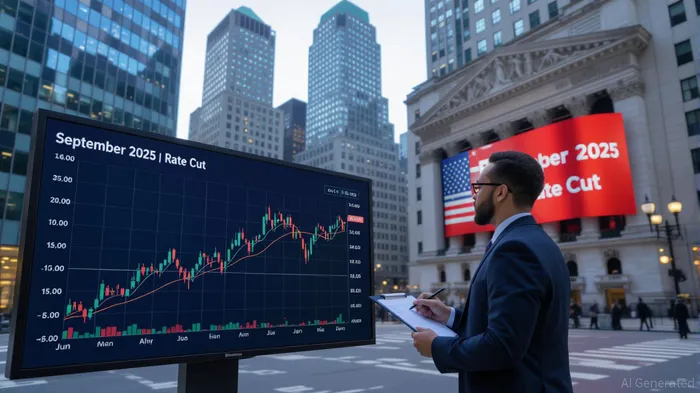
The Federal Reserve's September 2025 rate cut—its first of the year—has ignited a complex interplay of forces in the copper market, underscoring the metal's sensitivity to monetary policy shifts. By reducing the federal funds rate by 0.25 percentage points to a range of 4.00%–4.25%, the Fed signaled a dovish pivot to address a slowing labor market and downside risks to employment [1]. This move, coupled with projections for two additional cuts by year-end, has triggered sharp price swings in copper, a critical barometer of global industrial861072-- demand and macroeconomic sentiment [2].
Mechanisms Linking Rate Cuts to Copper Volatility
The Fed's easing cycle directly impacts copper through two channels: dollar weakness and industrial demand stimulation. A weaker U.S. dollar, which typically follows rate cuts, reduces the cost of copper for non-dollar-denominated buyers, boosting demand from emerging markets. Historical data reinforces this dynamic: copper prices have historically risen 5–8% within three months of Fed rate cuts, as seen in 2019, 2001, and 2007 [1].
Simultaneously, lower borrowing costs spur construction and manufacturing activity, both of which are major copper consumers. For instance, the September 2025 rate cut coincided with a surge in copper prices to a 15-month high on the London Metal Exchange (LME), reflecting optimism about a risk-on environment and accommodative monetary policy [3]. However, this optimism was tempered by short-term volatility, as traders unwound positions ahead of the rate decision, sending prices to a one-week low [5].
Strategic Implications for Commodity Investors
Investors navigating copper's volatility must adopt a dual focus on risk management and opportunistic positioning.
Hedging Against Dollar Fluctuations: Given copper's inverse correlation with the U.S. dollar (1-year correlation coefficient of -0.74), investors should consider hedging currency exposure through dollar-denominated bonds or futures contracts [1]. This mitigates the risk of profit erosion from unexpected dollar strength.
Diversification Across Industrial Sectors: Copper demand is concentrated in construction and renewable energy. Diversifying portfolios to include equities in copper-intensive sectors—such as electric vehicles (EVs) and solar infrastructure—can amplify returns while balancing sector-specific risks [3]. For example, the green energy transition, though delayed by automaker timelines, remains a long-term tailwind for copper demand [4].
Scenario Planning for Policy Shocks: Geopolitical risks, such as U.S. tariffs on Canadian and Mexican copper or retaliatory measures from China, could disrupt supply chains. Investors should stress-test portfolios against scenarios like a 50% tariff on U.S. copper imports, which J.P. Morgan warns could trigger a market correction and push LME prices toward $9,100 per metric ton in Q3 2025 [2].
Navigating the Fragile Balance of Supply and Demand
While the Fed's easing cycle supports copper demand, supply-side challenges persist. Declining ore grades and labor disruptions in key producing regions like Chile have constrained output, exacerbating price volatility [2]. Meanwhile, China's declining copper inventories signal tightening supply, though weakening demand in some end-use sectors creates a fragile equilibrium [1].
Investors must also weigh the green energy transition as a long-term driver. EVs and renewable infrastructure require significantly more copper than traditional industries, yet near-term delays in EV rollouts by automakers like GMGM-- and Ford could temper demand growth [4].
Conclusion: A Calculated Approach to Copper
Copper's volatility in the post-Fed rate cut era reflects its dual role as a barometer of macroeconomic health and a linchpin of industrial and green energy transitions. While the Fed's dovish stance and dollar weakness create a bullish backdrop, investors must remain vigilant against policy shocks, supply constraints, and sector-specific headwinds. A disciplined approach—combining hedging, diversification, and scenario planning—will be critical to capitalizing on opportunities while mitigating risks in this dynamic market.







Comentarios
Aún no hay comentarios