
Copper's Resurgence: Strategic Investment in a Decarbonizing, Post-Pandemic World
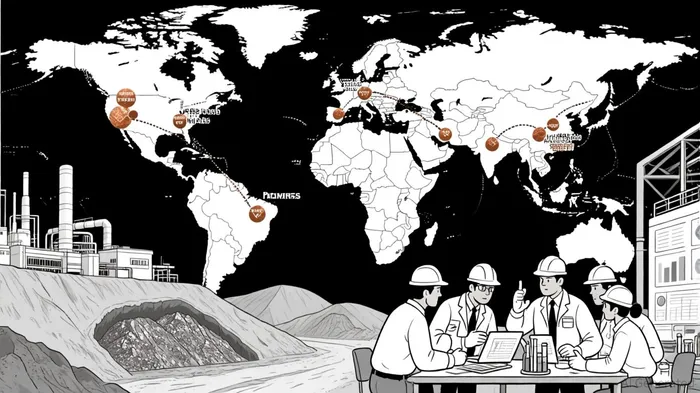
The global copper market is undergoing a seismic shift, driven by a confluence of structural supply constraints, surging demand from the energy transition, and geopolitical realignments. As the world grapples with the dual imperatives of decarbonization and post-pandemic economic recovery, copper—long a barometer of industrial health—has emerged as both a vulnerability and an opportunity. This analysis explores the forces reshaping copper markets and outlines investment strategies for navigating this pivotal moment.
Supply Constraints: A Perfect Storm
The immediate catalyst for copper's resurgence is a series of acute supply shocks. The catastrophic mudslide at Indonesia's Grasberg mine in September 2025, one of the world's largest copper producers, triggered a force majeure declaration, removing 3% of global supply from the market[1]. Goldman SachsGS-- estimates this disruption will reduce 2025 mine output by 250,000–260,000 metric tons, pushing the market into a deficit of 55,500 tons for the year[2]. This follows a broader trend of declining ore grades, which have halved since 2000, and project development timelines stretching to 7–10 years, with delays of 2–4 years common[1].
Structural bottlenecks are compounded by geopolitical risks. Chile, the world's top copper producer, has seen a 40% decline in exploration spending for grassroots projects since 2020, while Argentina's recent removal of export restrictions and introduction of incentives like the Regime for Large Investments (RIGI) signal a scramble to fill supply gaps[3]. Meanwhile, U.S. and Canadian policy shifts, including proposed tariffs on Chinese copper imports, are reshaping trade dynamics and adding volatility[3].
Demand Surge: The Decarbonization Imperative
The energy transition is turbocharging copper demand. Electric vehicles (EVs) require four times more copper than internal combustion engines, while wind turbines and solar panels demand 3 metric tons per megawatt of capacity[4]. The International Energy Agency (IEA) projects global copper demand to grow by over 40% by 2040, driven by grid expansion, electrification, and AI-driven data centers[5].
This demand surge is outpacing supply. By 2025, global demand is expected to outstrip supply by 400,000–500,000 metric tons, with deficits projected to widen to 5 million tons by 2030[6]. Recycling, which contributed 20% of global output in 2023, is a partial solution but insufficient to offset the scale of new mine development required[7].
Investment Strategies: Navigating the Copper Cycle
For investors, copper's dual role as a decarbonization enabler and a supply-constrained commodity presents a compelling case. Here are three strategic approaches:
ETFs and Futures: Hedging Against Volatility
Copper ETFs offer diversified exposure to price movements. The Global X Copper Miners ETF (COPX), with a 0.65% expense ratio, tracks major producers like Freeport-McMoRanFCX-- and BHPBHP--, while the United States Copper Index ETF (CPER) provides direct futures exposure[8]. However, futures-based ETFs face risks like contango, where backwardated markets erode returns. A balanced approach—combining ETFs with dollar-cost averaging—can mitigate these risks[9].Mining Stocks: Capitalizing on Operational Resilience
Mining companies with strong ESG profiles and technological innovation are best positioned to thrive. Freeport-McMoRan and BHP are investing in AI-driven ore sorting and renewable energy to reduce emissions and operational costs[10]. Mid-tier producers like Chakana Copper, which are advancing feasibility studies for new projects, offer higher growth potential but come with exploration risks[11].Geopolitical Diversification and Circular Economy Plays
Investors should prioritize companies and regions with policy tailwinds. Argentina's RIGI program and Chile's decarbonization initiatives are attracting capital, while the EU's Critical Raw Materials Act aims to secure 30% domestic processing by 2030[12]. Recycling-focused firms and technologies that enhance copper recovery rates (e.g., bioleaching) also present long-term opportunities[13].
Historical Lessons: From Crisis to Opportunity
History offers cautionary tales and blueprints. During the 2008 financial crisis, copper prices fell 70% but surged 270% by 2011 as stimulus packages reignited demand[14]. Similarly, the 2017 Escondida mine strike in Chile—removing 1.5% of global supply—highlighted the sector's vulnerability to force majeure events[15]. These episodes underscore the importance of resilience strategies, such as multi-sourcing and safety stock buffers, for investors.
Conclusion: Copper as a Strategic Asset
Copper's resurgence is not a fleeting trend but a structural shift. As the energy transition accelerates and supply constraints tighten, copper will remain a linchpin of global economic and environmental progress. For investors, the key lies in balancing short-term volatility with long-term fundamentals—leveraging ETFs for liquidity, mining stocks for growth, and circular economy innovations for sustainability. In a world increasingly defined by scarcity and decarbonization, copper is not just a metal; it is a mirror of our collective future.





Comentarios
Aún no hay comentarios