
Copper's Record Rally: Strategic Asset or Cyclical Spike?
Copper has surged to record highs in 2025, driven by a perfect storm of structural demand and geopolitical headwinds. But is this rally a fleeting cyclical spike or a fundamental reclassification of copper as a strategic infrastructure metal? The answer lies in the interplay of AI-driven electrification, policy shifts, and supply constraints.
Structural Demand: The AI and Electrification Megatrends
The transition to a green and digital economy is reshaping copper's role. Electric vehicles (EVs) alone are projected to increase copper demand from 1.2 million tonnes in 2023 to 2.2 million tonnes by 2025, as the metal is critical for wiring, motors, and charging infrastructure . Meanwhile, AI infrastructure is emerging as a game-changer. U.S. data centers now consume 4.4% of total electricity, a figure expected to rise to 6.7–12% by 2028 . This surge is driven by the energy-intensive cooling systems and power transmission networks required to sustain AI workloads. According to the International Energy Agency, AI data centers could boost global copper demand by 2% by 2030 .
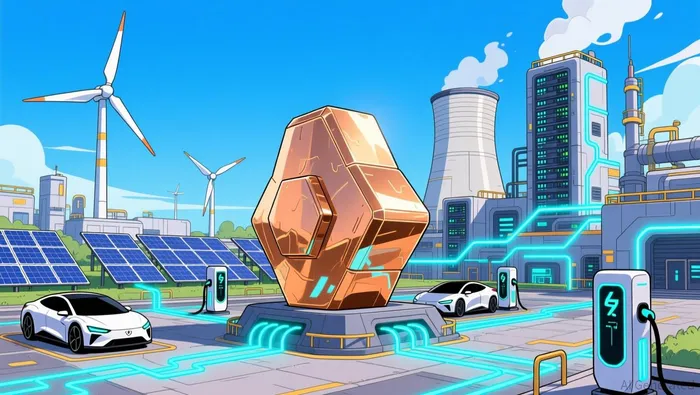
Renewable energy projects further amplify demand. Solar and wind installations require significantly more copper per unit of energy generated compared to fossil fuels, while grid modernization efforts add another layer of structural growth .
Cyclical Pressures: Supply Constraints and Geopolitical Risks
Despite robust demand, supply-side bottlenecks are exacerbating price pressures. Aging mines in Chile-the world's largest copper producer-face labor unrest and declining ore grades, while Chinese production constraints, driven by environmental regulations and energy shortages, have disrupted global flows . These factors, combined with the 5–10 year lead time required to bring new mines online, have created a supply-demand imbalance. Analysts project prices to reach $10,400–$11,000 per tonne by 2025–2026, fueled by tariffs and persistent shortages .
Strategic Reclassification: Copper as a Critical Mineral
The U.S. Geological Survey's 2025 addition of copper to its Critical Minerals List underscores its strategic importance. The agency cites copper's role in power transmission, data center cooling, and national security infrastructure as key drivers . This reclassification aligns with the Promoting Resilient Supply Chains Act of 2025, a bipartisan initiative aimed at mitigating supply chain vulnerabilities through reshoring incentives, workforce training, and cross-sector collaboration . The act reflects a philosophical shift from just-in-time to just-in-case logistics, prioritizing redundancy and resilience in the face of global competition for advanced technologies .
Balancing Cyclical and Structural Forces
While short-term factors like mine closures and geopolitical tensions are undeniably pushing prices higher, the long-term narrative is more compelling. Governments are now treating copper as a strategic asset, not just a commodity. The U.S. Department of Commerce's Supply Chain Resilience Working Group, for instance, is explicitly tasked with addressing copper's role in critical infrastructure . Similarly, the European Union and China have launched initiatives to secure domestic copper supplies, recognizing the metal's centrality to their decarbonization and AI ambitions .
For investors, this duality presents a unique opportunity. Cyclical factors may drive volatility in the near term, but structural demand from AI, EVs, and renewables-coupled with policy-driven supply chain reforms-suggest copper's strategic value is here to stay.
Conclusion: A Strategic Asset in Disguise
Copper's record rally is not merely a cyclical spike but a harbinger of its reclassification as a foundational infrastructure metal. While supply constraints and geopolitical risks will continue to influence short-term price swings, the long-term trajectory is anchored by irreversible megatrends. As governments and corporations alike prioritize resilience over efficiency, copper's role as a strategic asset will only deepen. For investors, this means treating copper not as a commodity to trade, but as a cornerstone of the 21st-century economy.
Copper's perfect storm of supply constraints collides with structural demand
Copper major factors that offer two opposing price scenarios
U.S. Department of Commerce Supply Chain Resilience Working Group







Comentarios
Aún no hay comentarios