
Copper as a Rate-Sensitive Commodity in a Shifting Monetary Policy Landscape
Copper as a Rate-Sensitive Commodity in a Shifting Monetary Policy Landscape
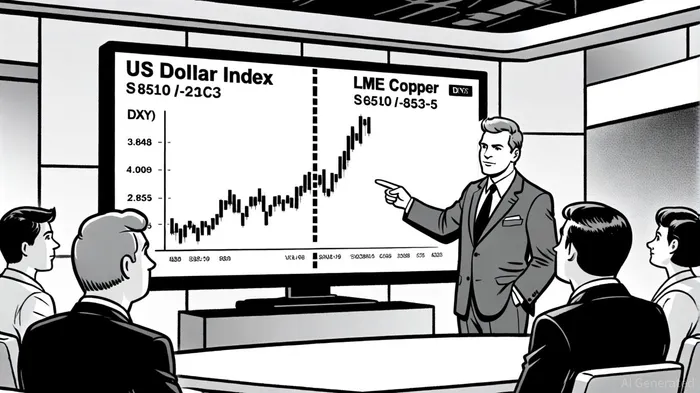
Copper, often dubbed the "barometer of global growth," has long been intertwined with monetary policy shifts. As the Federal Reserve navigates a complex economic landscape in 2025, investors are increasingly turning to industrial metals like copper to hedge against macroeconomic volatility. This article examines how Fed signals-particularly interest rate decisions-can inform strategic exposure to copper, leveraging historical patterns and current policy dynamics.
The Historical Link Between Copper and Fed Policy
Copper's sensitivity to U.S. monetary policy is rooted in its dual role as both a financial asset and an industrial input. When the Fed cuts interest rates, the U.S. dollar typically weakens, reducing the cost of dollar-denominated commodities for foreign buyers. Historical data underscores this inverse relationship: a 1-year correlation coefficient of -0.74 exists between the U.S. Dollar Index (DXY) and copper prices, according to a DiscoveryAlert analysis. For instance, during the Fed's 2019 easing cycle, copper prices surged 8.3% within 90 days of the first rate cut, driven by weaker dollar dynamics and stimulus-driven industrial demand. Similar gains of 6.1% and 7.2% followed rate cuts in 2001 and 2007, respectively.
Lower interest rates also reduce borrowing costs for industries reliant on copper, such as construction and manufacturing, directly boosting demand. This demand-side effect, combined with currency-driven price adjustments, creates a compounding tailwind for copper prices during Fed easing cycles.
Current Fed Signals and Market Implications
The Federal Reserve's September 17, 2025, decision to cut rates by 25 basis points to a target range of 4.00%–4.25% marked the first reduction of the year, reflecting growing concerns over slowing job growth and elevated inflation. Meeting minutes revealed internal divisions, an AP News report noted: while most officials supported further cuts, dissenting voices like Stephen Miran argued for a more aggressive 50-basis-point reduction to address sticky inflation and rental costs. This uncertainty highlights the Fed's data-dependent approach, with upcoming metrics like the September non-farm payrolls report and Personal Consumption Expenditures (PCE) index critical to shaping future policy, as the AP News minutes also emphasize.
Investors should note that a 50-basis-point cut in September could trigger heightened market volatility, potentially amplifying copper's traditional response to monetary easing, according to a LinkedIn analysis. The weakening dollar, a likely outcome of rate cuts, has historically supported copper prices by improving affordability for non-U.S. buyers, as Sprott notes.
Strategic Exposure: Leveraging Fed Signals
Historical case studies provide actionable insights for investors. During the 2019 rate cut cycle, those who increased copper exposure ahead of the Fed's easing saw robust returns (as documented in the DiscoveryAlert analysis). Today, a similar strategy could involve:1. Monitoring Key Indicators: Track the U.S. non-farm payrolls data and PCE index to gauge the likelihood of further rate cuts (the LinkedIn analysis provides one perspective on these dynamics).
2. Positioning for Dollar Weakness: Allocate to copper via futures, ETFs, or equities of major producers (e.g., BHP, Glencore) as the dollar weakens, leveraging historical patterns highlighted in earlier research.
3. Hedging Against Volatility: Use options or diversify into junior copper explorers for high-reward opportunities, though mindful of supply-side risks like mine closures and permitting delays, as noted in S&P Global analysis.
Broader Fundamentals: Beyond Monetary Policy
While Fed signals are pivotal, copper's price trajectory is also shaped by structural demand and supply constraints. Electrification, AI infrastructure, and urbanization are driving long-term copper demand, with the U.S. designating copper a critical mineral (this trend is discussed in the DiscoveryAlert analysis). However, supply remains tight: major producers have seen flat output despite heavy investment, and exploration budgets are increasingly focused on extending existing deposits rather than discovering new ones, as S&P Global analysis describes.
Conclusion
Copper's dual sensitivity to monetary policy and industrial demand makes it a compelling asset for investors navigating the Fed's shifting landscape. By aligning exposure with Fed signals-particularly rate cuts-and monitoring broader supply-demand dynamics, investors can position themselves to capitalize on both short-term volatility and long-term structural trends. As the Fed's September 2025 decision demonstrates, the interplay between policy and copper prices remains as relevant as ever.







Comentarios
Aún no hay comentarios